 Travel
Travel
September in Granada: Cascamorras, cool nights, and mangoes on the coast
A 15°C daily swing, one of the strangest fiestas in Spain, and a coast most people do not know the province has.
Granada is the province where September works hardest, because it contains three climates. The city sits at around 680 metres and swings 15°C between afternoon and night. The Costa Tropical, an hour south, behaves like Málaga. And the Sierra Nevada above 2,000 metres can see its first snow flurries before the month is out.
That spread is the reason to come now rather than in August. You can walk the Albaicín in the morning without suffering, swim in the Mediterranean in the afternoon, and want a jacket by eleven at night.
What the weather actually does
Granada averages roughly 28–29°C by day and 13–15°C at night in September, with about 19–25mm of rain. Sources disagree slightly: the airport station sits in the vega and drains cold air, so it reads several degrees colder at night than the city itself.
AEMET’s 1981–2010 normals give 29.4°C average maximum, 12.8°C average minimum and 19mm of rain. Read that night figure as the vega’s rather than the city’s: cold air pours off the mountains and pools on the flat where the station sits, while Granada is on a slope and holds its heat.
The daily swing is the thing to plan around. Early-September nights are pleasant; by late September it is closer to 26/11, and the Albaicín after dark needs a layer. The Costa Tropical sits at around 22°C sea temperature all month.
Two things the averages hide. September costs about 45 minutes of evening daylight: a dinner that starts in the light on the 1st starts in the dark on the 30th. And it opens the gota fría season, so read the 19mm as an average, not a forecast. When it falls it falls in one violent afternoon.
Which week to book
If your dates are flexible, take the last ten days. The first third of September is still August in heat terms whatever the calendar says; the final third is one of the best travel windows of the Andalucian year. Which part of the province you want changes that, though.
For the city, wait. Granada is far enough inland to get no sea breeze at all, and from about the 20th the afternoons come down and the Albaicín turns into a pleasure rather than something to survive until sunset.
For the coast it flips: the sea hits its annual maximum in September, warmer than it ever gets in June, and coming early adds the air temperature to match. For the mountains, earlier is safer. The first snow can arrive before the month ends, and storms build over the Sierra Nevada faster than a valley forecast suggests.
What is on in September 2026
Cascamorras — Baza on 6 September, Guadix on 9 September. Fixed dates every year, and one of the strangest things in Spain.
The story is a fifteenth-century dispute over a statue of the Virgin. A man in costume — the Cascamorras — has to reach the church without being touched. Thousands of people cover him, and each other, in black paint and oil. By the end nobody is recognisable. It is a Fiesta de Interés Turístico Internacional and almost nothing is written about it in English.
The mechanics, then. The Cascamorras is from Guadix, sent to fetch back the Virgen de la Piedad, a statue a Guadix workman found in Baza’s ground in the 1490s. Baza kept it. Every 6 September he tries again: he must reach the Iglesia de la Merced unmarked, and never does. Baza’s ayuntamiento puts out 3,000 kilos of black paint for it, natural dyes on a vegetable-oil base. On the 9th his own neighbours paint him for coming home empty-handed.
Both runs start at 18.00. Baza’s covers almost four kilometres from Las Arrodeas to the Merced over about two and a half hours; Guadix uses coloured dyes rather than black. The paint goes on everyone, not just the man in the costume, so pick a spot early and stay in it.
Wear clothes you intend to throw away. That is not a joke.
Shoes included. Bring a sealed bag for the phone.
- 6 September, 18.00 (fixed annually) — Cascamorras, Baza. Feria de Baza runs 6–15 September.
- 8 September (fixed annually) — Baza’s patronal procession, which the Cascamorras walks in, cleaned up.
- 9 September, 18.00 (fixed annually) — Cascamorras, Guadix.
- 11–12 September (confirmed) — Granada Sound at the Cortijo del Conde. Fangoria, Siloé, Carlos Sadness and Belén Aguilera on the bill; no day-by-day order yet.
- 15 September (fixed annually) — feast day of the Virgen de las Angustias, the city’s patroness.
- Last Sunday, 27 September in 2026 (fixed annually) — the patroness’s day proper, the one Granada turns out for. Timings unpublished.
What life is like
On the Costa Tropical around Motril, Salobreña and Jete, September is mango month — the campaign opens with the Osteen variety and runs to the end of October. Chirimoya, the custard apple the coast is better known for, does not start until October, whatever the guidebooks say. There is no sugar cane to see either: Salobreña’s mill closed in 2006.
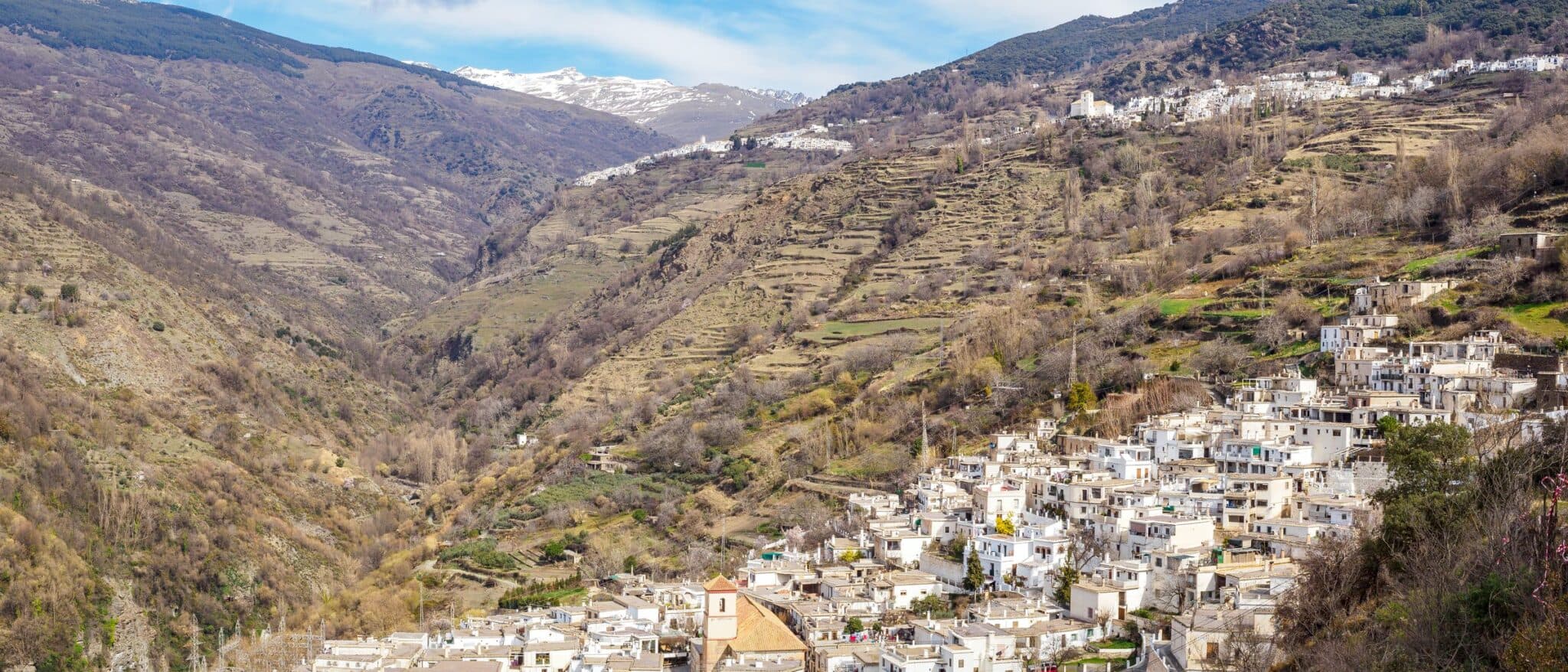
In the Alpujarra the almonds come off through September, and the villages are noticeably cooler than the city. The university term brings Granada’s students back at the end of the month, which changes the city’s evenings entirely.
Three climates, one province
Most people underpack in the same way: plenty for the heat, nothing for the evening. Pack for the swing, not the average. A jacket for the city after dark, long trousers for the Alpujarra, real walking kit above 2,000 metres. Swimming things stay in the bag all month.
Do not base yourself in the city and drive back every night. With a week: three nights in Granada, two on the coast for the warm sea and the mango stalls, two in an Alpujarra village for the walking, with the high Sierra Nevada reachable from Capileira.
The one thing to do in September
Cascamorras. One evening a year, two towns, and nothing else like it. Guadix on the 9th if you have to choose — the cave district makes the setting stranger still.
If the paint is not for you: the Alpujarra in late September, when the walking weather turns and the villages are picking almonds.
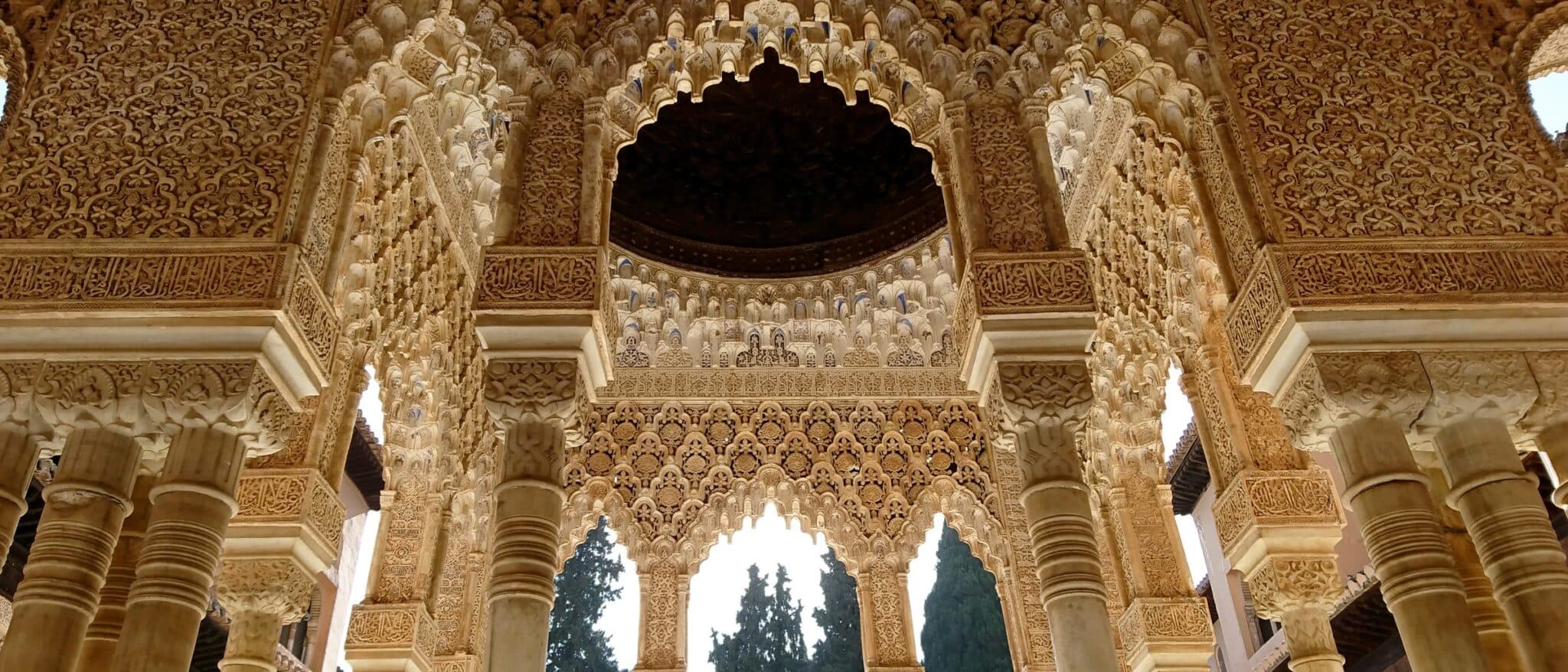
Or the thing September opens rather than closes: night visits to the Generalife gardens, Tuesday to Saturday, 22.00 to 23.30, from 1 September to 14 October. One of only two windows in the year, the other in spring; otherwise the gardens shut with the day ticket. The Nasrid Palaces run the same evenings and hours.
Common questions about Granada in September
Should I book the Alhambra before anything else?
Yes, before your hotel. Daily numbers are capped and the Nasrid Palaces carry a timed slot you cannot move, so the ticket decides the shape of the trip. Individuals can buy up to 23.59 the day before, but counting on that in September is optimistic. See our guide to booking Alhambra tickets.
Can I still swim at the end of September?
Yes, and the water is better than it was in June. The sea off the Costa Tropical holds around 22°C right through September, its warmest of the year, because it spends the summer absorbing heat and gives it back slowly.
Do I need warm clothes in September?
Yes, one warm layer at minimum, even in the first week. The swing between afternoon high and night low is about 15°C, so a 29°C afternoon becomes a 13°C night in the same clothes, and the Albaicín feels it first.
Is September too late to walk in the Sierra Nevada?
No, it is one of the better months, with the summer heat off the high ground and the snow not yet down. The park’s Servicio de Interpretación de Altas Cumbres runs from Capileira, Easter to early December depending on weather, at 10.00–14.00 and 17.00–20.00, up to Alto del Chorrillo and the usual start for Mulhacén.
Where to go next
- The Granada travel guide — and book the Alhambra before anything else
- How to book Alhambra tickets
- Granada province
- September across Andalucía
- Day trips from Granada