 Travel
Province
Almería
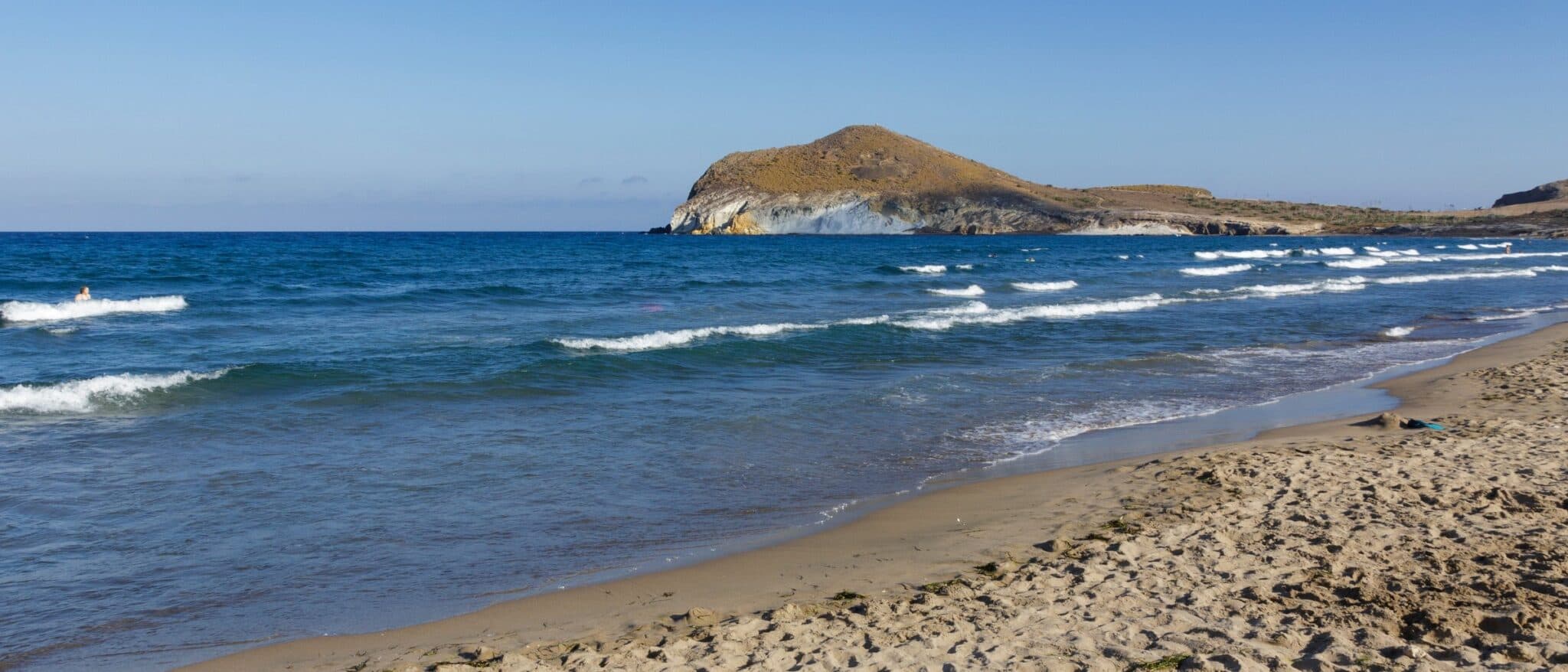
Cabo de Gata, desert landscapes used by the spaghetti westerns, and the emptiest beaches on the Mediterranean coast.
- Main airport
- Almería (LEI) — 9 km from the centre. Limited routes outside summer.
- Best months
- April–June and September–October. The driest and sunniest province in Spain.
- Getting there
- Fewer flights than Málaga; many arrive by road from Murcia or Granada. A car is needed for Cabo de Gata.
The Definitive Guide to Almería Province: Beyond the “Sea of Plastic”
Unveiling the Last Frontier of Andalusia: A Detailed Guide to Almería Province
Almería, a province of Andalusia, is a land of dramatic contrasts, often misunderstood and overshadowed by its more famous neighbors. While many only know it for its vast expanse of greenhouses, the province is a geological and cultural marvel—a place where Europe’s only desert coexists with a pristine volcanic coast, and ancient history is preserved in stunning fortresses and archaeological sites. This comprehensive guide delves into the essence of Almería, exploring its layered history, its unique cultural identity, its powerful modern economy, and its extraordinary natural landscapes.
A Chronicle of Civilizations: The History of Almería
The history of Almería is a story of resilience, shaped by centuries of invasions, trade, and natural disasters. Its strategic location on the Mediterranean has made it a crossroads for some of the most influential civilizations in history.
From Prehistoric Settlement to Roman Port
The first human settlements in Almería date back to the Metal Age. The Los Millares culture (c. 3200–2250 BC) in the Andarax valley and the later El Argar culture (c. 2200–1550 BC) left behind monumental archaeological sites, including fortified settlements and large necropolises, indicating a sophisticated and hierarchical society.
The region’s coastal importance was first recognized by the Phoenicians, who established a port here. The Romans later took control, naming their port Portus Magnus (“Great Port”). Under Roman rule, the area prospered as a center for trade and fishing. Remains of Roman infrastructure, including sections of an ancient road, can still be found today.
The Golden Age of Al-Andalus
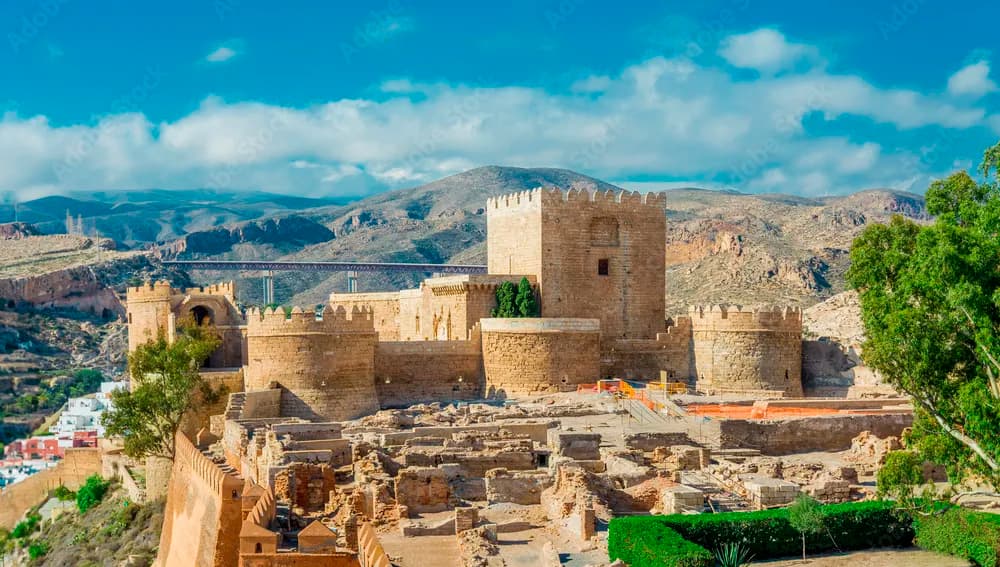
The most defining period in Almería’s history began in 955 AD when the city was founded by the Caliph of Córdoba, Abd al-Rahman III. He named it Al-Mariyya, meaning “the watchtower,” for its strategic importance in defending the Caliphate’s coast. The city’s magnificent Alcazaba (fortress), the second-largest Moorish fortress in Spain after Granada’s Alhambra, was built during this time.
In the 11th century, Al-Mariyya became the capital of an independent kingdom, the Taifa of Almería. This period marked its zenith as an international port and a center of culture and commerce. The city’s economy was driven by a flourishing silk and textile industry, with thousands of looms producing high-quality fabrics that were exported across the Islamic world. This era of prosperity earned it the nickname “the port of the Orient.”
The Christian Era and Modern Resurgence
The Christian Reconquista of Almería was a hard-fought campaign, with the city finally falling to the Catholic Monarchs in 1489. The subsequent centuries were a period of decline. Earthquakes, frequent pirate raids by Berbers, and the exclusion from the lucrative American trade routes led to widespread depopulation and economic hardship. The city’s cathedral, the Catedral de la Encarnación, was built in the 16th century not only as a place of worship but also as a fortress to protect the population from these pirate attacks.
A new era of prosperity began in the 19th century with the discovery of vast lead, iron, and gold mines. The mining boom attracted foreign investment and spurred the construction of key infrastructure, including the iconic Cable Inglés (English Cable), a massive iron pier built by a British company to load minerals onto ships.
In the 20th century, Almería underwent a spectacular transformation. From being one of Spain’s poorest provinces, it became an economic leader thanks to two key industries: intensive agriculture and tourism. This transformation, particularly the rise of the “sea of plastic,” has been a defining feature of its modern identity.
A Tapestry of Culture and Heritage: The Almerian Identity
Almería’s culture is as unique and resilient as its landscape. It is a fusion of ancient traditions, Andalusian flair, and an unexpected modern artistic scene.
Monuments and Architectural Gems
- The Alcazaba: Perched on a hilltop overlooking the city and the sea, the Alcazaba is Almería’s most important monument. Its triple-walled enclosure, intricate courtyards, and gardens offer a fascinating glimpse into its Moorish past.
- The Cathedral-Fortress: The city’s cathedral is a rare example of a fortified religious building. Its robust walls, towers, and battlements were essential for defense during a turbulent period.
- Civil War Air-Raid Shelters (Los Refugios de la Guerra Civil): Beneath the bustling city streets lies a network of underground tunnels that served as a refuge for the population during the Spanish Civil War. This well-preserved museum provides a somber and poignant look into this recent history.
- The Guitar Museum (Museo de la Guitarra): Almería is considered the birthplace of the modern Spanish guitar. This museum honors the legacy of Antonio de Torres Jurado, a 19th-century luthier from Almería whose designs revolutionized the instrument and set the standard for classical guitars worldwide.
Festivals and Cinematic Legacy
Almería’s cultural life is punctuated by a variety of festivals and traditions. Holy Week is celebrated with solemn processions and the rhythmic beat of drums. The Feria de Almería in August is a joyful, week-long celebration in honor of the Virgin of the Sea.
Perhaps one of the most surprising aspects of Almería’s culture is its deep connection to the film industry. The province’s unique, arid landscapes have served as the backdrop for hundreds of films, earning it the nickname “Europe’s Hollywood.”
- Spaghetti Westerns: The desolate plains and canyons of the Tabernas Desert were the primary filming location for iconic Spaghetti Westerns in the 1960s, including Sergio Leone’s “Dollars Trilogy” starring Clint Eastwood.
- Hollywood Blockbusters: The province’s landscapes have also been featured in major international films like Lawrence of Arabia, Conan the Barbarian, and Indiana Jones and the Last Crusade.
- Oasys MiniHollywood: This theme park is one of the original film sets from the Western era, now a popular tourist attraction with live stunt shows and a zoo.
The Almerian “Miracle”: A Modern Economic Powerhouse
Almería’s economy is a testament to human ingenuity and adaptability. What was once a land of stark, arid plains has been transformed into a global agricultural leader.
The “Sea of Plastic” and Intensive Agriculture
The most defining feature of Almería’s economy is its intensive agriculture, which has turned the province into Europe’s “vegetable garden.” A vast network of plastic greenhouses covers the landscape, creating a microclimate that allows for year-round production of fruits and vegetables. This “sea of plastic” is a true economic miracle.
- Economic Impact: The agricultural sector and its related industries account for a significant portion of the province’s GDP, far exceeding the national average.
- Innovation: Almerian farmers have pioneered sustainable techniques, including drip irrigation and integrated pest management, making their agriculture highly efficient and environmentally conscious.
- Social Cohesion: The farming model is largely based on small, family-owned farms and agricultural cooperatives, which has led to a more equitable distribution of wealth and social stability.
Other Key Industries
- Tourism: Almería’s untouched coastlines, especially in the Cabo de Gata, have made it a magnet for eco-tourism and nature lovers.
- Renewable Energy: Almería is a global leader in solar energy research and development, home to the Plataforma Solar de Almería, one of Europe’s most important solar research centers.
- The Marble Industry: The town of Macael is famous for its marble quarries, which have been in operation since Roman times. This “white gold” has been used in monuments around the world.
A Land of Extremes: Geography and Natural Wonders
Almería’s diverse geography is what truly sets it apart from the rest of Spain. It is a province of wild, untamed beauty.
The Tabernas Desert: Europe’s Wild West
The Tabernas Desert is Europe’s only desert. Its dramatic, barren landscapes of badlands and dry riverbeds have been sculpted by millennia of erosion. The desert’s unique ecosystem is home to a variety of endemic flora and fauna.
Cabo de Gata-Níjar Natural Park
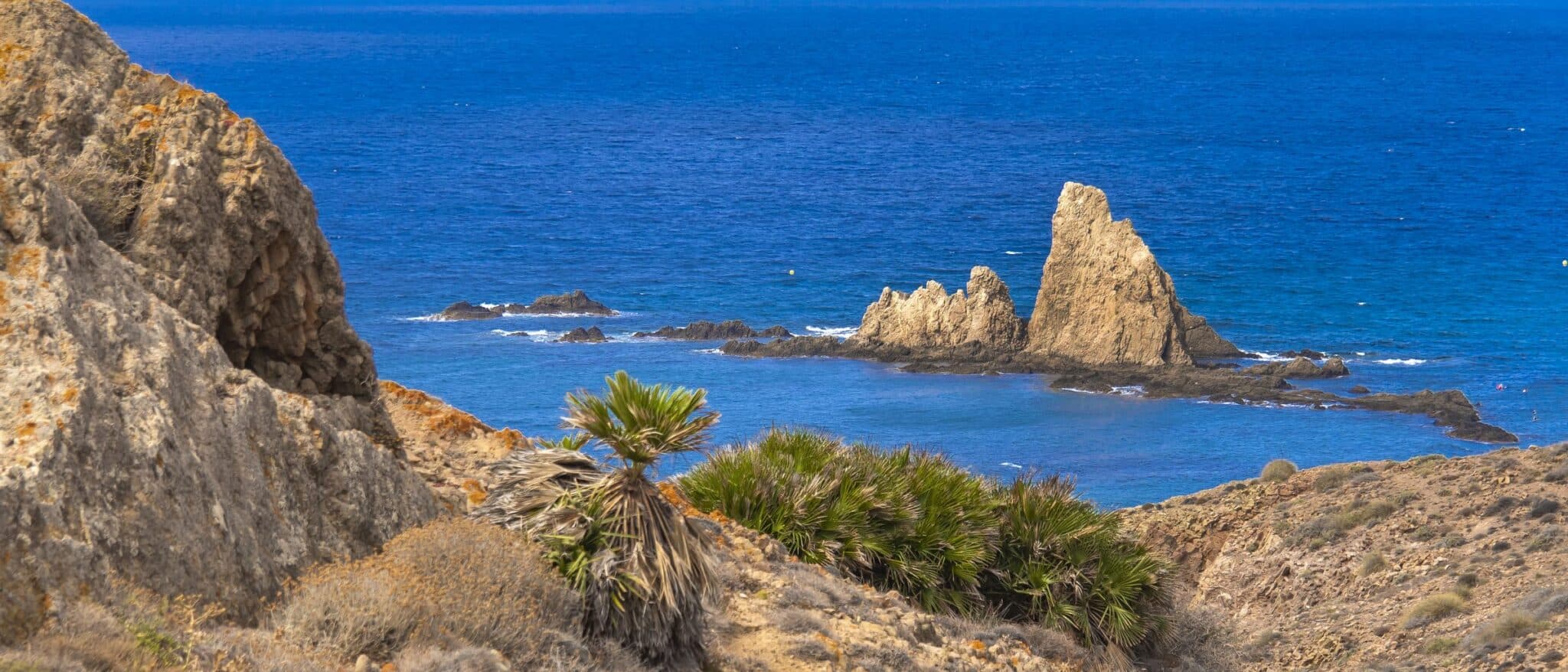
Declared a UNESCO Biosphere Reserve, the Cabo de Gata-Níjar Natural Park is the largest protected coastal area in Andalusia. It is a volcanic landscape of rugged cliffs, secluded coves, and pristine beaches. The park is a paradise for hikers, kayakers, and divers, offering stunning underwater seascapes and a unique habitat for migratory birds.
Underground Marvels
- The Geode of Pulpí: Located in an old mine, the Geoda de Pulpí is a giant geode lined with massive gypsum crystals, one of the largest in the world. Its discovery has made it a major geological landmark and tourist attraction.
- Karst in Yesos de Sorbas: This remarkable gypsum karst landscape is a labyrinth of caves, ravines, and canyons formed by the dissolution of gypsum. It is a unique geological phenomenon and a popular site for speleology.
Conclusion
Almería province is a land of incredible contradictions. It is a region of dramatic, often harsh, beauty that has been transformed by a spirit of innovation and perseverance. From the ancient fortifications of its capital to the futuristic greenhouses of its plains, and from its cinematic deserts to its protected coastal oases, Almería offers a journey unlike any other in Spain. It is a place that rewards the curious traveler with a deep sense of history, a taste of authentic Andalusian culture, and a profound appreciation for its extraordinary natural and human-made landscapes.
All 153 beaches in Almería, on a map →