 Travel
Blog
Romería del Rocío 2026: Dates, Routes and How to See It Without Being a Pilgrim
Romería del Rocío is one of the most extraordinary pilgrimages in Europe, and in 2026 it will once again bring hundreds of thousands of devotees and visitors to the marshes and forests of Doñana in western Andalucía. If you live on the Costa del Sol or are visiting southern Spain in late May, it is…
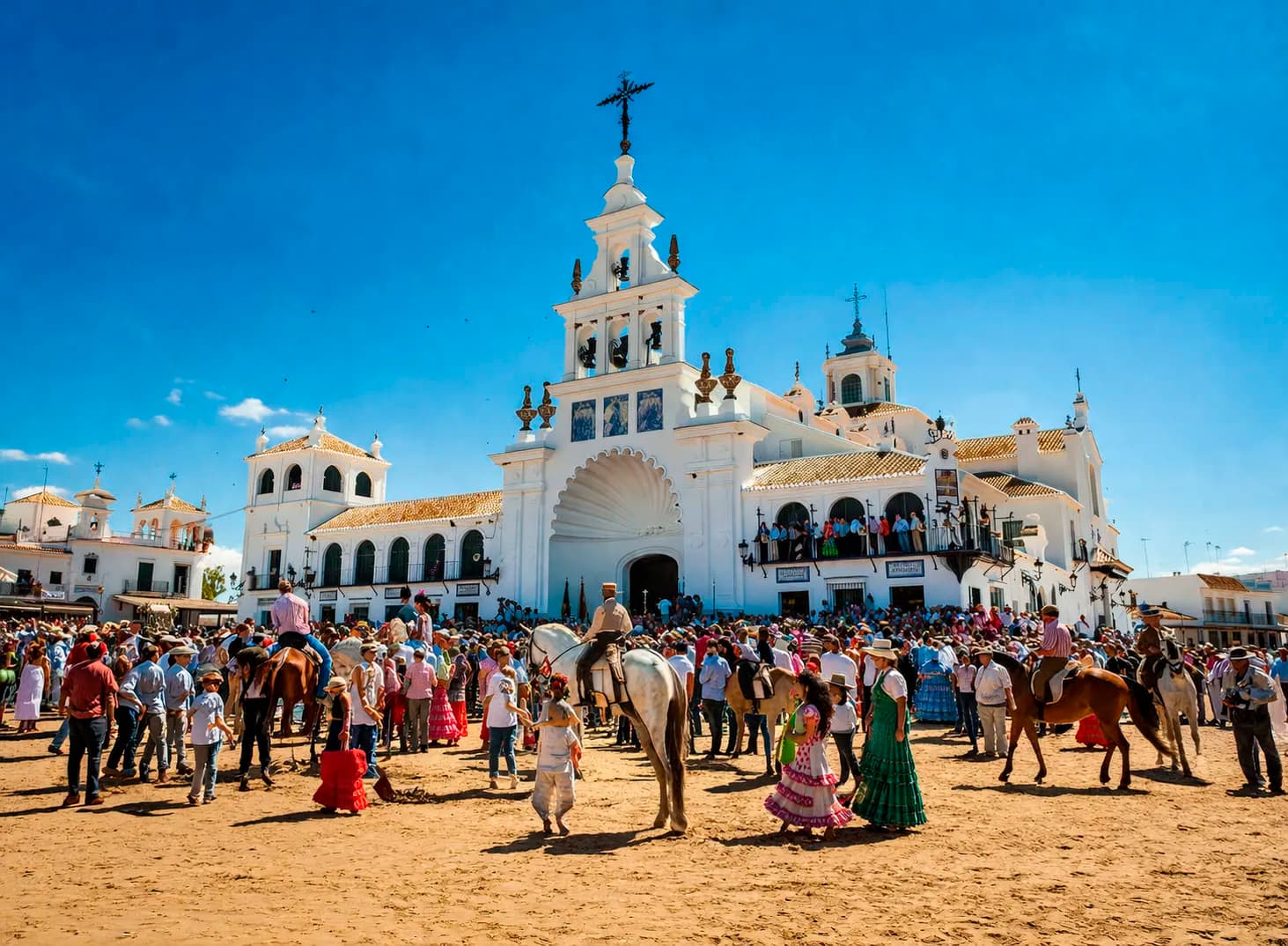
Romería del Rocío is one of the most extraordinary pilgrimages in Europe, and in 2026 it will once again bring hundreds of thousands of devotees and visitors to the marshes and forests of Doñana in western Andalucía. If you live on the Costa del Sol or are visiting southern Spain in late May, it is an experience unlike any other — even if you do not join as a traditional pilgrim.
This guide explains the 2026 dates, what actually happens during the Romería, the traditional pilgrimage routes, and practical ways to see it as an observer from the Costa del Sol rather than as a full participant.
Dates and Key Moments of Romería del Rocío 2026
In 2026, the official dates of Romería del Rocío run approximately from Wednesday 20 May to Monday 25 May, with the most intense days concentrated on the Pentecost weekend (22–25 May). These dates are tied to the feast of Pentecost (fifty days after Easter Sunday), which determines when the pilgrimage takes place each year.
Key moments include:
- The arrival of the different brotherhoods (hermandades) at the village of El Rocío from Wednesday through Saturday, each with colourful carretas (wagons), horses and pilgrims dressed in traditional outfits.
- The big Mass and night-time prayers on Pentecost Sunday (25 May 2026).
- The famous procession of the Virgin of El Rocío (La Blanca Paloma) in the early hours of Monday morning, when the image is carried on the shoulders of hundreds of devotees through the village.
- The departure of the brotherhoods back to their home towns starting Monday afternoon and continuing through Tuesday.
For more context on religious festivals in Andalucía throughout the year, see our guide to Fiestas and Events across Andalucía.
Where the Romería Takes Place
The heart of the Romería is the village of El Rocío in the municipality of Almonte, province of Huelva, on the edge of the Doñana marshes. For most of the year it is a quiet place of white-painted brotherhood houses, sandy streets and a beautiful sanctuary dedicated to the Virgin of El Rocío. During the pilgrimage it becomes a crowded “tent city” full of music, prayer, celebration and emotion.
From the Costa del Sol, reaching El Rocío involves a drive of roughly 3.5–4.5 hours depending on your starting point (Málaga, Marbella or further west). Many visitors base themselves in Huelva, Seville or on the Costa de la Luz and make day trips or overnight visits into the village.
How the Pilgrimage Routes Work
The traditional experience of Romería del Rocío is to walk or ride on horseback for several days, crossing countryside, forests and marshes in decorated wagons (carretas) and traditional dress. Brotherhoods (hermandades) set out from their home towns across Andalucía and follow well-established routes that converge on El Rocío.
Major routes include:
- Seville brotherhoods — Triana, Macarena, El Salvador, El Cerro and Sevilla Sur all depart from different neighbourhoods of Seville and take several days to reach El Rocío, often camping overnight along the way.
- Huelva province — Many local brotherhoods have shorter routes from nearby towns and villages.
- Cádiz province — Brotherhoods from Jerez, Sanlúcar and other towns in Cádiz cross the Doñana park on horseback or in wagons.
- Málaga, Córdoba and other provinces — Smaller brotherhoods also make the journey, though many travel part of the way by vehicle before completing the final stretch on foot or horseback.
You can still enjoy the Romería without walking the full route. Many visitors watch the brotherhoods depart from Seville or other cities, then drive to El Rocío separately to see the weekend celebrations and procession.
How to See Romería del Rocío from the Costa del Sol
If you are based on the Costa del Sol, you have several practical options for experiencing the Romería:
1. Day Trip to Watch a Brotherhood Departure
Drive or take the train to Seville early in the morning to see one of the major brotherhoods leave the city on its camino (route) towards El Rocío. The departure processions through Seville itself are events in their own right, with streets lined with spectators as the carretas and pilgrims pass. The Triana brotherhood departure (usually on the Thursday or Friday before Pentecost) is especially famous.
2. Overnight in or Near El Rocío for the Weekend
Staying overnight in Huelva, Seville or on the Costa de la Luz (Matalascañas, Mazagón) gives you time to visit the village on Friday or Saturday morning before it gets extremely crowded, and to choose quieter moments to observe the celebrations. You can then experience the intense atmosphere on Sunday evening before the big procession early Monday morning.
3. Guided Excursions from Seville
Some tour agencies offer special excursions from Seville or nearby coastal areas during Romería weekend. These usually include transport, some commentary and a visit to the village itself, which can be a good option if you prefer organised travel and do not want to worry about driving or parking.
Whichever option you choose, plan far in advance — accommodation and transport near the main dates sell out months early.
What to Expect If You Are Not a Pilgrim
As an observer, you can still enjoy many aspects of Romería del Rocío:
- The sight of hundreds of horses, wagons and pilgrims dressed in traditional Andalucían outfits.
- The music — sevillanas rocieras, drums, flutes and singing are heard constantly throughout the village.
- The strong sense of devotion, community and emotion, particularly during the night-time prayers and the procession of the Virgin.
- The unique setting in a village on the edge of Doñana National Park, surrounded by marshes and wetlands that are home to flamingos and other wildlife.
However, keep in mind that this is above all a religious event, so modesty and respect are important, especially near the sanctuary and during official acts. Facilities can be basic and crowded — expect queues, dust or mud (depending on the weather), and limited parking. Mobile coverage can be patchy at peak times.
Practical tips:
- Bring comfortable shoes (the village streets are sandy).
- Wear sun protection, a hat and carry water — Huelva in May can be very warm.
- Be patient with crowds, traffic and noise.
- Consider earplugs if you are staying overnight in or near the village — the music and celebrations continue through the night.
Responsible Visiting and Combining with Other Trips
Because the Romería takes place next to Doñana National Park, a fragile natural area of international importance, it is essential to respect environmental rules, stick to designated paths and avoid leaving any rubbish. If you are driving, follow all parking instructions and temporary traffic rules issued by local authorities.
Many visitors combine a brief visit to El Rocío with:
- A beach stay on the Costa de la Luz (Matalascañas, Mazagón, Punta Umbría).
- A cultural city break in Seville or Huelva.
- A visit to the Doñana visitor centres to see the unique wetland and dune ecosystems that surround the village.
This way, you experience the intensity of the Romería but also have quieter days to recover and enjoy the region.
For more on what else is happening across Andalucía in spring and early summer 2026, explore our full calendar of Fiestas and Events in Andalucía.
Why Is Romería del Rocío So Special?
Romería del Rocío is not just a pilgrimage — it is a cultural and social event that brings together devotion, music, tradition and community on an extraordinary scale. The image of hundreds of pilgrims on horseback crossing the marshes at sunrise, the sound of sevillanas rocieras echoing through the village streets, and the emotion of the Monday morning procession when the Virgin is carried through the crowds are things you simply cannot experience anywhere else.
For visitors from the Costa del Sol, it is also a reminder of how diverse Andalucía is — from the Mediterranean beaches to the Atlantic wetlands, from feria parties to silent religious devotion.
For a general overview of Andalucían pilgrimages and religious traditions, the Andalucía tourism site provides useful context on the history of the Romería and its place in regional culture.