 Travel
Blog
Semana Santa Málaga Province 2026
Calendar Processions Towns Gastronomy Tips Semana Santa Málaga 2026 Semana Santa Málaga Province 2026 Experience the most dramatic Holy Week celebrations in Spain — where centuries-old traditions, stunning processions, and deep faith converge across Málaga city and its magnificent province. Explore Calendar Discover Processions Holy Week Calendar 2026 Semana Santa in Málaga runs from Palm…
Semana Santa Málaga 2026
Semana Santa Málaga Province 2026
Experience the most dramatic Holy Week celebrations in Spain — where centuries-old traditions, stunning processions, and deep faith converge across Málaga city and its magnificent province.
Explore Calendar Discover ProcessionsHoly Week Calendar 2026
Semana Santa in Málaga runs from Palm Sunday (March 29) to Easter Sunday (April 5), 2026. Each day features multiple processions (cofradías) departing from different churches across the city and province.
| Date | Day | Key Cofradías |
|---|---|---|
| March 29 | Palm Sunday (Domingo de Ramos) | La Polliníca, La Esperanza, Virgen de la Paz |
| March 30 | Monday of Holy Week (Lunes Santo) | El Rescatado, La Sangre, Nuestro Padre Jesús |
| March 31 | Tuesday of Holy Week (Martes Santo) | Los Estudiantes, La Misericordia, El Gran Poder |
| April 1 | Holy Wednesday (Miércoles Santo) | Cristo de Mena, El Huerto, La Vera Cruz |
| April 2 | Holy Thursday (Jueves Santo) | El Cautivo, Los Gitanos, La Soledad |
| April 3 | Good Friday (Viernes Santo) | Santo Sepulcro, Virgen del Rocío, La Amargura |
| April 4 | Holy Saturday (Sábado de Gloria) | La Resurrección, Nuestro Padre Jesús Resucitado |
| April 5 | Easter Sunday (Domingo de Resurrección) | El Resucitado, La Misericordia, El Amor |
Iconic Processions of Málaga
These are the most celebrated and emotionally powerful processions in Málaga’s Semana Santa, drawing thousands of spectators and believers each year.
April 2 — Jueves Santo
El Cautivo
Nickname: El Señor de Málaga
The most beloved image in Málaga, Jesus bound with rope representing his captivity before the Passion. The procession draws the largest crowds of the week.
April 1 — Miércoles Santo
Cristo de Mena
Nickname: El Cristo de los Legionarios
Carried by the Spanish Foreign Legion (La Legión), this procession is one of the most dramatic in Spain. Legionnaires carry the throne at a quick march to the sound of their anthem.
April 3 — Viernes Santo
Santo Sepulcro
Nickname: La Procesión del Silencio
The most solemn procession of Good Friday, conducted in near-total silence. The image of Christ in the tomb is carried through the darkened streets as candles flicker in the night.
April 3 — Viernes Santo
Virgen del Rocío
Nickname: La Reina de las Procesiones
One of the most spectacular Marian processions of Good Friday, the Virgin is adorned with an extraordinary floral canopy and carried amid a sea of white carnations and incense.
Understanding the Processions
To fully appreciate Semana Santa, it helps to understand the key elements that make these processions unique in Spanish Catholic tradition.
Tronos (Floats)
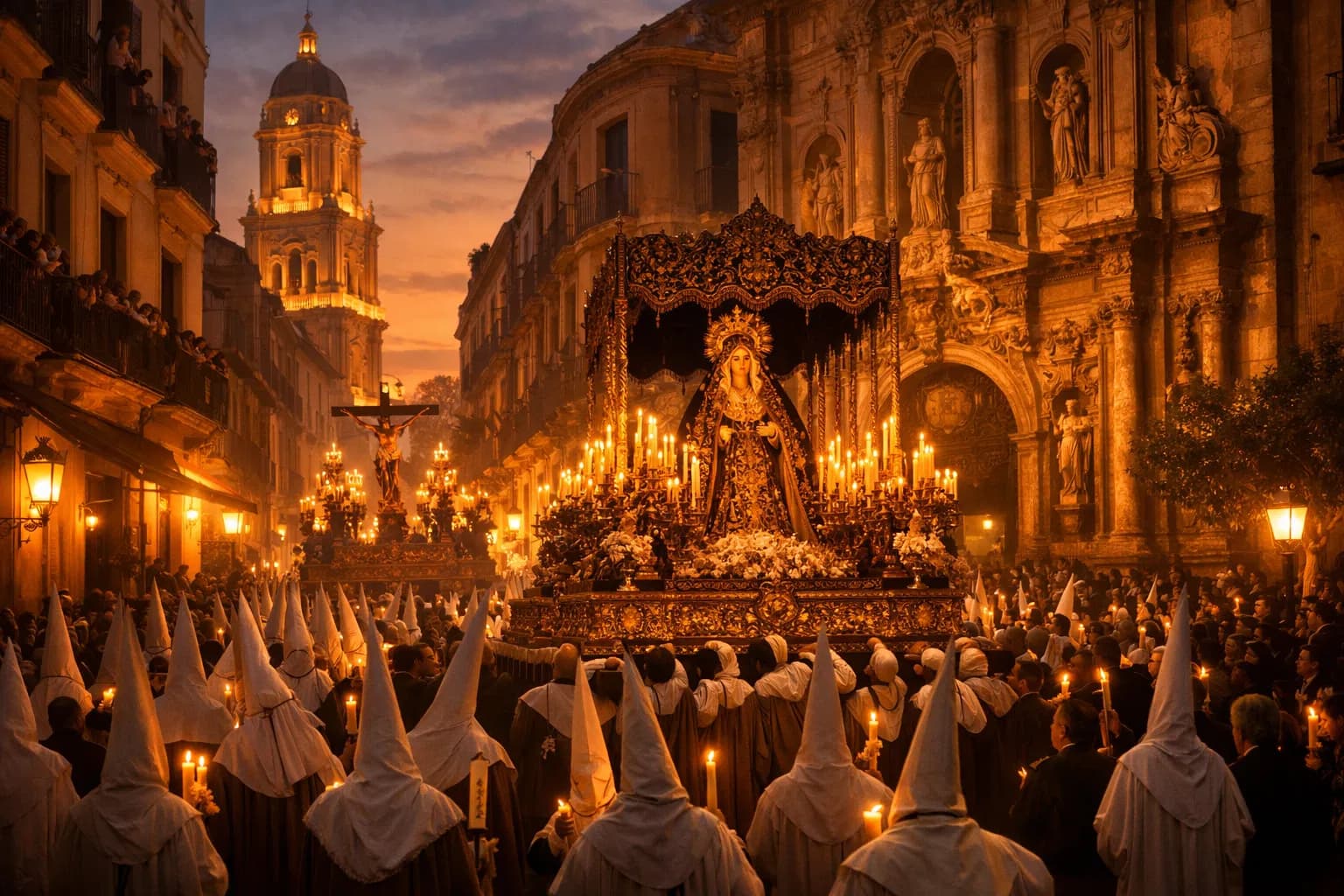
The ornate platforms on which religious images are carried. These massive structures can weigh several tonnes and are decorated with candles, flowers, and gold embroidery. The tróno is a masterpiece of baroque craftsmanship that can take years to create.
Cofradías (Brotherhoods)
Religious brotherhoods that organise and carry out the processions. Each cofradía is linked to a specific church and image. Members (nazarenos) wear distinctive robes and pointed hoods (capirotes) in their brotherhood’s colours — a tradition dating back centuries.
Saetas
Spontaneous flamenco-style laments sung from balconies or the street as a procession passes. The saeta is one of the most moving experiences of Semana Santa — an improvised prayer of grief, love, and devotion directed at the passing image.
Atmosphere
The sensory experience of Semana Santa is unforgettable: the smell of incense and orange blossom, the sound of marching bands and weeping, candle wax dripping, and thousands of people pressing together in narrow streets. It is simultaneously sacred and festive.
Semana Santa Across the Province
Beyond Málaga city, the province’s towns and villages host their own deeply moving Holy Week celebrations with centuries-old local traditions.
Antequera
- Fourteen cofradías process through narrow baroque streets
- The pasos date back to the 16th and 17th centuries
- The Colegiata de Santa María la Mayor provides a stunning backdrop
- Processions feature intricate silver-work and baroque sculptures of exceptional artistic value
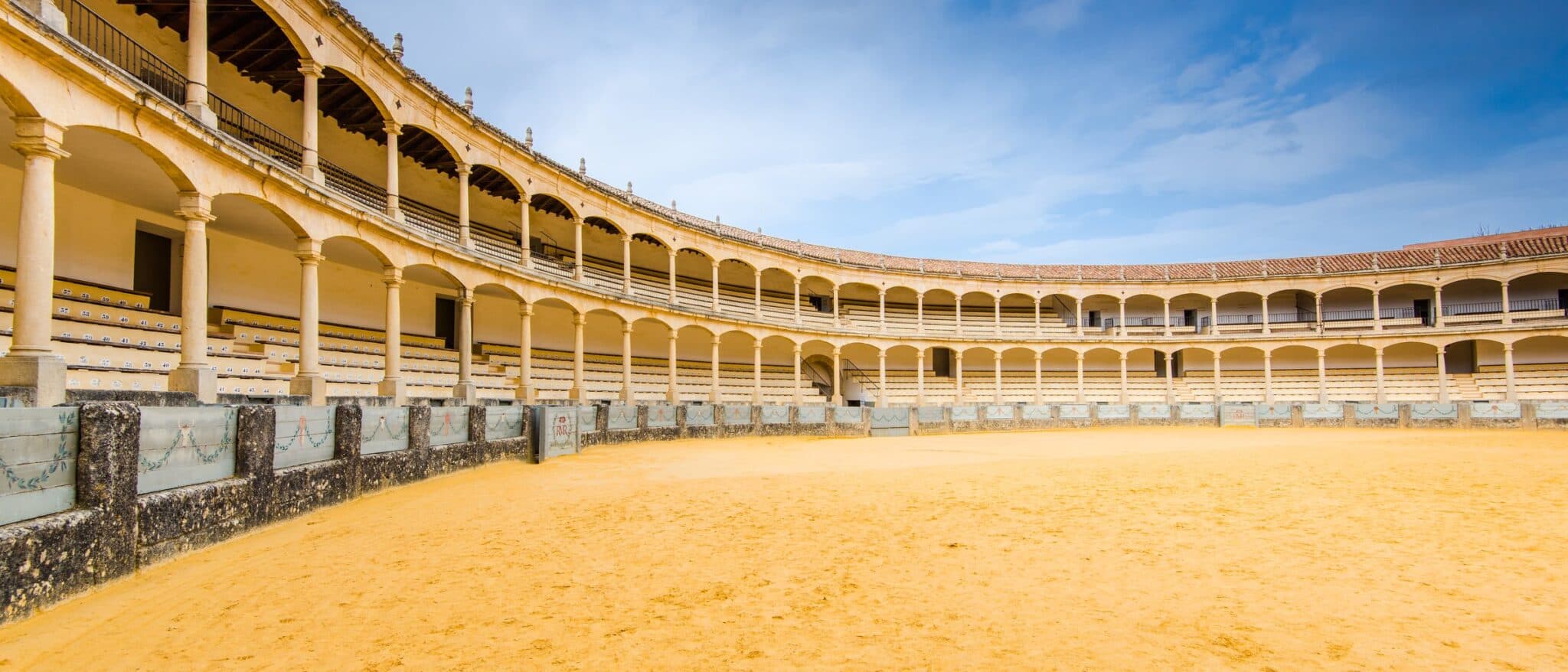
Ronda
- Smaller but deeply moving cofradías carry images through cobblestoned historic quarter
- Processions cross the Puente Nuevo area offering breathtaking views
- The intimate scale allows visitors to get very close to the images
- Easter Monday features a special resurrection procession at dawn
Riogordo
- Over 300 villagers participate as actors in the Passion Play held on Good Friday
- The tradition dates back over 150 years
- The entire village transforms into first-century Jerusalem
- Tickets sell out months in advance — book early
Vélez-Málaga
- Seventeen cofradías carry out processions through the historic Moorish quarter
- The processions wind past the medieval castle and Arab-era streets
- Known for exceptionally ornate Virgin images dressed in traditional costume
- The Virgen de los Remedios is one of the most venerated in the province
Semana Santa Gastronomy
Holy Week in Andalucía has its own rich culinary traditions. Many dishes reflect the Catholic fasting requirements of Lent, yet they are anything but austere.
Torrijas
The Easter SweetPotaje de Vigilia
The Fasting StewPestiños
The Moorish PastryEspinacas con Garbanzos
The Lenten ClassicVisitor Planning Guide
Make the most of your Semana Santa experience in Málaga with these practical tips for first-time and returning visitors alike.
Book Early
Hotels in Málaga city fill up months in advance for Semana Santa. Book accommodation at least 3-4 months ahead, especially for Holy Thursday and Good Friday nights. Shoulder options in nearby coastal towns like Torremolinos or Benalmádena often have more availability.
Know the Routes
Each cofradía follows a fixed route from its church through the city centre and back. The official programme (available from the Málaga Tourist Board) lists exact times and routes. The main viewing area is along Calle Larios and the Cathedral square.
Respect the Atmosphere
Semana Santa is a religious event first and a spectacle second. Keep voices low when processions pass, avoid crossing in front of a paso, and never touch the images or tronos. Applause is acceptable and even encouraged at certain moments.
Comfort is Key
You will stand for hours on cobblestone streets. Wear comfortable shoes, bring a fold-up seat or cushion for seated grandstand areas, and dress in layers as evenings can be cool even in late March and early April.
What to Bring
Water bottle, light snacks, a small umbrella or poncho (spring rain is possible), portable phone charger, cash for street food vendors, and a camera. Leave large bags at your hotel as crowds are very dense.
Dates 2026
Palm Sunday: March 29
Holy Monday: March 30
Holy Tuesday: March 31
Holy Wednesday: April 1
Holy Thursday: April 2
Good Friday: April 3
Holy Saturday: April 4
Easter Sunday: April 5
Getting Around
Most city centre streets are closed during processions. Use the metro (Estación Guadalmedina is central) or park at the edge of the city and walk. Taxis and ride-shares are very limited. The bus network is modified but still operates on peripheral routes.
Weather
Málaga in late March and early April averages 18-22°C during the day and 10-14°C at night. Rain is possible and processions are cancelled if heavy rain falls. Check forecasts and follow the Agrupación de Cofradías on social media for updates.
Respectful Conduct
Dress modestly if entering churches. Avoid eating or drinking while standing directly in the procession route. If a saeta is sung, remain silent and still. Photography is allowed but use discretion — flash photography near the images is considered disrespectful.