 Travel
Travel
Seville to Córdoba Day Trip: The Complete Guide (2026)
How to do the Seville to Córdoba day trip by AVE — the schedule, what to see, the ideal itinerary, and tips for the Mezquita and Judería.
The Seville to Córdoba day trip by AVE is the most efficient excursion in Andalucia — 45 minutes each way on the high-speed train, with enough time for a full day at the Mezquita and Judería.
Seville To Cordoba Day Trip: Key Planning Points
The Seville to Córdoba day trip is the easiest, most rewarding day excursion in Andalucia. Forty-five minutes by AVE high-speed train, a few euros, and you’re in one of the most historically extraordinary cities in Europe. No car needed, no complex planning — just a train ticket and a morning’s curiosity.
This seville to cordoba day trip guide covers everything you need to know for your trip.
Use this seville to cordoba day trip resource to plan each stage of your visit to Andalucia.
Our seville to cordoba day trip page is updated for 2026 with the latest practical information.
Getting there
Train: Seville Santa Justa → Córdoba, 45 minutes, from €15 each way. Around 10–12 trains per day in each direction. Buy at renfe.com — Básico fares (the cheapest) are available up to a few days ahead.
First departure from Seville: typically 6.50am, arriving Córdoba ~7.35am. Useful for catching the free Mezquita morning hour.
Last return to Seville: typically 10–11pm. You have a full day.
By car: 140km, 1h 30min on the A-4 motorway. Parking in Córdoba centre is difficult — use Parking Alcázar near the Mezquita (€15/day) and walk.
The free Mezquita hour: the single most important tip
The Mezquita-Catedral of Córdoba charges €13 general admission. But Monday through Saturday, 8.30–9.30am, entry is free. This is official and reliable — and it’s the best time to visit anyway (coolest, quietest, the light through the lanterns is extraordinary).
Take the 6.50am AVE from Seville and you arrive at Córdoba at 7.35am. It’s a 20-minute walk from the station to the Mezquita, or a 5-minute taxi. You’re inside before 8.30am with time to find your bearings before the free hour begins. By 10am you’ve had the experience of a lifetime without paying entrance.
What to see in Córdoba
The Mezquita-Catedral (2–3 hours)
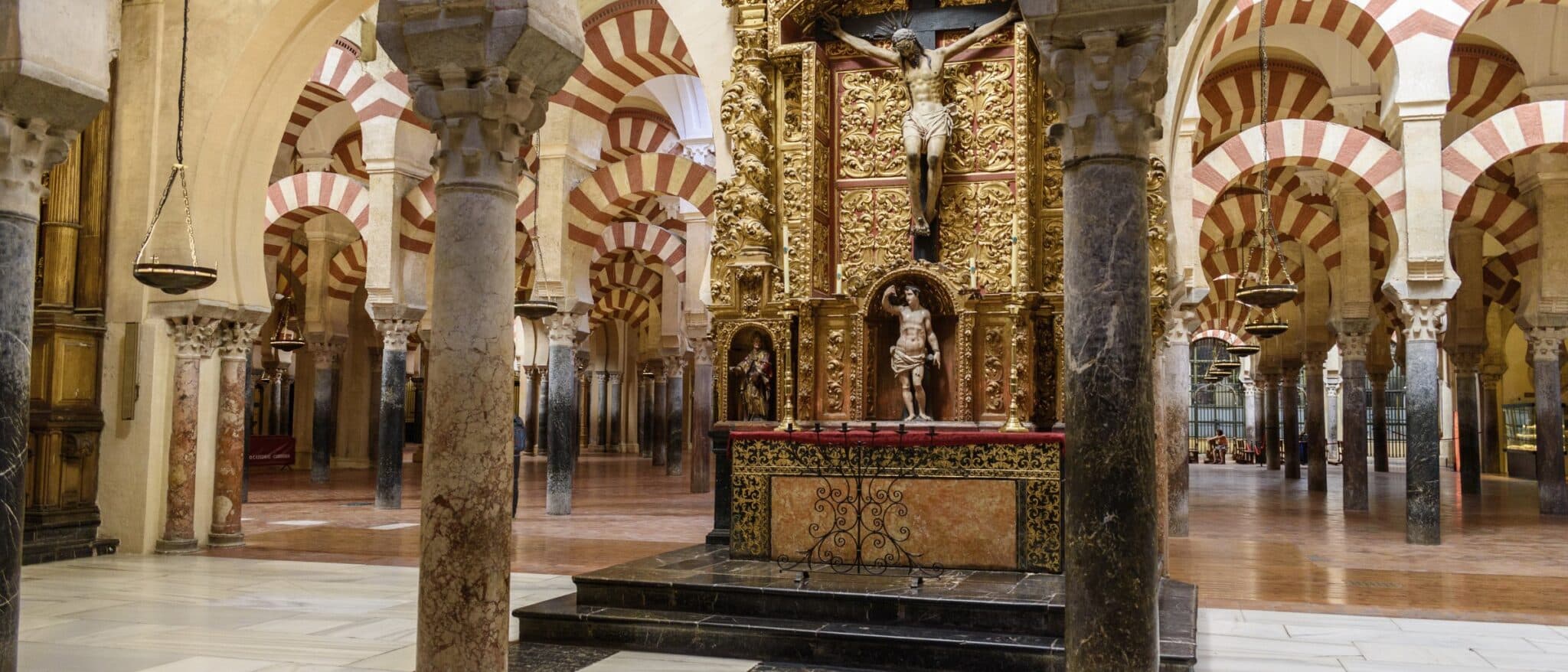
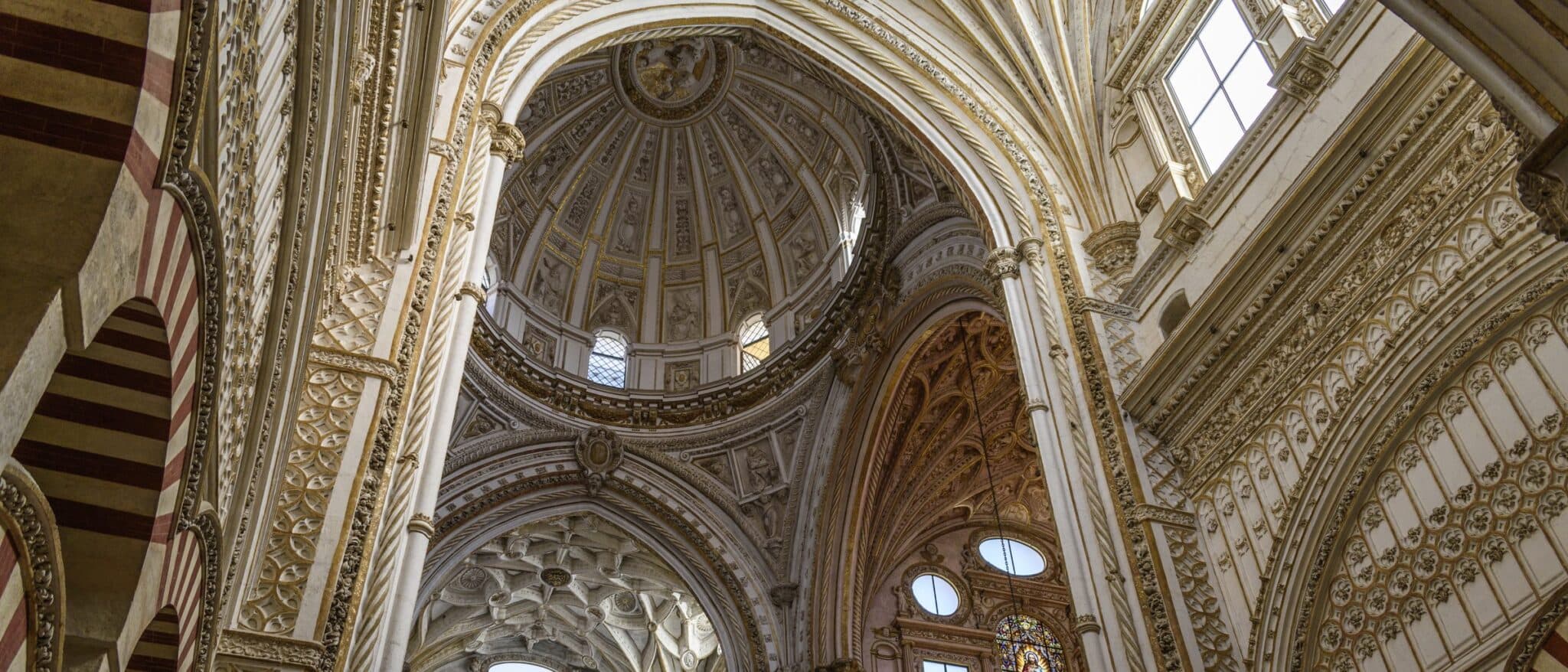
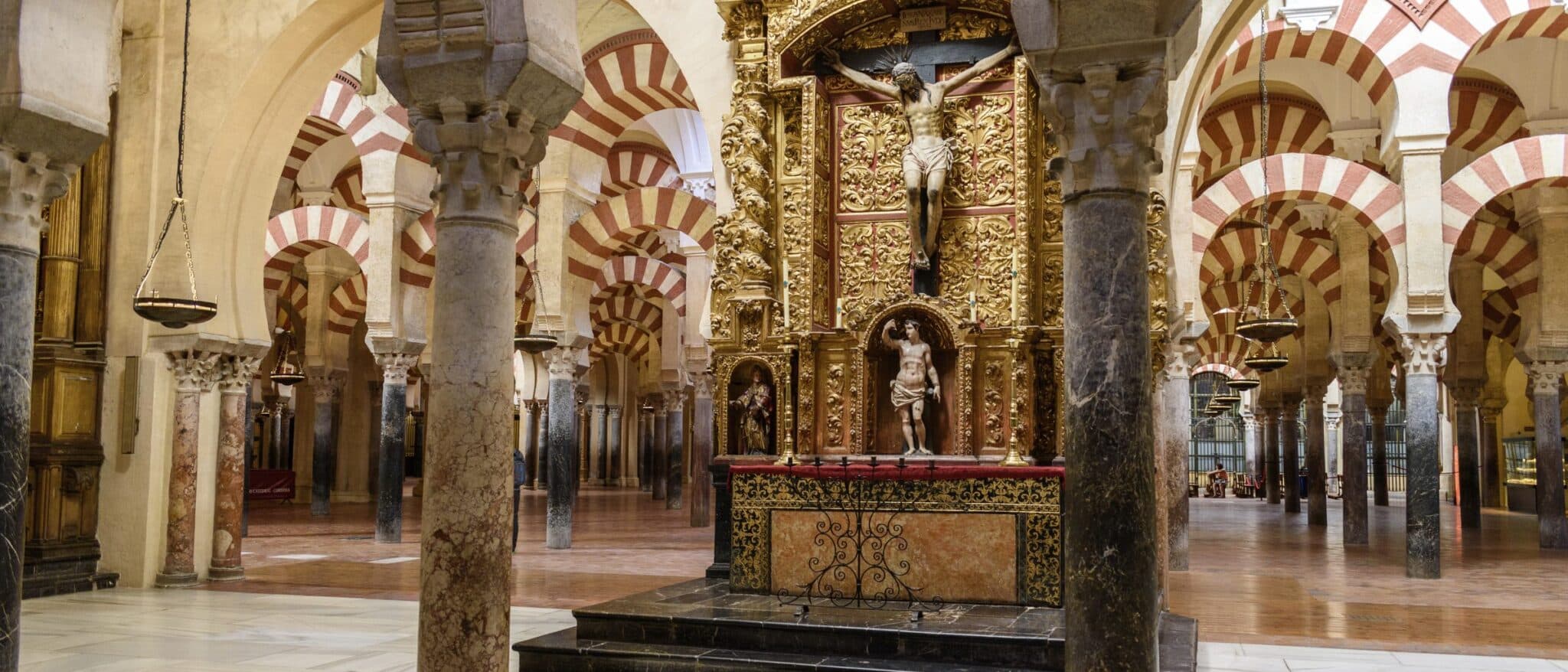
The unmissable. A 9th-century mosque — begun by Abd al-Rahman I in 785, expanded over 200 years to 856 columns — into which a full 16th-century cathedral was inserted by order of Charles V (who, on seeing the result, reportedly said: “You have destroyed something unique to build something ordinary”). Both structures are extraordinary; the collision between them is philosophically fascinating.
The interior is one of the great architectural experiences in the world: the double-tiered arches of alternating red brick and white stone, the forest of columns, the jewelled mihrab at the furthest end of the original mosque. Give yourself at least 90 minutes.
The Judería (Jewish quarter) (1 hour)
A maze of whitewashed alleys immediately west of the Mezquita. The 14th-century Sinagoga (one of only three surviving medieval synagogues in Spain) is small but significant — €0.30 entry. The Casa de Sefarad (Jewish heritage museum, €4) is excellent. The Zoco (artisan market in a former Moorish marketplace) has quality local crafts.
The Alcázar de los Reyes Cristianos (1 hour)
The Christian fortress built over a Moorish original, where Ferdinand and Isabella received Columbus in 1486. The gardens — formal Roman-style pools and fountains — are beautiful in spring. Entry €5.
Medina Azahara (optional, half day)
If you have a full day and a car (or take the tourist bus from the city), the Medina Azahara palace-city 8km west of Córdoba is extraordinary. Built by Abd al-Rahman III as the capital of the Caliphate of Córdoba in the 10th century, destroyed 70 years later, and only partially excavated. The scale and quality of the ruins are remarkable. €1.50 entry, UNESCO World Heritage Site.
Where to eat
Taberna Salinas (Calle Tundidores 3) — the classic Córdoba taberna. Salmorejo, flamenquín, rabo de toro. Booking recommended at lunchtime.
Casa Pepe de la Judería (Calle Romero 1) — in the heart of the Jewish quarter, reliable Cordoban classics and a pleasant patio. Tourist-facing but quality remains high.
Bodegas Mezquita (Calle Céspedes 12) — simple, honest bar food steps from the Mezquita. Cold beer, good jamón, no pretension.
Bar Santos (Calle Magistral González Francés 3) — famous for the tortilla española. Simple, standing bar, legendary omelette. Go for breakfast or a mid-morning stop.
The day trip plan (perfect timing)
6.50am: AVE from Seville Santa Justa
7.35am: Arrive Córdoba. Walk or taxi to the Mezquita.
8.30am–10.00am: Free entry to the Mezquita. Take your time — this is the highlight of the day and the best possible version of the visit.
10.00am: Walk into the Judería. Sinagoga, Casa de Sefarad, browse the Zoco.
12.00pm: Alcázar de los Reyes Cristianos and its gardens.
1.30pm: Lunch at Taberna Salinas (reserve ahead) or Bodega Mezquita for something more casual.
3.30pm–5.30pm: Wander the Roman Bridge, the riverside area, the old city. Or the Medina Azahara (requires car or tourist bus, check times).
6.00pm–8.00pm: Return to station. Trains back to Seville every 45 min.
In May: the Fiesta de los Patios
If your day trip falls in the first two weeks of May, Córdoba hosts one of its most extraordinary annual events: the Fiesta de los Patios. Private homeowners across the Judería and historic quarter open their flower-filled courtyard gardens for public viewing — free entry. The competition for the most beautiful patio is fierce; the results are genuinely breathtaking. Maps of open patios are available at the tourist office.
Is a day trip to Córdoba worth it?
Unequivocally yes. The 45-minute train ride is trivial; the Mezquita alone justifies the entire trip. Córdoba is consistently one of the most underrated stops on the Andalucia circuit — visitors who allocate a full day (or overnight) invariably say they wished they’d spent more time.
If your schedule allows a night in Córdoba instead of a day trip from Seville — do it. The Mezquita at 8.30am, the Medina Azahara in the afternoon, dinner in the Judería, and the old city at night is a complete experience.
More from Seville
Useful Resources
For official travel information about Andalucia, visit Renfe — Spanish national rail.
Related reading: Córdoba travel guide, Córdoba food guide.