 Travel
Architecture
Cordoba Mezquita
Cordoba Mezquita: Discovering the Jewel of Moorish Spain The Mezquita of Cordoba, also known as the Great Mosque-Cathedral, stands as a testament to the rich cultural tapestry of Andalusia. This architectural masterpiece, with its 1,036-year history, offers visitors a unique glimpse into the intertwining of Islamic and Christian heritage. A Journey Through Time Islamic Beginnings…
Cordoba Mezquita: Discovering the Jewel of Moorish Spain
The Mezquita of Cordoba, also known as the Great Mosque-Cathedral, stands as a testament to the rich cultural tapestry of Andalusia. This architectural masterpiece, with its 1,036-year history, offers visitors a unique glimpse into the intertwining of Islamic and Christian heritage.
A Journey Through Time
Islamic Beginnings
The story of the Cordoba Mezquita begins in 785 CE when Abderraman I, the first Umayyad Caliph of Cordoba, initiated its construction. The original mosque featured eleven naves aligned from north to south, incorporating elements from Roman and Visigoth structures. Its distinctive horseshoe arches and alternating stone and brickwork laid the foundation for what would become a hallmark of Islamic architecture in the region.
Expansion and Embellishment
Over the centuries, successive rulers expanded and enhanced the mosque:
- Hixem I added a minaret and galleries for female worshippers
- Abderraman II and III further expanded the prayer hall
- Alhaken II, in the 10th century, constructed additional naves and enlarged the courtyard[1]
These expansions not only increased the mosque’s size but also introduced new decorative elements influenced by various Islamic styles.
Christian Transformation
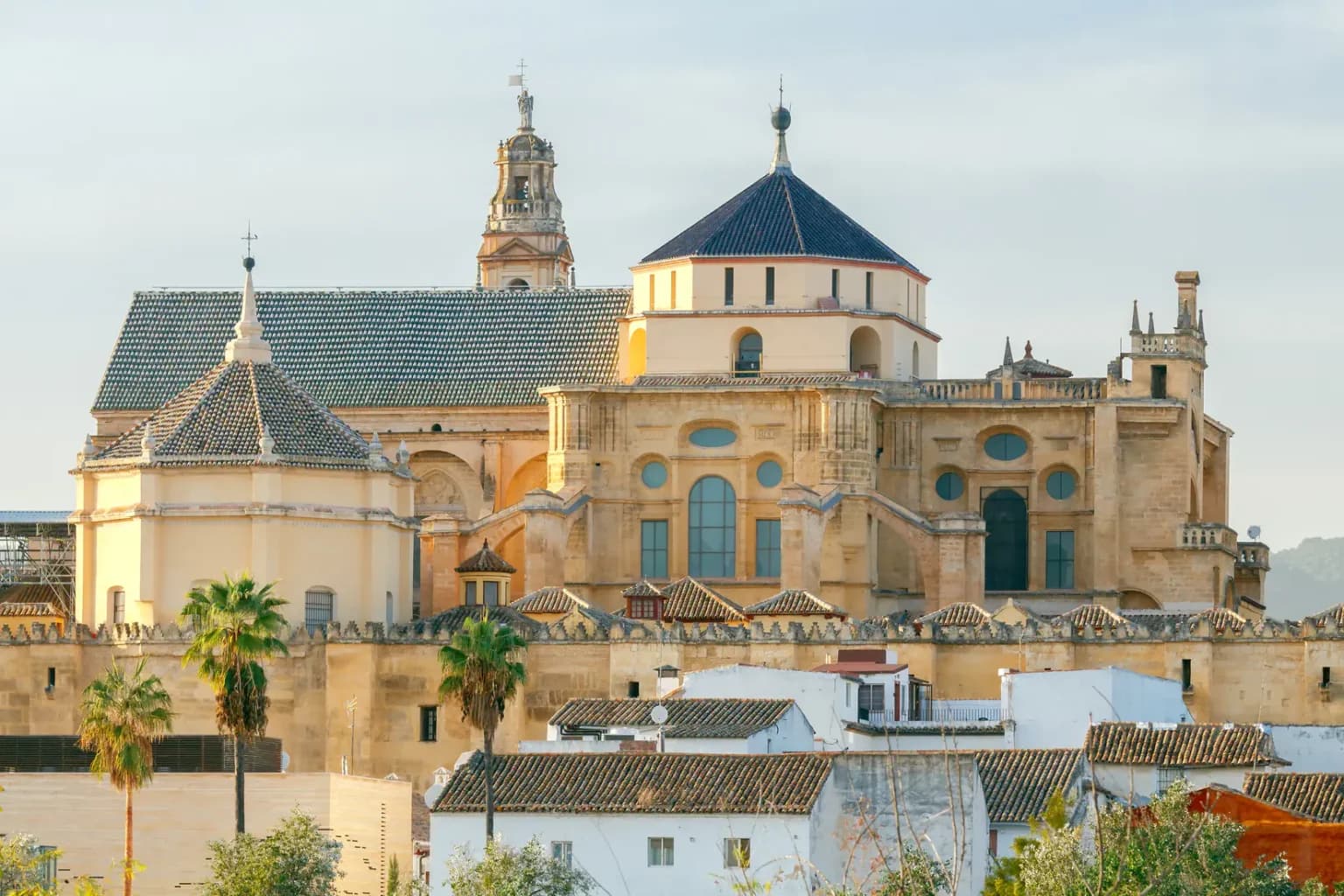
The Reconquista in the 13th century marked a turning point for the Cordoba Mezquita. The mosque was converted into a cathedral, initiating a fascinating fusion of architectural styles[2]. The most significant alteration came in the 16th century with the construction of a Renaissance cathedral nave and transept within the mosque’s structure[1].
Architectural Marvels
The Forest of Columns
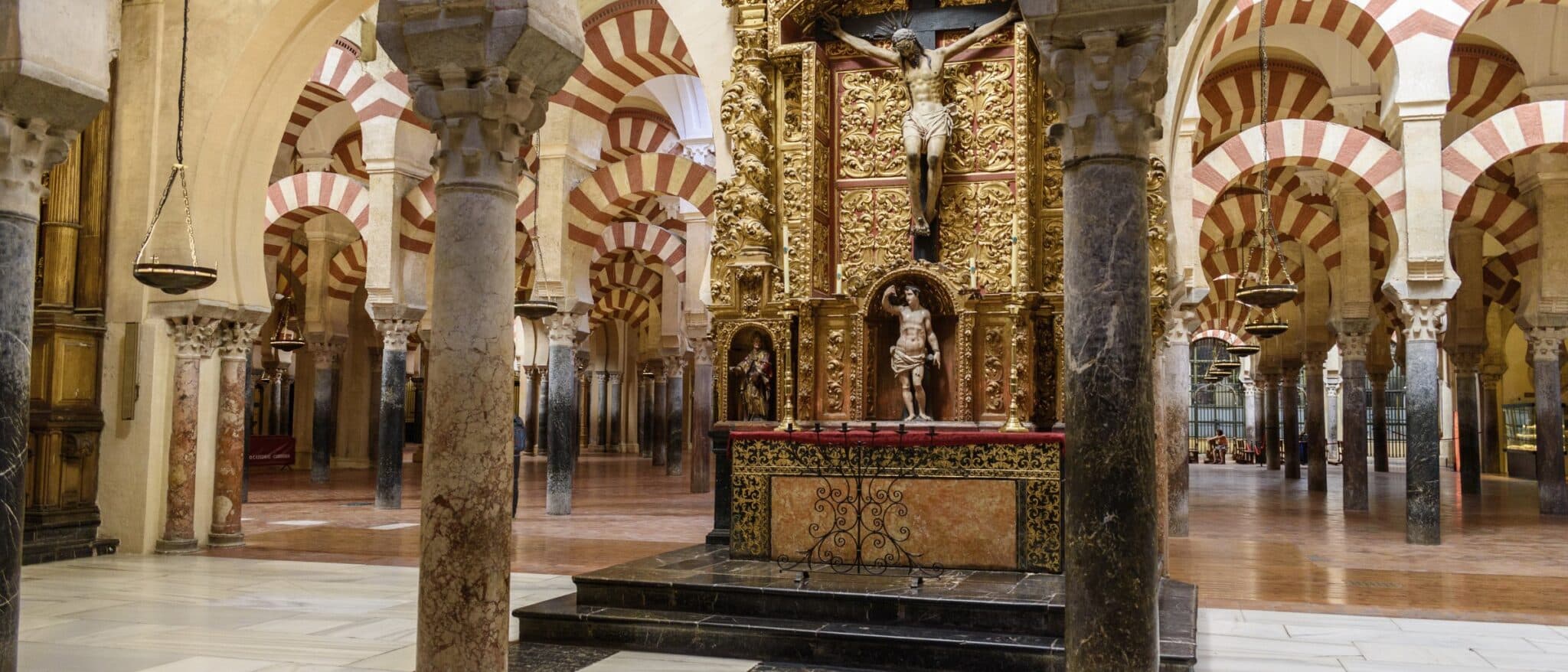
Upon entering the Cordoba Mezquita, visitors are greeted by a breathtaking sight: a vast hall filled with over 850 columns. These columns, crafted from jasper, onyx, marble, and granite, support a series of double arches – a lower horseshoe arch and an upper semicircular arch. This innovative design allowed for greater height while maintaining structural integrity.
The Mihrab
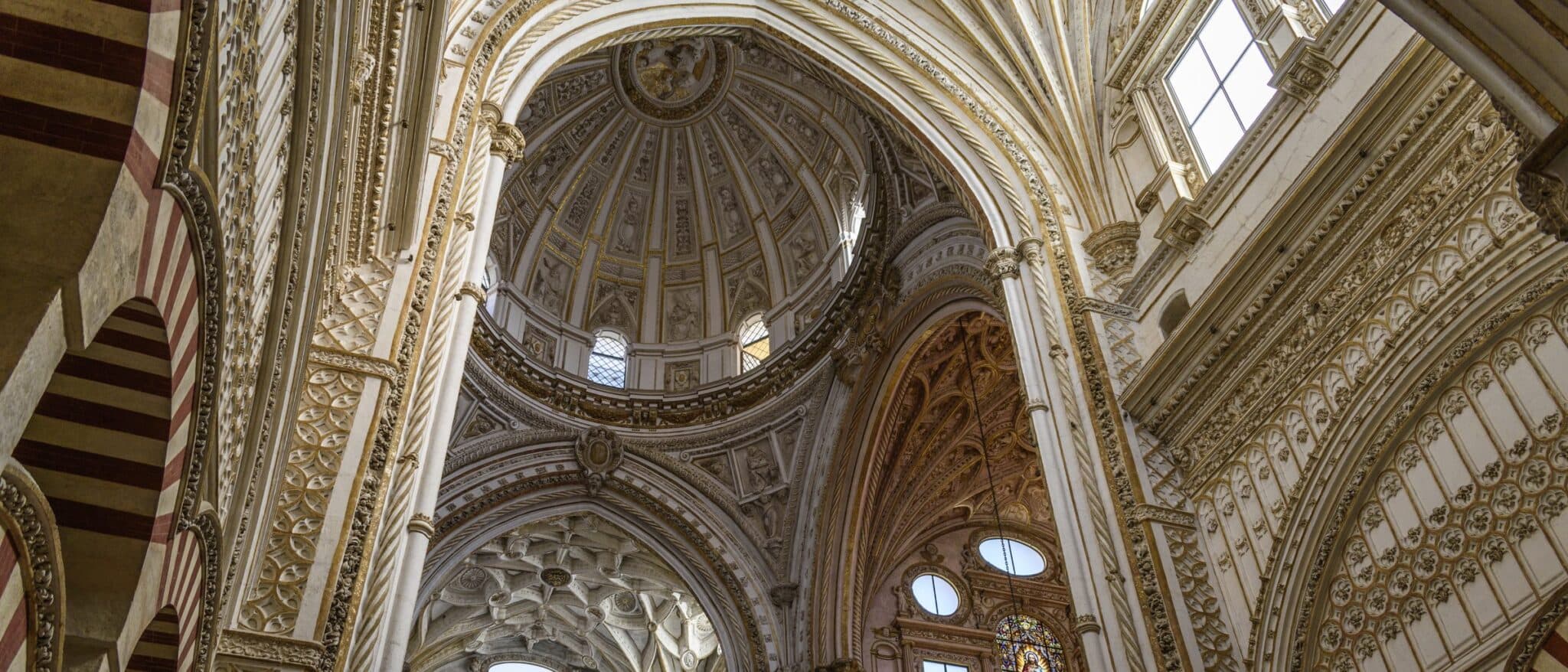
The mihrab, or prayer niche, is undoubtedly one of the Mezquita’s most stunning features. Adorned with intricate gold mosaics and calligraphy, it exemplifies the pinnacle of Islamic artistry. The space before the mihrab, known as the maksura, features a ribbed dome that presages Gothic vaulting techniques.
The Renaissance Nave
In stark contrast to the Islamic elements, the 16th-century cathedral nave rises at the heart of the Cordoba Mezquita. This addition, while controversial at the time, now serves as a unique example of architectural juxtaposition. The nave’s soaring ceiling and ornate choir stalls offer a dramatic counterpoint to the low-ceilinged Islamic prayer hall.
Visiting the Mezquita
Timing Your Visit
To fully appreciate the Cordoba Mezquita beauty, consider visiting early in the morning or late in the afternoon when the light filtering through the windows creates a mesmerizing effect. The site opens daily, with slightly reduced hours on Sundays and holidays[6].
Highlights Not to Miss
- The Bell Tower: Once a minaret, now encased in a Renaissance structure, offering panoramic views of Cordoba.
- Patio de los Naranjos: The orange tree courtyard, a tranquil space perfect for reflection.
- The Maksura: The area in front of the mihrab, featuring some of the most intricate decorations in the complex.
Nearby Attractions
After exploring the Cordoba Mezquita, take time to wander through Cordoba’s historic center, a UNESCO World Heritage site. The narrow, winding streets of the old Jewish quarter and the Roman Bridge over the Guadalquivir River are just a stone’s throw away.
A Symbol of Coexistence
The Mezquita-Cathedral of Cordoba is more than just a beautiful building; it’s a powerful symbol of cultural coexistence. The decision to build a cathedral within the mosque rather than demolish it entirely speaks to a complex history of conquest and reconciliation.
Today, the Cordoba Mezquita continues to serve as Cordoba’s cathedral, with daily masses held in the Christian areas of the building. This ongoing use adds another layer to the site’s rich tapestry, making it a living monument to the diverse heritage of Andalusia.
Preserving the Past, Embracing the Future
Conservation efforts in the 19th and 20th centuries have focused on studying and preserving the Mezquita’s Islamic elements while maintaining its function as a Christian place of worship. This delicate balance between preservation and use ensures that future generations can continue to marvel at this unique architectural fusion.
The Mezquita of Cordoba stands as a testament to the power of art and architecture to transcend cultural and religious boundaries. Its harmonious blend of styles, from Umayyad to Gothic and Renaissance, creates a space that is at once awe-inspiring and deeply moving.
For visitors to Andalusia, the Cordoba Mezquita is not just a stop on the tourist trail; it’s an opportunity to step into a living history book, where the pages of Islamic and Christian Spain are intertwined in stone and light.
As you walk among the forest of columns, gaze up at the intricate domes, or stand in quiet contemplation before the mihrab, you’re not just observing history – you’re experiencing the culmination of centuries of human creativity and spiritual devotion. The Mezquita of Cordoba is more than a monument; it’s a bridge between cultures, a reminder of our shared heritage, and an enduring symbol of the beauty that can emerge when different traditions come together in harmony.