 Travel
Cities
Setenil de las Bodegas: Travel Guide (2026)
A guide to Setenil de las Bodegas — the white village built into the rock. What to see, where to eat, and how to visit from Ronda.
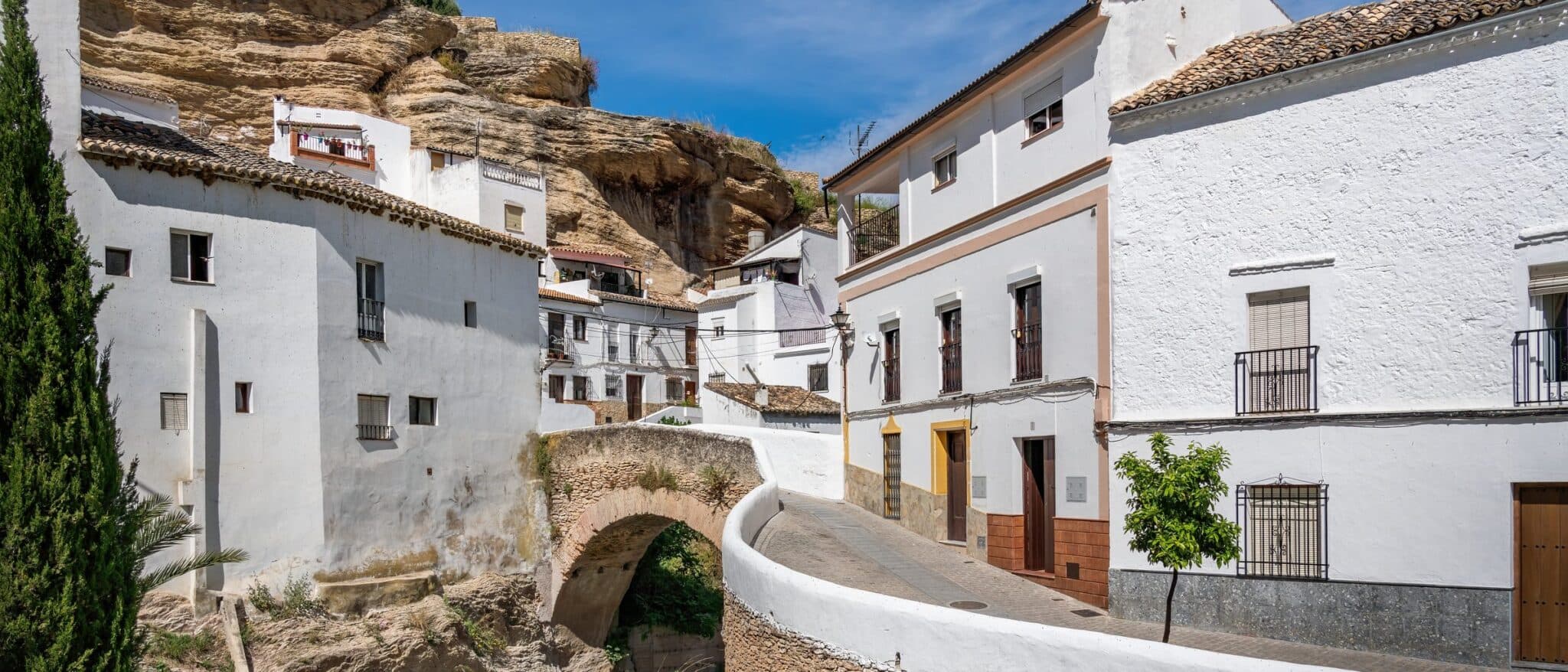
Setenil de las Bodegas is unlike any other village in Andalucia: its streets, bars, and houses are built directly beneath an overhanging rock ledge that forms the ceilings of an entire neighbourhood.
Setenil De Las Bodegas: Key Planning Points
Setenil de las Bodegas is the strangest village in Andalucia. Houses are built directly into — and under — the overhanging volcanic rock walls of the Guadalporcún river gorge. Streets run in the shade of massive cliff overhangs with rock ceilings just above the rooftops. Residents live beneath the earth while remaining in the sunlight. It makes no architectural sense and is completely wonderful.
This setenil de las bodegas guide covers everything you need to know for your trip.
Most visitors come from Ronda (20 minutes away) and spend a few hours. That’s enough — but those hours are memorable.
What makes Setenil unique
The settlement has been here since at least the Moorish period (the name comes from Arabic Sitinyal, though the etymology is debated). The Romans may have occupied the site earlier. The fundamental logic of building under the overhanging rock was simple: natural shelter, thermal insulation (the rock stays cool in summer and holds warmth in winter), and a defensible position against the cliff.
What’s extraordinary is that this arrangement survived centuries, grew into a proper functioning town, and continues today. The residents who live in the cave-houses have electricity, internet, and satellite dishes. The cliff ceiling is just a fact of their living room.
What to see and do
Calle Cuevas del Sol and Calle Cuevas de la Sombra
The two main gorge streets — Calle Cuevas del Sol (Sun Caves Street) faces south and catches afternoon light; Calle Cuevas de la Sombra (Shade Caves Street) is on the north-facing wall and stays cool all day.
Walk both streets slowly. Look up at the rock ceiling above the buildings — the overhang is sometimes only a metre above the rooftop, sometimes five or six metres, forming different scales of tunnel along the street. Some of the houses have the rock face as their back wall; others are built entirely under the overhang.
The castle ruins
At the top of the village, the ruins of the Moorish castle and watchtower offer views across the gorge and the surrounding olive and almond countryside. The castle resisted eight Christian sieges before finally falling to Ferdinand and Isabella in 1484 — just eight years before the fall of Granada. The climb takes 20 minutes from the gorge streets.
The church of La Villa
The 15th-century church at the top of the village, built after the Christian reconquest. Modest interior but the views from the plaza in front of it — across the rooftops and down into the gorge — are excellent.
The old town beyond the gorge streets
Beyond the famous cave streets, Setenil is a normal Andalusian village — white houses, a central plaza, a market square. Worth a 20-minute wander to get beyond the tourist circuit.
Where to eat and drink
Bar Frasquito
Calle Cuevas de la Sombra (the shade side of the gorge)
The essential Setenil experience. A small bar built into the cliff face — the back wall is raw volcanic rock. Order local wine (vino de la tierra) or a cold beer and sit on the terrace as the late afternoon light turns the rock golden. The tapas (jamón, montaditos, cheese) are simple and honest.
Bar Palmero
Calle Cuevas del Sol
The sun-side counterpart — slightly more touristy but reliable. Famous for the tagarninas (wild thistle, a local speciality cooked with egg and jamón). Good tostas (open-faced sandwiches).
Restaurante El Almendro
Plaza de Andalucía
The most serious restaurant in Setenil — a proper sit-down meal rather than a tapas bar. Wild boar, venison, and mountain goat from the sierra; local olive oil; excellent wine list featuring Serranía de Ronda denominations. Reserve ahead on weekends.
Getting there
By car from Ronda: 21km, 25 minutes. Take the A-374 east from Ronda, then the CA-9103 north to Setenil. Straightforward and well-signposted.
By car from Málaga: 1h 45min via the A-357 and A-374. Easy day trip from the Costa del Sol.
By car from Seville: 2h 15min via the A-92 and A-374. Long day trip — combine with Ronda to make it worthwhile.
By public transport: Difficult. There is a bus connection from Ronda (1–2 per day, not on weekends) — check current Damas/Comes timetables. No direct connection from major cities. A taxi from Ronda costs €25–€30 each way.
Parking: Follow signs to the designated car park just outside the village (free or €2–€3/day). Do not attempt to drive into the village itself — the gorge streets are pedestrian only and the upper streets are too narrow for standard cars.
When to visit
Best time of day: Late afternoon (4–7pm) — the light is warmest, the day-tripper coaches have left, and the rock faces glow amber. Bar Frasquito is at its best with the setting sun on the shade-side cliffs.
Best season: Spring (March–May) for wildflowers in the surrounding countryside. October for thin crowds. Any time of year works — the cave streets are cool in summer (the overhanging rock blocks direct sun) and protected from winter rain.
Avoid: Midday in high summer (too crowded, too hot on the open upper streets) and Sunday lunchtimes (busy with Spanish day-trippers from Seville and Málaga).
How long to spend
Two hours is the comfortable minimum for the gorge streets, the castle climb, a drink at Bar Frasquito, and a walk through the upper village. Three hours allows a proper lunch. Setenil doesn’t reward an overnight stay — the village is tiny and the evening is quiet; better to sleep in Ronda.
Combining Setenil with other villages
Setenil + Ronda (1 day): The classic combination. Base in Ronda, morning in Setenil (25 min drive), afternoon back in Ronda for the gorge and old town.
Setenil + Olvera + Zahara + Grazalema (2 days): The full white village circuit. Drive from Ronda to Setenil → Olvera → Zahara → Grazalema → back to Ronda. Sleep in Grazalema or Zahara on night 2.
For the full circuit route with distances: Pueblos Blancos Road Trip Route
Practical information
- Entry: Free — the village and all streets are public
- ATM: One at the main square — bring cash for the smaller bars
- Toilets: Public facilities near the main car park
- Tourist office: Small office on the main plaza (limited hours; pick up a village map)
- Signal: Reasonable in the village centre; unreliable in the deep gorge sections
Useful Resources
For official travel information about Andalucia, visit Andalucia — Spain Tourism.
Related reading: Pueblos Blancos road trip, Ronda travel guide.