 Travel
Cities
Ronda Travel Guide: Everything You Need to Know (2026)
A complete Ronda travel guide — the Puente Nuevo, La Ciudad, the bullring, the gorge walks, and how to get there from Seville and Málaga.
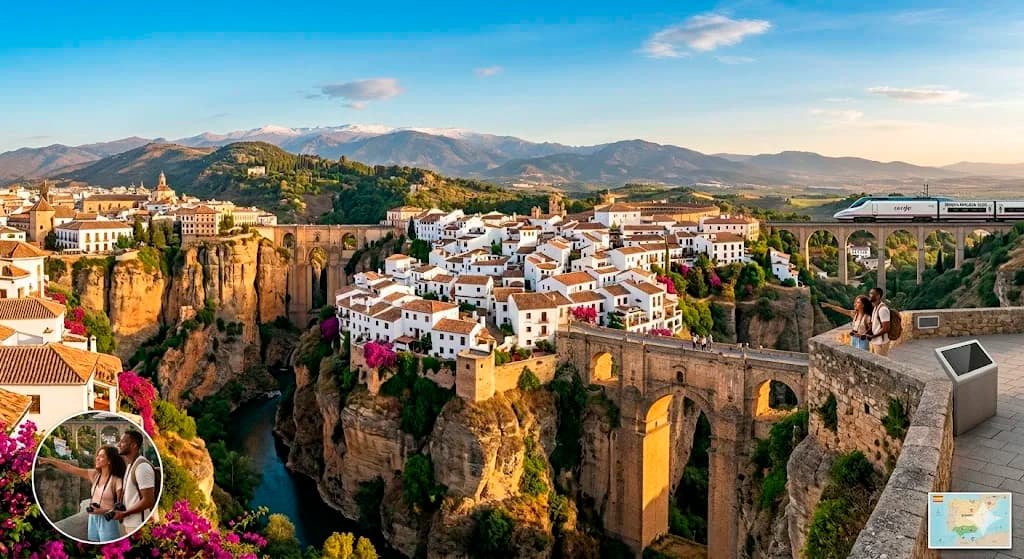
This Ronda travel guide covers one of the most dramatically situated towns in Spain — perched 120 metres above a river gorge in the mountains of Málaga province, connected to the coast by a scenic mountain railway.
Ronda Travel Guide: Key Planning Points
Ronda stops you. You round a bend on the mountain road and there it is — a city balanced on the edge of a 120-metre gorge, two halves of an ancient town connected by a single extraordinary bridge, the whole thing suspended above thin air. The photographs don’t quite do it. The reality does.
This ronda travel guide guide covers everything you need to know for your trip.
Use this ronda travel guide resource to plan each stage of your visit to Andalucia.
Ronda is the most visited of Andalucia’s white villages and with good reason: it has the gorge drama, a beautifully preserved old Moorish town, Spain’s most romantic bullring, and some of the best restaurants and hotels of any small city in southern Spain.
The Puente Nuevo and the gorge
The Puente Nuevo (New Bridge) was completed in 1793 after 42 years of construction — the previous bridge collapsed, killing 50 workers. The central arch spans 98 metres above the Guadalevín river at the bottom of the El Tajo gorge. It’s the defining image of Ronda and genuinely as dramatic in person as the photographs suggest.
The best views are not from the bridge itself. Walk down to the Camino de los Molinos — a path that descends from near the Puente Viejo (the older bridge downstream) into the gorge. Looking up at the Puente Nuevo from below, with the gorge walls rising on either side, is more dramatic than any view from the top.
From the bridge itself: the easiest viewpoints are from the Parador terrace (open to non-guests for drinks — worth it), the Jardines de Cuenca park on the north side, and the small balconies at the southern end of the bridge. All are free.
Inside the bridge: a small museum is housed in the bridge’s interior chamber — once a prison, later a torture chamber during the Civil War. Entry €2.50. Worth 30 minutes for the context and the views through the original windows.
The old town (La Ciudad)
Ronda is divided into two halves: the Mercadillo (the newer town, north of the gorge — where most accommodation and transport sits) and La Ciudad (the old town, south of the bridge — the Moorish and Christian historic quarter).
Cross the Puente Nuevo and walk south into La Ciudad for:
Palacio de Mondragón — the most impressive palace in Ronda, built in the 14th century as the Moorish ruler’s residence. Now the Municipal Museum, with good archaeological collections and a formal garden terrace with gorge views. €4 entry.
Casa del Rey Moro (House of the Moorish King) — a misnomer (it’s 18th century, not Moorish), but the gardens and the dramatic water mine descending to the river via 365 steps cut into the gorge wall are genuinely historic. €8 entry.
Santa María la Mayor — the main church, converted from the mosque of a Moorish sultan. The minaret was kept and converted to a bell tower. Inside, the original mihrab (prayer niche facing Mecca) is visible. €5.
Baños Árabes — the Arab Baths on the edge of La Ciudad, well-preserved from the 13th–14th century. The horseshoe arches and star-shaped skylights are characteristic Nasrid architecture. €4.
Plaza de Toros (bullring)
Ronda’s Plaza de Toros (1785) is the oldest active bullring in Spain and widely considered the most architecturally beautiful. Even visitors with no interest in bullfighting appreciate the Baroque elegance of the sandstone arena and the museum inside.
The Museo Taurino traces the history of the Corrida Goyesca — the annual bullfight held in September in period costume from the era of Goya and Pedro Romero (Ronda’s most celebrated matador, who codified the modern rules of bullfighting here in the 18th century). The museum includes the ceremonial capes, photographs, and memorabilia of two centuries of toreros.
Entry: €8. Open daily 10am–8pm (shorter in winter).
Eating and drinking in Ronda
Ronda’s restaurant scene is good by white village standards — benefiting from the city’s size and the proximity to excellent local produce (goat’s cheese, wild boar, venison from the sierra, and local wine from the Serranía de Ronda denomination).
Restaurante Almocábar — consistently the best-regarded restaurant in Ronda. Traditional Andalusian cooking with a modern sensibility; beautiful courtyard. Reserve ahead in season.
Bardal — the serious restaurant. Two Michelin stars. Chef Benito Gómez’s tasting menus showcase the produce of the Sierra with genuine ambition. Expensive (€120–€140 tasting menu) and advance booking essential, but extraordinary for a special occasion.
Taberna El Lechuguita — for unpretentious tapas at the bar. Rabo de toro (oxtail stew), solomillo al whisky (pork tenderloin), local ibérico ham. Cheap, local, excellent.
Bodega San Francisco — old-school wine bar in a converted bodega. Serranía de Ronda wines by the glass, cheese and ham boards. Perfect late afternoon stop.
Café Bar Faustino — the breakfast institution. Tostada con aceite y tomate (toasted bread with olive oil and tomato pulp) and a café con leche. Standing room only at 8am.
Day trips from Ronda
Ronda is an excellent base for the white village circuit:
- Setenil de las Bodegas: 20 min drive. The rock-overhang village — houses built under overhanging cliff. Unmissable.
- Grazalema: 30 min. Sierra Natural Park village with wildflower countryside.
- Zahara de la Sierra: 45 min (via Grazalema or direct). Castle and reservoir views.
- Olvera: 45 min north. Large white village with impressive castle and church.
For the full white village route from Ronda, see our Pueblos Blancos Guide.
How to get to Ronda
By train: The Algeciras–Antequera narrow-gauge line passes through Ronda — one of the great scenic railway journeys in Spain. Trains from Málaga (2h, from €12, 3–4 daily), from Algeciras (1h 45min), and from Granada (3h+ with changes, less practical). Book at renfe.com.
By bus: Damas/Comes buses from Seville (2h 30min, from €12), Málaga (1h 45min, from €10), and Cádiz (2h, from €12). Less comfortable than the train but sometimes more convenient.
By car: From Málaga: A-357 to Campillos, then A-367/A-374 (1h 40min). From Seville: A-92 to Osuna, then A-92M and A-374 (1h 45min). From Granada: A-92 to Loja, then A-384 (2h 30min via Campillos).
Parking in Ronda: Parking Plaza de España (underground, €10/day) and Parking Alameda are the two most central options. Book a hotel with parking if you can — street parking in the historic centre is scarce.
Where to stay in Ronda
Parador de Ronda — the most famous hotel in town, dramatically positioned on the gorge edge next to the Puente Nuevo. The terrace is the best view in Ronda. Prices: €180–€280/night in season.
Hotel Montelirio — a 16th-century mansion on the gorge edge, smaller and slightly less expensive than the Parador but equally dramatic. Prices: €120–€200/night.
Hotel Catalonia Ronda — solid 4-star in the Mercadillo, with pool and comfortable rooms. Prices: €100–€160/night.
Hotel San Gabriel — elegant 18th-century mansion in La Ciudad. Great breakfast, central old-town location. Prices: €90–€140/night.
Hostal San Francisco — the best budget option. Clean, central (Mercadillo), family-run. Prices: €45–€75/night.
When to visit Ronda
September: Ronda’s finest month. The annual Corrida Goyesca (bullfight in 18th-century costume) takes place in the first week, combined with a flamenco festival and cultural programme. The city is in full swing but not overwhelmingly busy.
April–June: Beautiful countryside, full spring blooming. Busy during the day with day-trippers, but quieter overnight.
October: My personal recommendation — thin crowds, beautiful light, and the sierra countryside in harvest mode.
July–August: The mountain altitude keeps Ronda cooler than the lowlands, but the day-tripper crowds from Málaga and the Costa del Sol are at their peak. Stay overnight and have the old town to yourself after 7pm.
Practical information
- Entry to the historic old town (La Ciudad): free to walk
- Must-book in advance: Bardal restaurant (weeks ahead), Parador (especially in Goyesca week)
- ATMs: Several in the Mercadillo; fewer in La Ciudad
- Pharmacies: On Calle Espinel (main commercial street, Mercadillo)
- Tourist office: Plaza de España 9, useful for maps and current opening hours
Plan your Ronda visit
- For fitting Ronda into a larger itinerary: see our 7-Day Andalucia Itinerary
- For the white village circuit from Ronda: see our Pueblos Blancos Guide
- For Setenil specifically: see our Setenil de las Bodegas Guide
Useful Resources
For official travel information about Andalucia, visit Ronda — Spain Tourism.
Related reading: day trips from Málaga, Pueblos Blancos road trip.