 Travel
Blog
Semana Santa in Andalucia: The Complete Guide (2026)
Everything about Semana Santa in Andalucia — the best processions in Seville, Málaga, and Granada, and how to plan your visit.
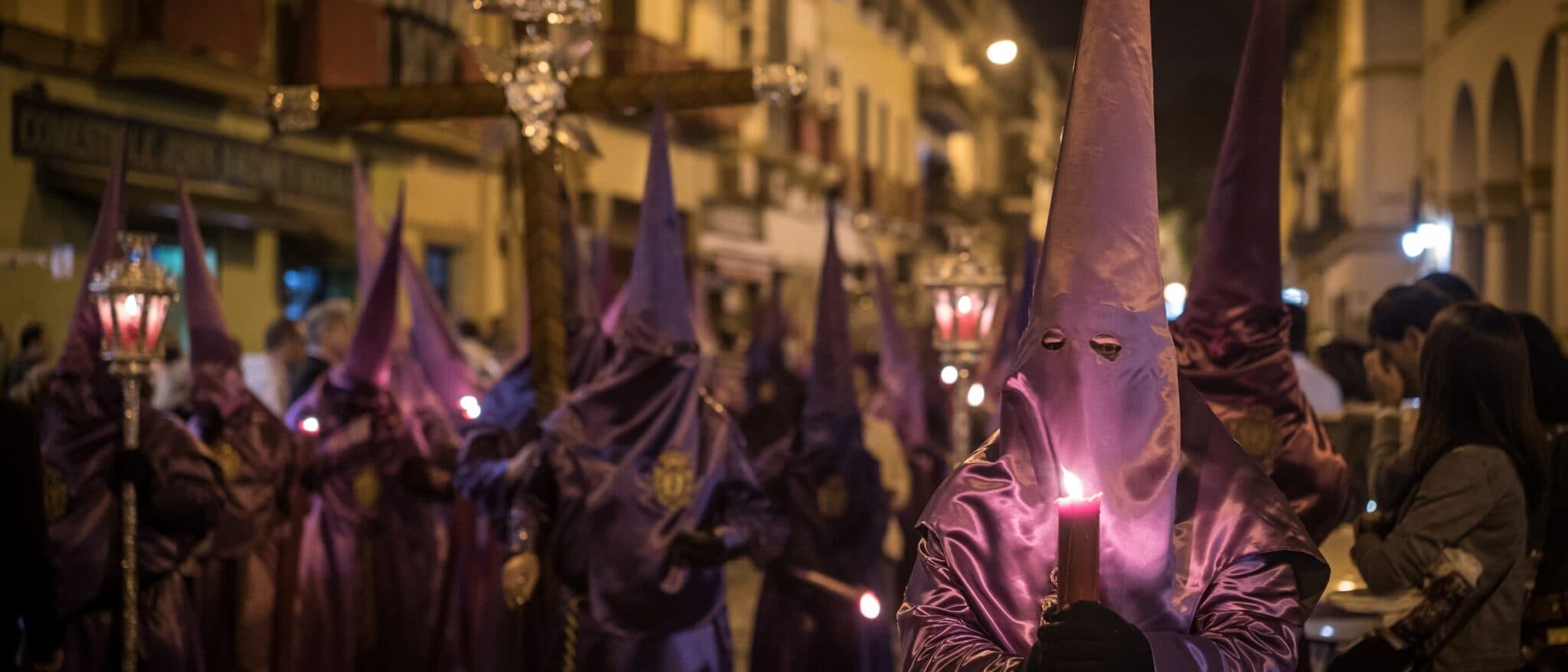
Semana Santa in Andalucia is the most spectacular Holy Week celebration in Europe — a week of candlelit processions, baroque floats, and ancient brotherhoods that transforms every city centre.
Semana Santa Andalucia: Key Planning Points
Semana Santa — Holy Week — is the most extraordinary public event in southern Spain and one of the great cultural spectacles of Europe. For ten days before Easter, the cities of Andalucia transform. Hooded brotherhoods carry ornate floats through narrow streets lit by thousands of candles. Flamenco prayer-songs (saetas) cut through the night air from balconies above the processions. The smell of incense hangs over the streets for days.
This semana santa andalucia guide covers everything you need to know for your trip.
Use this semana santa andalucia resource to plan each stage of your visit to Andalucia.
Our semana santa andalucia page is updated for 2026 with the latest practical information.
It is deeply religious, intensely theatrical, and completely unlike anything else you will experience in Spain.
When is Semana Santa 2026?
Palm Sunday (start): 29 March 2026
Easter Sunday (end): 5 April 2026
The key processions in most Andalusian cities run from Palm Sunday through Good Friday (the most intense days). Easter Saturday is quieter; Easter Sunday has the Resurrection procession.
What is Semana Santa?
Semana Santa marks the Passion, death, and resurrection of Jesus Christ. In Andalucia, it’s observed through procesiones — street processions organised by hermandades (brotherhoods and sisterhoods), religious confraternities that have existed for centuries.
Each hermandad has:
– Pasos — ornate floats carrying life-sized sculptures of religious scenes (typically a paso depicting Christ on the cross or carrying the cross, and a paso of the Virgin Mary). The pasos can weigh several tonnes and are carried on the shoulders of teams of men (costaleros) working in total darkness under the float, guided by drum beats from the capataz (foreman).
– Nazarenos — the hooded penitents who walk in the procession. The pointed hood and full-length robe worn by nazarenos is visually startling to visitors unfamiliar with its context — it is a Catholic penitential costume predating the KKK by centuries and has no connection to it.
– Música — each procession has its own band playing marchas procesionales (processional marches). The music ranges from solemn orchestral pieces to the extraordinary bandas de cornetas y tambores (brass and drum bands) whose sound is uniquely Andalusian.
Semana Santa by city
Seville
The most famous, the most elaborate, and the most emotionally overwhelming. Seville has around 60 hermandades, each with their own paso, route, and tradition. The processions last up to 12 hours.
The Madrugá (the early hours of Good Friday morning) is the climax of the entire week — six of Seville’s most revered hermandades (El Silencio, El Gran Poder, La Macarena, El Calvario, Los Gitanos, and La Esperanza de Triana) make their way to the Cathedral through packed streets in near-complete silence broken only by music and the occasional saeta from a balcony above. It is one of the most powerful things you can witness.
Practical: Crowds are enormous. Book accommodation 9–12 months ahead. Prices triple. The official viewing stands along the procession route to the Cathedral can be booked through the Junta de Hermandades — book early, cost €30–€80 per seat.
Málaga
Málaga’s Semana Santa is the second most visited in Andalucia and arguably the most spectacular in terms of pure visual impact. The Málaga tradition emphasises the size and artistic quality of the pasos — some of the largest and most richly carved in Spain — and the quality of the orchestras. The Legión brotherhood’s procession on Good Friday, with its own military band playing the famous Novio de la Muerte, is extraordinary.
Practical: Slightly less crowded than Seville, somewhat more accessible. Book 3–6 months ahead. The seafront Alameda Principal is a good free viewing spot.
Granada
Granada’s Semana Santa has a different feel — smaller, more intimate, with the backdrop of the Alhambra and the Albaicín giving the processions a uniquely layered historical atmosphere. The Silencio procession on Holy Wednesday through the Albaicín streets at night is considered one of the most atmospheric in Spain.
Practical: More accessible than Seville or Málaga — accommodation and tickets easier to find. Good for first-timers who want the experience without the extremes of the Seville crowds.
Córdoba
Smaller scale but intense quality. Córdoba’s hermandades have refined their traditions over centuries. The Prendimiento (arrest of Christ) paso is widely considered one of the finest sculptural achievements in Spanish religious art. The processional routes through the Judería are particularly beautiful.
Cádiz and Jerez
Cádiz’s Semana Santa comes just weeks after its legendary Carnaval — the emotional contrast (outrageous satire followed by profound religious solemnity) is characteristically Gaditano. Jerez has several important hermandades and is less visited than Seville, making it a good alternative for those who want an authentic experience without the crowds.
What to expect as a visitor
Processions are free to watch from the streets. You simply find a spot along the published route and wait. The processions move slowly — a full hermandad with both pasos can take 30–45 minutes to pass a given point.
Viewing stands (palcos and sillas) are rented along the main routes, particularly near the Cathedral in Seville. Prices range from €15–€80 per seat depending on location and day. These are worth it for the Madrugá in Seville — standing for 6 hours in a crowd is exhausting; a seat gives you a proper view.
Timing: Published route and timing guides are available from tourist offices and local newspapers. Processions don’t always run to schedule — the capataz sets the pace and a paso can pause for a saeta, a technical difficulty, or to wait for the crowd. Build flexibility into your evening plans.
Dress: Respectful but not formal. Spaniards dress up for Semana Santa (especially in Seville), but visitors in smart casual are fine. Don’t wear beach clothes or shorts.
Saetas: The most moving moments of Semana Santa are spontaneous — a singer on a balcony above the procession breaks into a saeta (a type of flamenco prayer-song) as the paso passes beneath. The procession stops. The crowd falls silent. The music stops. Only the voice, cutting through the night. This cannot be scheduled or planned for; it simply happens.
Practical tips
- Book accommodation early. For Seville: 9–12 months. For Málaga, Granada: 3–6 months.
- Prices double or triple in all Andalusian cities during Semana Santa.
- Trains and buses are packed. Book transport in both directions as early as possible. Renfe releases AVE seats 60 days ahead.
- Streets close for hours. Major roads through city centres are closed whenever a procession is moving. Allow extra time for any journeys.
- Download the official Semana Santa app for Seville or your city — real-time procession tracking and route maps.
- For the Madrugá in Seville: bring a coat (it gets cold at 3am), comfortable shoes, water, and patience. Find a position before midnight.
2026 dates and key processions (Seville)
Procession schedules for 2026 are published by the Consejo General de Hermandades y Cofradías de Sevilla around January 2026. Key dates to know:
- Palm Sunday (29 March): La Borriquita (the entry into Jerusalem), traditionally the most joyful procession
- Holy Wednesday: Several major hermandades
- Holy Thursday (Maundy Thursday): Long processions, first of the all-night marathons
- Good Friday Madrugá (3–4 April, beginning midnight): The six most revered hermandades; the emotional peak of Semana Santa
- Good Friday afternoon: The most solemn processions of grief
- Easter Sunday: The Resurrection — the joyful conclusion
Plan your Semana Santa visit
- For Seville hotels: book at least a year ahead through the official Semana Santa dates
- For the full Seville itinerary around Semana Santa: see our 7-Day Andalucia Itinerary
- For the best time to visit more generally: see our Best Time to Visit Andalucia
Useful Resources
For official travel information about Andalucia, visit Semana Santa — Spain Tourism.
Related reading: Andalucia in spring, best time to visit Andalucia.