 Travel
December in Huelva: the 15th of the month decides the dehesa
Spanish law makes 15 December both the last day a pig may enter montanera and the first day of the slaughter window. Plus the latest sunrise in Andalucía and the oldest living nativity in the region.
Huelva has the latest sunrise in Andalucía, and in December it is late enough to notice. The sun comes up at 08:23 on the 1st and 08:42 on the 31st — later than anywhere else in the region, and later than most people would guess for the south of Spain. Huelva is the westernmost capital, nineteen minutes behind Almería on the same clock.
The other thing about a Huelva December is a date: 15 December. On that day the dehesa stops filling and starts emptying, because Spanish law says so. It is the hinge of the Iberian pig year, it happens in no other month, and almost nobody writes about it.
What the weather actually does
Huelva’s Ronda Este station averages 16.9°C by day and 7.6°C at night in December, with 99mm of rain across 7.9 rain days, 1.4 thunderstorm days and 0.5 frost nights. Sunshine: 151 hours. AEMET’s normals for this station run 1984–2010 rather than 1981–2010, and AEMET states that itself.
December is Huelva’s wettest month of the year, up 20mm on November. The daytime figure of 16.9°C is identical to Cádiz’s and Jerez’s — the Atlantic southwest converges almost exactly by day in December — but Huelva’s nights sit 3.3 degrees below Cádiz’s, because the city is a few kilometres back from the open ocean on a river estuary.
The record is dominated, like most of the region’s, by December 1996: 386.2mm across the month, nearly four times normal. The driest December produced nothing at all, in 1993. Inland is a different province: the Sierra de Aracena sits between 600 and 900 metres and in December it is cold, wet and frequently fogged in. That is exactly what the ham needs, but it does make the sierra villages a winter destination rather than a mild one.
Which week to book
The first weekend if you want the sierra at full tilt, the third if you want it to yourself.
Saturday 5 to Tuesday 8 December is four consecutive non-working days across Spain — 6 December falls on a Sunday in 2026, so the Constitution holiday moves to Monday the 7th, with the Inmaculada on the Tuesday — and the Sierra de Aracena’s December fairs are built around exactly that bridge. Fuenteheridos’ chestnut fair, the belenes, the village markets all cluster there, and so does every car in the province, on narrow roads into villages with no parking.
A warning for the end of the month: San Silvestre de Guzmán has a local holiday on 31 December, the only municipality in all of Andalucía that does. Everywhere else, New Year’s Eve is a working day.
What is on in December 2026
- Selected days through December (expected) — the Belén Viviente de Beas, the oldest living nativity in Andalucía, in its 56th edition. Critically, it opens on selected days only, not daily — last season about a dozen, clustered on the weekends and on 6, 8, 25, 27 and 28 December, with afternoon hours on Saturdays and both morning and afternoon on Sundays. The 2026 calendar had not been officially published when this was written.
- Around the 5–8 December bridge (expected) — the Feria de la Castaña at Fuenteheridos, the province’s chestnut fair. Documented editions have run 7–10 December, 8–10 December and the weekend of 5–7 December in different years, always around the Inmaculada. The ayuntamiento had not published 2026 dates when this was written.
- Tuesday 15 December (fixed by law) — the last day an Iberian pig may legally enter montanera, and the first day of the slaughter window.
- 4, 10, 18 and 31 December (confirmed) — local holidays in Alosno, La Nava and La Zarza-Perrunal, all for Santa Bárbara, then Santa Olalla del Cala, then Villarrasa, then San Silvestre de Guzmán.
- Through December (named officially, dates not published) — the Sierra de Huelva’s December cluster: belenes vivientes at Valdelarco and Linares de la Sierra, the Christmas market at Arroyomolinos de León, “Saborea Cumbres” at Cumbres Mayores, Aracena’s Noche de Rehiletes, and Alájar’s Christmas opening. The Diputación names all of them; each village sets its own dates, usually two to four weeks ahead.
- Not announced by the city — the Christmas lights switch-on. See below.
What to ignore
The Christmas lights date, and this one is a genuine trap. Huelva’s switch-on tracks the Friday of Black Friday week rather than a fixed calendar date, so it moves every year — and last year’s official announcement said “Friday 28 November”, which was right for 2025 and impossible for 2026, because 28 November 2026 is a Saturday. The 2026 Friday is the 27th, which is what the local press reports; we could not reach the city’s own pages to confirm it. Treat it as likely rather than fixed, and never carry a Huelva lights date forward from a previous year.
Also ignore any December claim about Doñana’s peak bird numbers. The winter waterbird picture is real — CSIC’s January 2026 census recorded 385,649 birds of 88 species, up on two drought years but below the 22-year average of about 437,000 — but no December figure is published, and two incompatible counting series are in circulation.
What life is like
The coast — Punta Umbría, El Rompido, Isla Cristina, Mazagón — has closed down. It is a summer coast with a domestic market, and in December it is a quiet working shoreline with excellent seafood and almost nothing open for visitors. The compensation is the beaches, empty for kilometres.
The sierra is the opposite, and December is its month. The matanza season opens, the villages hold their fairs around the Inmaculada bridge, the chestnut crop is sold, and the dehesa is as full of pigs as it gets. Aracena, Jabugo, Cortegana, Almonaster, Alájar and Linares de la Sierra are working rather than performing, and the cold is the reason: curing only happens at these temperatures. The capital, meanwhile, is the quietest of the eight in December, which is not a criticism — it has its lights, its markets, an ice rink and a municipal programme, and nobody queueing for any of it. Sierra over coast, then, and it is the clearest answer in this whole series: base in Aracena, drive the N-433 and the sierra lanes, give it three days, and bring the coat you would bring to a northern European December.
The one thing to do in December
Walk a montanera before 15 December, while the dehesa is still full.
Here is why that date is the whole point. Real Decreto 4/2014 governs Iberian pork, and its article 6.3 is specific: animals must enter montanera — the acorn season in the oak pasture — between 1 October and 15 December, and the slaughter period runs from 15 December to 31 March. Article 6.4 requires more than sixty days in the dehesa and a minimum weight gain of 46 kilos.
Read those together and December becomes the only month when both things are true at once: the last month any animal can go in, and the first month any can come out. Because of the sixty-day rule, an animal killed in late December must have entered the oaks by about mid-October. So up to the 15th the dehesa is at maximum occupancy and nothing has left; after the 15th the first lorries go.
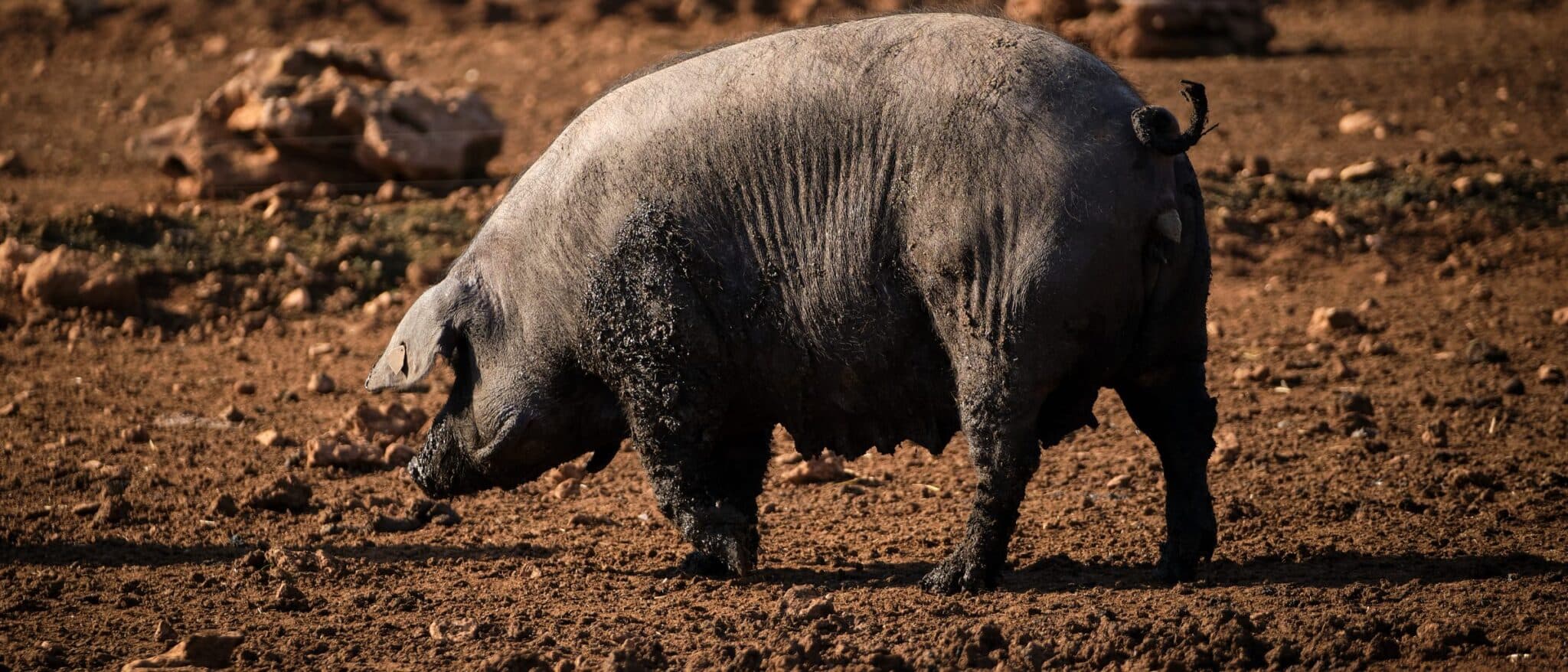
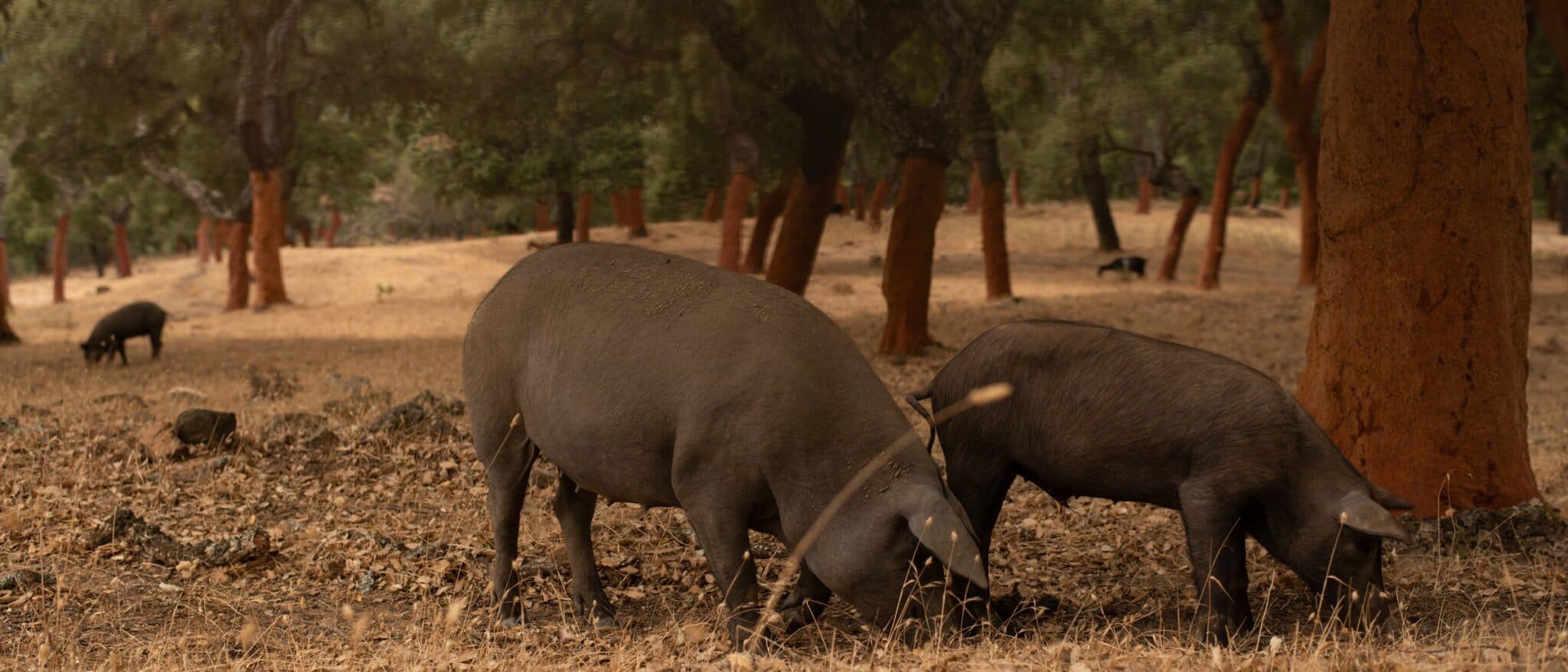
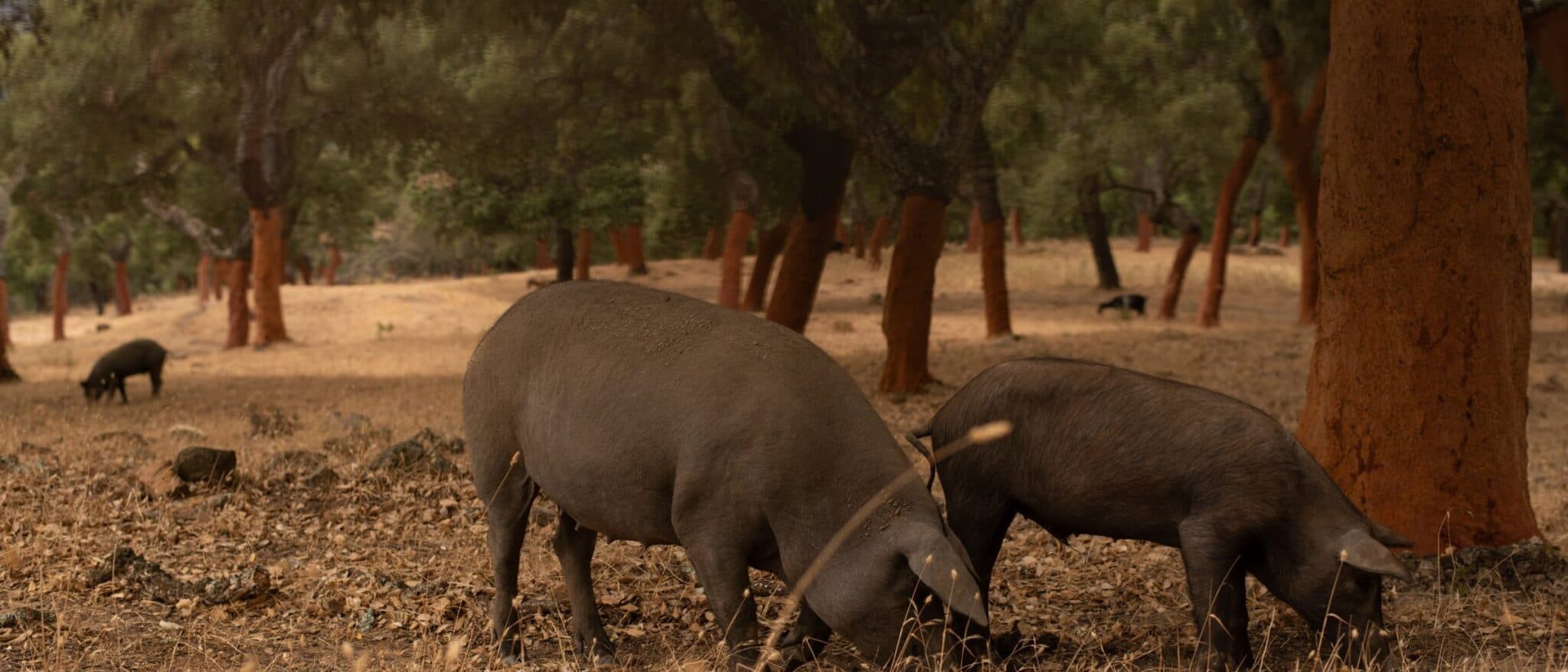
What you see is several hundred black pigs moving slowly through holm oak and cork oak pasture, eating acorns off the floor, on land that looks like parkland and is in fact a managed agricultural system a thousand years old. Several of the Jabugo and Cortegana producers run visits. Go before the 15th, on a cold clear morning.
Common questions
Is December a good time for Huelva?
For the sierra, it is the best month of the year. For the coast, it is the worst. The province does not have a single answer, and anyone giving you one has not been to both halves of it.
Can I visit the Belén Viviente de Beas on any day?
No, and this is the detail most listings get wrong — it opens on about a dozen selected days across the season, not daily, and the hours differ between Saturdays and Sundays. Check the current calendar from the Diputación or the organisers before travelling.
Where to go next
- The Huelva province guide
- December across Andalucía — how the province compares with the other seven
- November in Huelva, if you are choosing between the two months
- The Fiestas Colombinas and the Romería del Rocío
- Christmas lights in Huelva and the Cabalgata de Reyes Magos
- The fiesta calendar and what to pack
Sources
AEMET Valores climatológicos normales and Efemérides y valores extremos, Huelva Ronda Este, 1984–2010 as AEMET states. Sun times from the US Naval Observatory. Montanera and slaughter dates and the weight and age requirements from Real Decreto 4/2014, articles 6.3 and 6.4. Belén Viviente de Beas and the sierra programme from the Diputación de Huelva; Fuenteheridos’ chestnut fair from Diputación coverage of previous editions. Doñana counts from CSIC. Holidays from Decreto 101/2025 and BOJA no. 197.