 Travel
Travel
The Best Day Trips in Andalucia (2026 Guide)
The best day trips in Andalucia from Seville, Granada, and Málaga — white villages, Roman ruins, Atlantic coasts, and mountain towns. With transport options and timings.
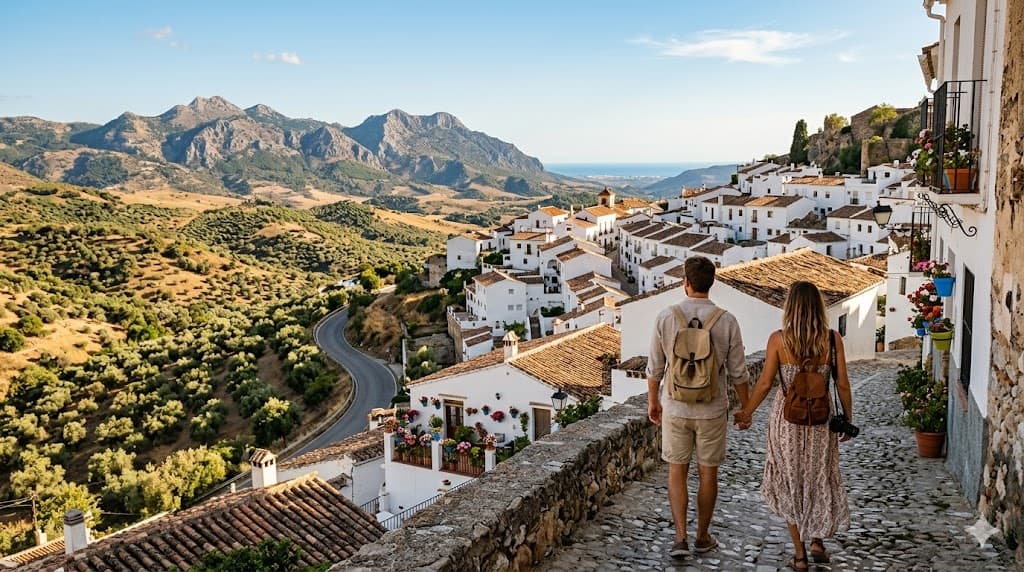
The best day trips in Andalucia range from 45-minute AVE journeys to half-day mountain drives, covering gorges, Moorish fortresses, white villages, sea caves, and Atlantic coastline.
Best Day Trips In Andalucia: Key Planning Points
One of Andalucia’s great advantages as a travel destination is its density. The region’s most compelling places sit close enough together that you can wake up in Seville and eat lunch in Córdoba, spend a morning in the Alhambra and an afternoon in a mountain village, or base yourself in Málaga and reach half a dozen completely different landscapes within two hours.
This best day trips in andalucia guide covers everything you need to know for your trip.
Use this best day trips in andalucia resource to plan each stage of your visit to Andalucia.
This guide covers the best day trips across the region — grouped by starting city, with honest transport options, timing, and the one thing at each destination that makes it worth the drive.
Day trips from Seville
Córdoba (the essential day trip)
Distance: 140km | Train: 45 min from €25 | Drive: 1h 30min
The most logical day trip from Seville — fast, cheap by AVE, and packing more UNESCO World Heritage per square metre than almost anywhere in Europe. The Mezquita-Catedral alone justifies the trip: a forest of 856 red-and-white striped arches beneath which a 16th-century cathedral was controversially built. Arrive early (free entry Mon–Sat 8.30–9.30am) to beat the tour groups.
From the Mezquita, the Judería (Jewish quarter) is a ten-minute walk — a maze of flower-draped lanes around the 14th-century synagogue. In May, the Fiesta de los Patios fills these lanes with open courtyards of extraordinary flowers. Lunch at Casa Mazal or Taberna Salinas for proper Córdoba salmorejo and flamenquín.
Time needed: 6–7 hours minimum. Take the 8am train, catch the 7pm return.
One thing not to miss: The Mezquita at 8.30am — enter through the Puerta del Perdón, let your eyes adjust to the interior, and stand in the forest of arches before anyone else arrives.
Jerez de la Frontera
Distance: 90km | Train: 1h from €15 | Drive: 1h
Jerez is the capital of sherry and flamenco — a city with serious cultural credentials that most visitors skip entirely in favour of the bigger names. A mistake.
The Real Escuela Andaluza del Arte Ecuestre (Royal Andalusian School of Equestrian Art) puts on the “How the Andalusian Horses Dance” show on Tuesdays and Thursdays — an hour of precision equestrian display set to flamenco music, in a stunning 19th-century arena. Book ahead; it sells out.
The sherry bodegas cluster around the old town. González Byass (Tío Pepe) does the most comprehensive tours; Bodegas Tradición is the connoisseur’s choice for aged VORS sherries. Lunch at La Carboná — a converted bodega restaurant — is one of the best meals in the province.
Time needed: 6–8 hours comfortably fills a day.
One thing not to miss: A sherry tasting at a working bodega — the smell of the solera system alone is worth the trip.
Cádiz
Distance: 125km | Train: 1h 45min from €20 | Drive: 1h 30min
Cádiz is one of the oldest continuously inhabited cities in Western Europe — Phoenician, Roman, Moorish, and Spanish colonial history all layered into a compact Atlantic peninsula. The old city is surrounded on three sides by the sea, giving it a breezy, island-like atmosphere entirely different from inland Andalucia.
The Barrio del Pópulo (the old Roman town), the Catedral de Cádiz (with its golden baroque dome that glows above the rooftops), and the Mercado Central de Abastos are the three anchors. The beach at La Caleta is swimmable from June.
Time needed: A full day — the city is compact but rewards slow walking.
One thing not to miss: Climbing the Torre Tavira camera obscura for a real-time panoramic view of the entire city projected onto a white dish — genuinely extraordinary.
Ronda
Distance: 150km | Bus: 2h from €12 | Drive: 1h 45min
The most dramatic of the white villages, with the 120-metre gorge and Puente Nuevo that stop you in your tracks. As a day trip from Seville it’s long (the drive or bus takes 1h 45min+ each way), so consider whether Ronda is better done from Málaga (1h 40min) if that fits your route.
For the full white village circuit, however, Seville → Ronda → Setenil → back is a satisfying long day by car.
Time needed: 4 hours in Ronda itself; allow 7–9 hours door to door from Seville by car.
One thing not to miss: The gorge walk on the Camino de los Molinos below the Puente Nuevo — accessed via a gate near the Puente Viejo. The views looking up at the bridge are more dramatic than looking down from it.
Italica
Distance: 9km | Bus: 30 min from Plaza de Armas | Drive: 20min
The Roman city of Italica — birthplace of emperors Trajan and Hadrian — sits just outside Seville and is chronically undervisited given its proximity and significance. The amphitheatre (third-largest in the Roman Empire) is extraordinarily well-preserved; the residential district has some of the finest Roman mosaic floors still in their original position.
This is the ideal half-day option when you want something cultural but close. Combine with the Monasterio de San Isidoro del Campo next door.
Time needed: 3–4 hours including transport.
One thing not to miss: The House of the Birds mosaic — 33 species of birds depicted in one of the most detailed floors to survive from the Roman world.
Day trips from Granada
Alpujarras villages
Distance: 50–80km | Bus: 2h to Lanjarón/Órgiva | Drive: 1h–1h 30min
The Alpujarras are a series of Moorish mountain villages in the foothills of the Sierra Nevada, inhabited by Berber settlers after the fall of Granada in 1492 and barely changed in appearance since. Pampaneira, Bubión, and Capileira are the most visited — each a compact cluster of flat-roofed stone and whitewashed houses connected by mule paths along the Poqueira gorge.
The culture here is distinct from lowland Andalucia — heavily influenced by Moroccan Berber traditions (the flat roofs, the chimneys, the woven textiles sold in every shop). The altitude means cool air even in July. Buy jamón trevélez (the local air-cured ham, made at 1,650m elevation) to take home.
Time needed: A full day to do all three main villages; half a day for just Pampaneira and Bubión.
One thing not to miss: The gorge walk between Pampaneira and Bubión — 45 minutes, well-marked, with the ravine dropping away on one side and the Sierra Nevada rising on the other.
Sierra Nevada (skiing or hiking)
Distance: 32km | Bus: 1h from Granada | Drive: 45min
In winter (December–April), the Sierra Nevada ski resort operates at 3,000m+ — the southernmost ski resort in Europe, where you can genuinely ski in the morning and eat paella by the sea in the afternoon. The resort is well-equipped and far less expensive than the Alps.
In summer and autumn, the same mountain roads give access to extraordinary high-altitude hiking — including the ascent of Mulhacén (3,479m, the highest peak on the Iberian Peninsula), which is a long but non-technical day walk from the Hoya del Portillo car park (shuttle buses run in summer).
Time needed: Full day for either skiing or serious hiking.
One thing not to miss: The summit plateau of the Sierra Nevada on a clear day — views to Morocco on one side, the Mediterranean on the other.
Guadix
Distance: 58km | Train: 1h | Drive: 55min
One of the strangest towns in Spain: Guadix is a medium-sized Andalusian city with a remarkable secret — roughly 2,000 people live in cave houses built into the sandstone badlands on the edge of town. The Barrio de Santiago (cave quarter) is a full working neighbourhood of troglodyte homes, complete with satellite dishes, flower pots, and whitewashed cave facades. A small Cave Museum lets you inside one.
The town itself has a fine cathedral and a Moorish alcazaba with panoramic views across the badlands.
Time needed: 4–5 hours.
One thing not to miss: Walking the cave quarter streets — the landscape of white chimney stacks rising from the earth, with the Sierra Nevada behind, is completely unlike anything else in Andalucia.
Costa Tropical (Almuñécar and Salobreña)
Distance: 70km | Bus: 1h 30min | Drive: 1h
Granada is only an hour from the sea — specifically the Costa Tropical, a stretch of coastline that grows subtropical fruit (custard apples, mangos, avocados) thanks to the sheltered microclimate between the mountains and the Mediterranean. The beaches are pebbly rather than sandy, but the water is clear blue and the small resort towns of Almuñécar and Salobreña retain genuine character.
Time needed: 4–6 hours — a half-day beach trip works perfectly.
One thing not to miss: The Peñón del Santo rock at Almuñécar — a Moorish-era castle perched on a volcanic rock above the beach, with the castle walls running straight into the sea.
Day trips from Málaga
Nerja and Frigiliana
Distance: Nerja 52km, Frigiliana 65km | Bus: 1h to Nerja | Drive: 50min to Nerja, 1h to Frigiliana
The classic Costa del Sol day trip. Nerja is a well-preserved resort town (relatively — it resisted the worst of the Costa’s concrete development) with the famous Balcón de Europa viewpoint over the sea, good beaches, and the extraordinary Cueva de Nerja just outside town — a massive cave system with Palaeolithic paintings and a spectacular auditorium chamber.
From Nerja, drive or take a bus 15 minutes inland to Frigiliana — the most photogenic white village accessible from the coast.
Time needed: 6–7 hours comfortably covers both.
One thing not to miss: The cave at Nerja — especially the Sala del Cataclismo (auditorium chamber), which contains the world’s largest stalactite column.
Ronda
Distance: 100km | Train: 2h from €15 | Drive: 1h 40min
The best base for the white villages if you’re on the Costa del Sol. Ronda is reachable by the scenic Algeciras–Ronda–Antequera train line — a narrow-gauge mountain railway that winds through gorges and past dramatic rock formations. The train journey itself is half the appeal.
One thing not to miss: Already covered above — but from Málaga specifically, also consider adding El Chorro and the Caminito del Rey gorge walk on the return (40 min from Málaga, separate trip).
Caminito del Rey
Distance: 55km | Drive: 40min | No public transport to the start
The Caminito del Rey is a restored mountain path pinned to the sheer walls of the El Chorro gorge — originally built in the early 20th century for workers accessing a hydroelectric dam, it’s now one of the most spectacular walks in Spain. The path runs 7.7km through the gorge, with exposed sections over the river on narrow wooden walkways.
Tickets must be booked in advance (caminitodeireyboletos.com — typically 2–3 weeks ahead in spring). The gorge is 8km north of El Chorro; you park at one end and get a bus back from the other.
Time needed: Allow 5–6 hours including the walk, transport, and changing in/out of the mandatory helmet.
One thing not to miss: The suspended walkway section in the Desfiladero de los Gaitanes — 100m above the river, with the gorge walls rising on both sides. Mildly vertiginous; genuinely breathtaking.
Antequera and El Torcal
Distance: 45km | Train: 30min from €10 | Drive: 45min**
Antequera is an underrated Baroque city with a Moorish alcazaba, a collection of extraordinary Renaissance churches, and the Menga, Viera, and Romeral dolmens — 5,000-year-old megalithic tombs on the edge of town, now a UNESCO World Heritage Site.
From Antequera, a 20-minute drive brings you to El Torcal — a protected limestone landscape of weathered rock towers and karst formations that looks genuinely alien. Short walking trails wind through the rock formations (the 1.5km circular route is accessible for all fitness levels).
Time needed: 6–7 hours for Antequera + El Torcal.
One thing not to miss: The dolmens at Menga — 5,500 years old, the largest megalithic structure in Andalucia, and almost completely overlooked by visitors rushing to the coast.
Practical tips for day tripping in Andalucia
Train vs car vs bus
Trains are excellent for the main cities (Seville–Córdoba, Málaga–Antequera, Granada–Seville via Antequera) and fast enough that they’re often better than driving. For the villages, coastal towns, and mountain destinations — you need a car or an organised tour.
Andalucia’s regional bus network (Alsa and various local operators) covers many destinations not served by train, but connections can be infrequent and journey times long. Always check current timetables — routes and frequencies change seasonally.
Book key attractions in advance
- Mezquita-Catedral, Córdoba — tickets online save you the queue
- Alhambra, Granada — book 2–4 months ahead in spring
- Caminito del Rey — book 2–3 weeks ahead in spring/summer
- Cueva de Nerja — book ahead on weekends and in summer
- Royal Equestrian School, Jerez — show tickets sell out
Start early
The heat and the crowds both peak between 11am and 4pm. The best Andalucia day trippers are those who leave by 7.30am, have the morning sights to themselves, and are eating lunch while everyone else is still arriving.
Plan your Andalucia day trips
- For multi-day itineraries incorporating these destinations: see our 7-Day Andalucia Itinerary
- For the white villages in depth: see our Pueblos Blancos Guide
- For the Alhambra specifically: see our Alhambra Visitors Guide
- For city comparisons to help pick your base: see our Seville vs Granada guide
Useful Resources
For official travel information about Andalucia, visit Andalucia — Spain Tourism.
Related reading: Andalucia 7-day itinerary, renting a car in Andalucia.
More on the two that need booking well ahead: the Caminito del Rey and Alhambra tickets.