 Travel
November in Jaén: the Picual harvest, and oil before it has a label
Half the guides put the Jaén olive harvest in September. It starts in November. 575,000 tonnes, 45.6% of Andalucía’s oil, and early-harvest oil you can only taste now.
Half the guides written about Jaén will tell you the olive harvest starts in September. They are wrong by two months, and it matters, because the harvest is the single best reason to come here and November is when it actually happens.
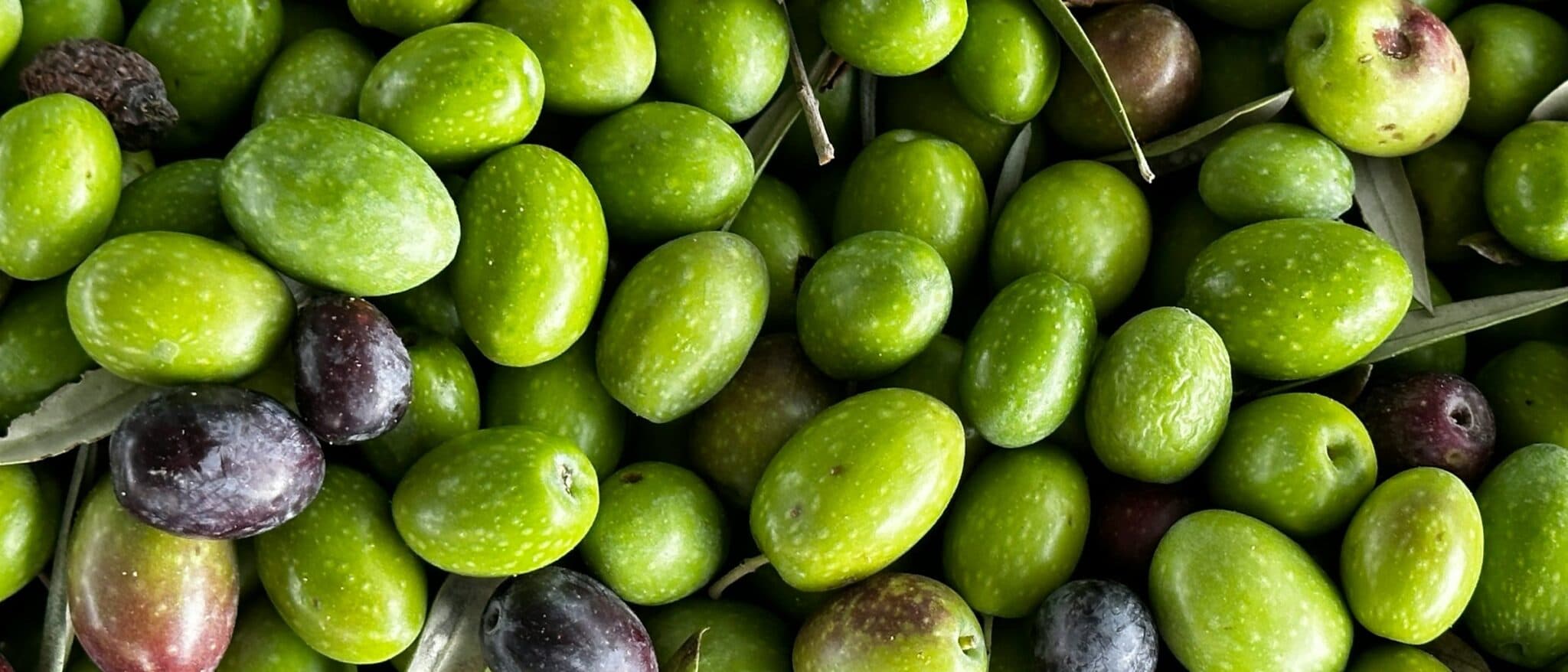
Jaén is Picual country, and Picual comes off the tree from November. A protected-origin council in the next province states it plainly in its own published text: in this zone, olive picking usually begins in November. So for about three weeks the mills of Jaén are crushing fruit that was on the branch that morning, and the oil that comes out — bitter, peppery, aggressively green — only exists now.
What the weather actually does
Jaén averages 15.7°C by day and 8.9°C at night in November, with 62mm of rain across 6.9 rain days and 0.1 frost days. That is AEMET’s normal series for the Jaén station at 580 metres, over the period 1983–2010 rather than the standard 1981–2010 — a caveat AEMET publishes itself.
Jaén is the coolest provincial capital in Andalucía in November by day — cooler than Granada, which sits twenty metres lower. That is the thing to pack for: 15.7°C is pleasant walking weather and nothing like the twenty degrees the rest of the region is getting.
What Jaén does not get is the cold nights, and this is the most interesting pair of numbers in the region. Jaén records 0.1 frost days in November; Granada, at almost identical altitude, records 4.8. Jaén’s diurnal range is 6.8 degrees against Granada’s 12.8. The difference is topography — Jaén is built on a hillside and sheds its cold air downhill overnight, while Granada’s station sits in a basin that collects it. Two cities, the same height, completely different nights.
Jaén is also the least thundery station in Andalucía at 0.1 storm days, and 62mm is on the dry side for the region. The one caution is the light: Jaén loses 51 minutes across November, the most of any capital, almost all of it in the morning.
Which week to book
The last week, if you want the city’s own fiesta. Santa Catalina, the patron of Jaén, falls on Wednesday 25 November and it is a local holiday, so the city takes the day off. The early-music festival at Úbeda and Baeza is running by then, and Baeza’s own patronal fiestas close the month.
The first and second weeks are the alternative, because that is when the autumn festival in the capital is at its densest and when the oil festival usually falls.
A practical note: Úbeda’s local holidays are in September, so the town is working normally during its November events.
What is on in November 2026
- To 15 November at least (confirmed) — the 27th Festival de Otoño de Jaén, opening 25 October. The November programme includes the Kiev Ballet’s Swan Lake on the 1st, Revólver at the Teatro Infanta Leonor on the 6th, Arte on the 7th, Rigoletto on the 8th, and further dates on the 12th to the 15th.
- Monday 2 November (confirmed) — the transferred All Saints holiday, the 1st being a Sunday.
- 21 November – 8 December (confirmed) — the 30th Festival de Música Antigua de Úbeda y Baeza, themed “SACRA” for its anniversary, with schools concerts from the 20th. November concerts fall on the 20th, 21st, 22nd and 25th to 29th, split between the two Renaissance towns. If you have any interest in early music in Renaissance buildings, this is the reason to come.
- Wednesday 25 November (fixed every year, and a local holiday) — Santa Catalina, patron of Jaén city. The only provincial capital in Andalucía with a November local holiday.
- Sunday 29 November (expected) — the Romería de Santa Catalina up at the castle on the Cerro de Santa Catalina, with the sardinada — the sardine roast that goes with the saying about the sardine running up the hill. The city’s pattern is to hold the romería on the Sunday after the feast; the 2026 programme was not published when this was written.
- 30 November (fixed every year, and a local holiday) — San Andrés, patron of Baeza. Also a local holiday in Bélmez de la Moraleda.
- Around 27–30 November (expected) — the Reales Fiestas del Concejo in Baeza, with a medieval market and a bonfire, running into the San Andrés holiday. The 2025 edition ran 28–30 November.
- October to December (expected) — the Rutas del Aceite, which put visitors inside working mills across eleven municipalities during picking. The 2025 edition ran 11 October to 14 December with fifteen partner mills; the 2026 calendar was unpublished when this was written. The “El mejor olivo de Jaén” exhibition runs November to March.
- From 1 and 15 November (confirmed) — woodcock from the 1st, thrushes from the 15th, on top of big game open daily to 14 February across Cazorla, Segura y Las Villas and the Sierra Morena.
What to ignore
Do not book around the Fiesta del Primer Aceite de Jaén without checking. This is the province’s early-oil festival and it has run in the first half of November for twelve consecutive editions — Andújar on 8–10 November 2024, Martos on 8–10 November 2025. Trade press has it at Úbeda on 7–8 November 2026. But the Diputación de Jaén’s own festival portal still showed only the 2025 editions when this was written, and the Diputación’s own edition numbering is inconsistent across its pages. Treat the date as likely and unconfirmed, and check the official portal before you travel.
There is a second trap in the same event: it has an “away” leg in a city outside Andalucía each year — Sabadell in 2024, Fuenlabrada in 2025 — and listings routinely merge the two into one long Jaén festival. They are a week apart and several hundred kilometres apart.
The Christmas lights are December, not November. Jaén’s switch-on was 5 December in 2025. And San Lucas is October — the feria ends on 18 October every year, so it is finished before this month starts.
One more: the berrea, the red deer rut in Cazorla, is largely over by mid-October. It is an autumn draw but not a November one.
What life is like
Jaén in November is a province at work, and the scale is hard to overstate. The Junta’s forecast for the 2026/27 campaign puts Andalucía at 1,261,200 tonnes of olive oil, up 29.3% on the previous year — and Jaén alone at 575,000 tonnes, which is 45.6% of the Andalusian total, from around 2,890,000 tonnes of mill olives at a yield of nearly 20%. Jaén generates more agricultural day-labour than any other province in Andalucía, over a third of the regional total.
On the ground that means nets under the trees, tractors on every road, mills running into the night, and villages whose population doubles for the season. One detail worth knowing: night-time harvesting in the super-intensive groves is suspended for the 2026/27 season by regional resolution, so the mills work late but those particular groves do not.
Mill visits are a published, bookable product rather than something you improvise — the Diputación’s own November page describes farmhouses, mills, restaurants and museums opening specifically to show the olive culture, and the province runs an oleotourism platform for it. Up in Cazorla and the Sierra de Segura the high country is quiet and cold, and in the Renaissance towns Úbeda and Baeza spend the back half of the month hosting early music in buildings built for it.
Capital, Renaissance towns or sierra
The Renaissance towns, if you only pick one. Úbeda and Baeza are twenty minutes apart, both UNESCO-listed, and in the second half of November they have a thirty-year-old early-music festival running through their churches and palaces — a better reason to be in this province than anything in the capital. The capital still earns a day or two for the cathedral, the Arab baths and the castle, and on the 25th you get the city’s own fiesta. The sierra is for walkers, and November walking at this altitude is cool, clear and almost entirely yours.
The one thing to do in November
Taste the oil before it has a label. Get inside a working almazara during the harvest — through the Rutas del Aceite, or through the oil festival in the first half of the month — and taste Picual that was picked that morning.
This is not a marketing idea. Aceite de cosecha temprana, early-harvest oil, is chemically and sensorially a different thing from the same oil six months later: it is bitter, it catches at the back of the throat, it is a colour that looks wrong in a bottle, and it is the version that wins the competitions. By February it has rounded off. By June it is something else.
And it can only be here. Nowhere else in Andalucía mills on this scale — 575,000 tonnes, 45.6% of the region — and nowhere else is the dominant variety one whose harvest, by a regulatory council’s own published account, starts in November. Three weeks, one province, one liquid.
Common questions
When does the Jaén olive harvest actually start?
November, for Picual, which is the variety that dominates the province. Earlier-ripening varieties elsewhere in Andalucía start in October. Anything telling you the Jaén harvest is a September event is wrong.
Can I visit an olive mill?
Yes. The province runs organised mill routes across eleven municipalities during the picking season and an oleotourism booking platform. Check the 2026 calendar, which had not been published when this was written.
How cold is Jaén in November?
Cool by day — 15.7°C, the lowest of any Andalusian capital — but mild at night at 8.9°C, with almost no frost. Pack layers rather than a heavy coat. It is the opposite balance to Granada.
Is anything closed?
Monday 2 November region-wide, and Wednesday 25 November in Jaén city for Santa Catalina. Baeza and Bélmez de la Moraleda close on 30 November. Úbeda does not take a November holiday.
Where to go next
- The Jaén province guide
- November across Andalucía — how the province compares with the other seven
- October in Jaén, if you are choosing between the two months
- The Feria de San Lucas, the province’s big October fiesta
- The best hiking routes in Andalucía
- Christmas lights in Jaén and the fiesta calendar
- What to pack
Sources
Weather: AEMET, Valores climatológicos normales, Jaén station, period 1983–2010. Sunrise and sunset: Instituto Geográfico Nacional / Observatorio Astronómico Nacional, Salida y puesta de Sol 2026. Autumn festival and Santa Catalina: Ayuntamiento de Jaén. Early-music festival and Baeza fiestas: Ayuntamiento de Baeza and Turismo Baeza. Local holidays: Resolución de 6 de octubre de 2025, BOJA no. 197. Harvest timing by variety: Consejo Regulador DOP Priego de Córdoba. Harvest forecast: Junta de Andalucía 2026/27 aforo. Night-harvest suspension: Resolución de 30 de julio de 2026, BOJA no. 150. Mill routes and oleotourism: Diputación de Jaén and the Junta de Andalucía cultural agenda. Hunting periods: Junta de Andalucía 2026/27 season.