 Travel
Blog
Andalucía in November: the month the region stops being one place
In November the nine Andalusian capitals converge to within 1.4°C by day and spread 9.2°C apart at night. Real AEMET figures, the two dates that shape the month, and where to go.
November is the month Andalucía stops being one place. For most of the year the eight provincial capitals share a climate — hot, then very hot, then pleasantly less hot. In November the daytime temperatures converge until they are almost interchangeable, and the nights pull violently apart. That single fact decides where you should go.
Seven of the nine stations AEMET keeps in the region average between 19.1°C and 20.5°C by day in November. That is a spread of 1.4 degrees across 400 kilometres. The night-time spread is 9.2 degrees. Cádiz sits at 13.4°C after dark; Granada airport sits at 4.2°C and records frost on nearly five nights of the month. In August the coast-versus-inland question answers itself by day. In November the day tells you nothing and the night tells you everything.
What the weather actually does
These are AEMET’s 1981–2010 normals, the standard reference period, measured at the provincial capitals. Huelva’s series is 1984–2010 and Jaén’s is 1983–2010 — AEMET flags this itself inside the same publication.
- Almería — 20.5°C day, 12.3°C night, 28mm across 3.6 rain days
- Seville — 20.2°C day, 10.0°C night, 91mm across 6.4 rain days
- Jerez (inland Cádiz) — 20.2°C day, 9.5°C night, 96mm across 6.9 rain days
- Málaga — 20.1°C day, 11.3°C night, 100mm across 5.6 rain days
- Huelva — 20.0°C day, 9.8°C night, 79mm across 6.3 rain days
- Cádiz city — 19.6°C day, 13.4°C night, 98mm across 7.2 rain days
- Córdoba — 19.1°C day, 7.8°C night, 80mm across 5.9 rain days
- Granada (560m) — 17.0°C day, 4.2°C night, 54mm across 6.8 rain days
- Jaén (580m) — 15.7°C day, 8.9°C night, 62mm across 6.9 rain days
Two of those readings deserve a footnote. Granada’s station is at the airport out in the vega, which drains cold air off the Sierra Nevada and collects it on the valley floor. The Armilla station, 127 metres higher on the city’s edge, runs 1.1°C warmer at night in November — the inverse of what altitude should do, and the signature of cold-air pooling. For the city itself, add about a degree to the airport minimum.
Jaén is the more interesting one. It is the coolest capital in the region by day, cooler than Granada, because it sits on a hillside at 580 metres. But its diurnal range is 6.8 degrees against Granada’s 12.8, and it records 0.1 frost days in November against Granada’s 4.8 — two stations twenty metres apart in altitude, with completely different nights. A hillside town sheds its cold air downhill. A basin keeps it.
November is wetter than October, and differently wet
Eight of the nine stations get more rain in November than in October. Málaga gains the most, from 57mm to 100mm, which makes it the wettest capital in the region in November. Cádiz adds 31mm, Jerez 24mm, Seville 23mm. Córdoba is the single exception and gets slightly drier, 86mm down to 80mm.
That reorders the map. Through most of the year the Guadalquivir valley is the wet half of Andalucía. In November the Mediterranean coast leads, and Almería — 28mm across 3.6 days — is drier than everywhere else by a factor of two or three.
The more useful difference is how the rain arrives. In October, Andalusian rainfall is brutally concentrated: most of the month’s total lands on two or three days. In November the same or greater rainfall spreads over more rain days at seven of the nine stations — Granada gains 1.8 rain days, Cádiz 1.6, Málaga 1.2. The monthly average still overstates a typical November, but November earns its average more honestly than October does. If you are planning a fortnight, expect a handful of genuinely wet days rather than one spectacular one.
A wet November, when it comes, is a regional event rather than a local one. In November 1997 Seville, Córdoba, Granada and Jaén all recorded 21 rain days in the same month. The extremes are wide enough to be worth knowing: Seville has recorded a November of 0.4mm (1981) and one of 361mm (1983) against a 91mm average. Málaga’s wettest was 497mm in 1989. The Atlantic side is also the thundery side — Cádiz averages 1.7 thunderstorm days in November, Jaén 0.1.
The light goes in the morning
The clocks went back on Sunday 25 October, so all of November runs on standard time. The region loses between 48 and 51 minutes of daylight across the month — but the loss is almost entirely at the front end, which is the opposite of October’s.
In Seville, sunrise slips from 07:49 on 1 November to 08:18 on the 30th: twenty-nine minutes later. Sunset moves only nineteen minutes earlier, from 18:26 to 18:07. Huelva has the latest sunrise in the region at 08:22 by month’s end, and four capitals — Huelva, Seville, Cádiz and Córdoba — are rising after 08:15 by then. In a region that already eats breakfast late, November mornings simply start in the dark. Plan the day from the back: the evening holds up better than you expect, and the early start does not.
The two dates that shape November 2026
Monday 2 November is the public holiday, not Sunday the 1st. All Saints falls on a Sunday in 2026, so Andalucía moves the paid holiday to the following Monday. The region gets a three-day weekend from Saturday 31 October to Monday 2 November, and the closures — shops, offices, many municipal museums — land on the Monday. Anything telling you that everything shuts on Sunday 1 November has it backwards.
Spain votes on Sunday 29 November. An early general election was called in October, with the campaign running 13–27 November. Expect schools and sports halls requisitioned as polling stations, pressure on hotel rooms in the capitals during the campaign, and municipal programmes steering clear of the final weekend. It has already moved fixtures: Seville’s half marathon was pushed off 29 November to 13 December because of it.
The region’s biggest working month
If there is one thing that unites Andalucía in November, it is harvest. This is the month the region does most of its actual work, and almost all of it is visitable.
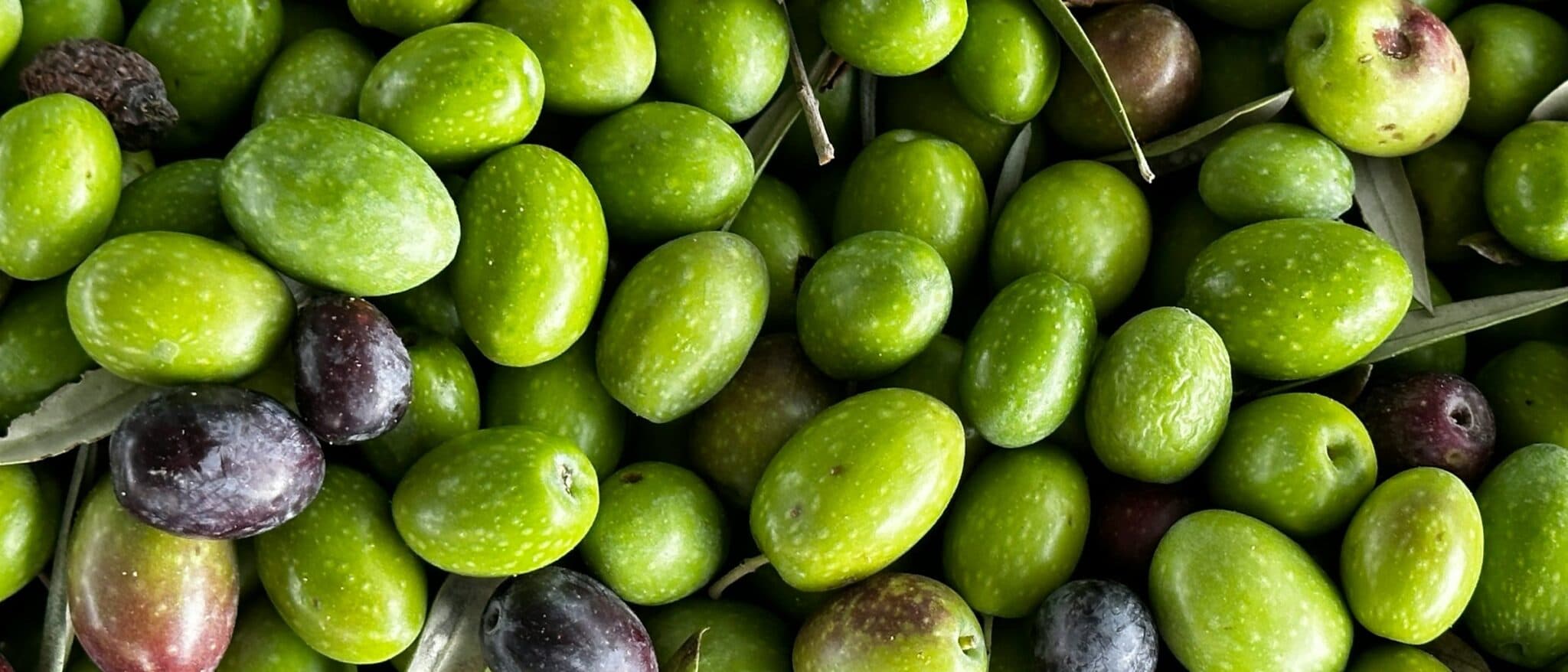
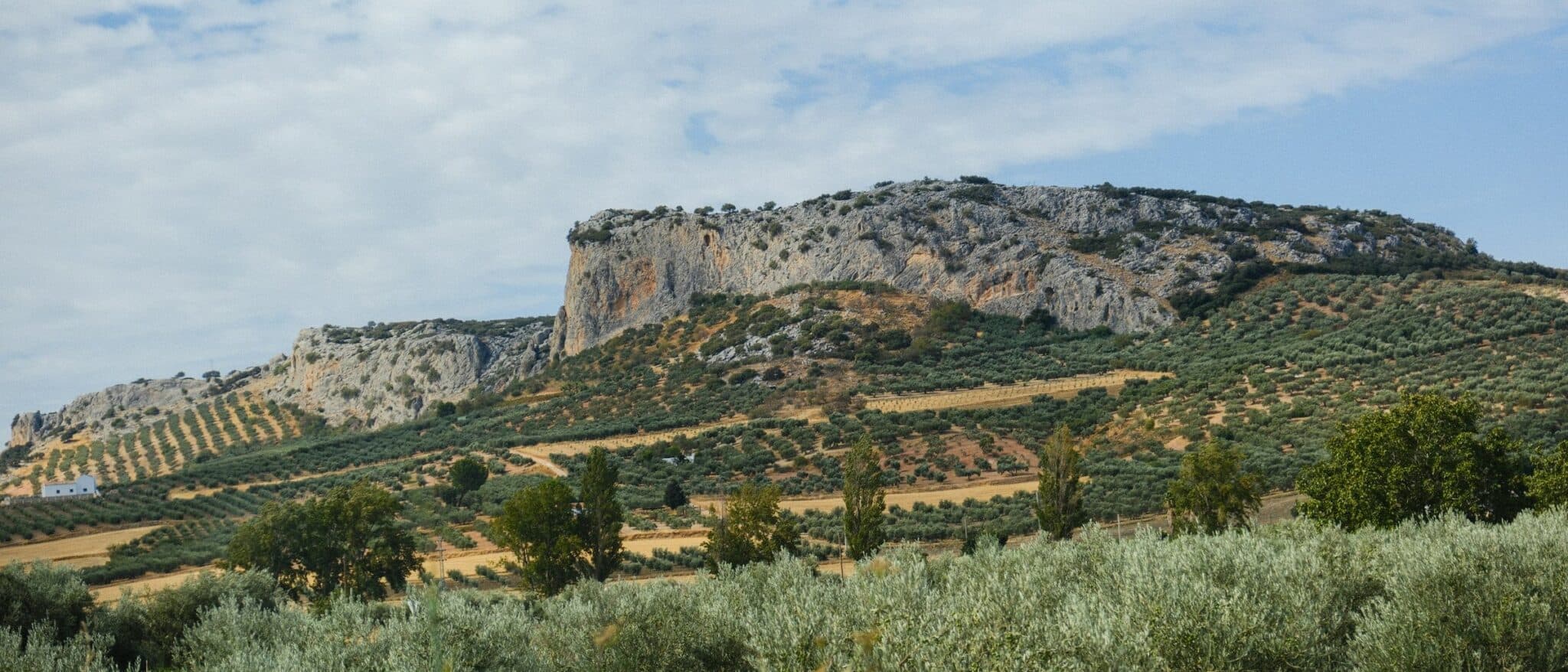
Jaén is milling. The Junta’s 2026/27 forecast puts Andalucía at 1,261,200 tonnes of olive oil, and Jaén alone at 575,000 tonnes — 45.6% of the regional total, from more than 2.8 million tonnes of olives. Picual, the variety that is effectively Jaén, starts coming off the tree in November, not September, whatever the guidebooks say. Seville is picking the other kind: 320,000 tonnes of table olives out of 466,000 for the region, two-thirds of the Andalusian crop, mostly hojiblanca and manzanilla.
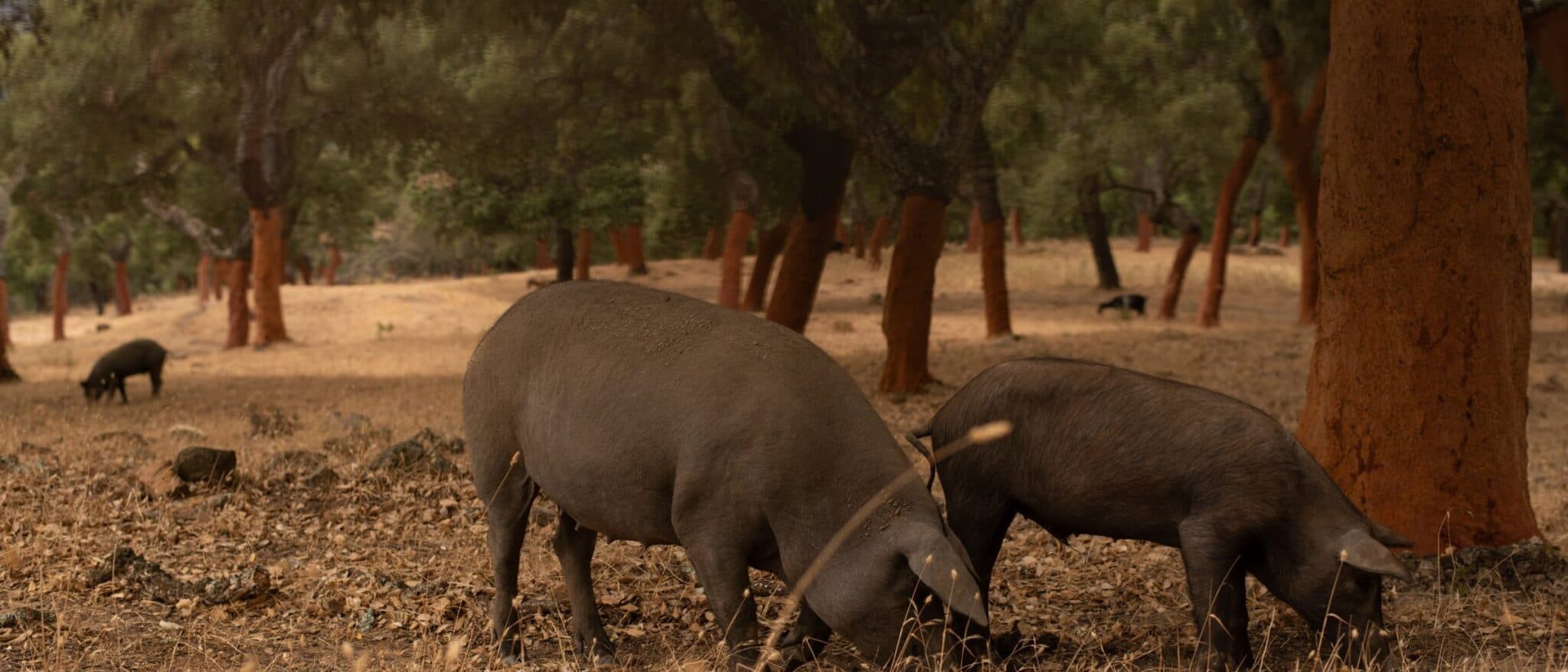
In the dehesas of Huelva and the Los Pedroches valley in northern Córdoba, the Iberian pigs are out under the oaks. Spanish law requires them to enter the montanera between 1 October and 15 December and forbids slaughter before 15 December, which makes November the only month when the whole thing is in motion and nothing has been taken out of it yet. On the Costa Tropical, custard apples are being picked by hand, tree by tree. In the Bay of Cádiz the tidal fish ponds are drained for the despesque. In the Aljarafe west of Seville, mosto — the year’s barely-fermented new wine — is being poured, and it has no shelf life at all.
November province by province
- November in Málaga — the wettest capital in the region, and the month the Genal chestnut woods turn copper
- November in Seville — the European film festival, the table-olive harvest, and mosto straight from the Aljarafe
- November in Granada — snow on the Sierra Nevada before the lifts open, chirimoyas on the coast, frost in the vega
- November in Cádiz — Sherry Week, the despesque, the warmest nights in Andalucía and the first zambombas
- November in Córdoba — the only capital that gets drier, the World Cheese Awards and the Los Pedroches jamón fair
- November in Huelva — a full montanera, Doñana refilling, and the Ibero-American film festival
- November in Jaén — the Picual harvest, Santa Catalina, and oil you can taste before it has a label
- November in Almería — 28mm of rain, legal access to Cabo de Gata’s beaches, and FICAL
Where to go in November
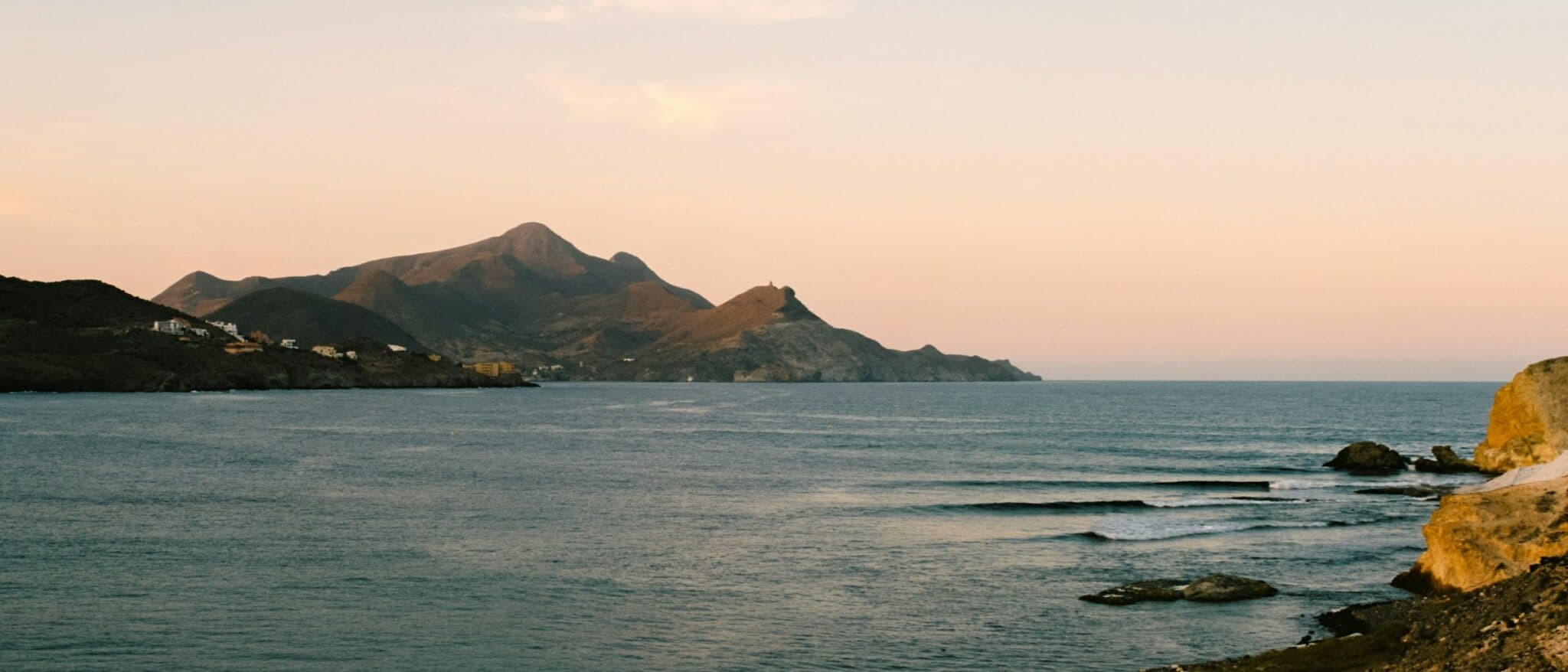
If you want warmth and dry weather, go to Almería. It is the warmest capital by day, the warmest-but-one by night, and it gets a quarter of the rain the Mediterranean coast gets. Cabo de Gata’s natural beaches are legally driveable again from late September through to June, and in November they are close to empty.
If you want cities, go to Seville or Córdoba. Twenty degrees by day with no crowds and no heat is as good as either city gets, and both are in full cultural season.
If you want to eat, go to Cádiz province. Sherry Week in the first week, the esteros all month, the new wine being classified in the bodegas, and the warmest nights in the region to sit out in.
If you want mountains, go to Granada or Jaén — and pack properly. Granada will frost. Jaén will not, but it is the coolest capital in Andalucía by day.
Common questions
Is November a good time to visit Andalucía?
For cities, the sierras and food, it is one of the best months of the year — twenty degrees by day, no heat, no queues, and the whole region harvesting. For beaches it is the wrong month everywhere except Almería, and even there the swimming is for the hardy.
How much rain should I expect?
Between four and seven rain days depending on where you are, and more in Málaga and Cádiz than anywhere else. Almería is the outlier at 3.6 days and 28mm. Unlike October, the rain tends to come in several ordinary days rather than one dramatic one.
Will anything be closed?
Monday 2 November, the transferred All Saints holiday, closes shops, offices and many municipal museums region-wide. Individual towns also take their own local holidays in November — Jaén city on the 25th for Santa Catalina, Baeza on the 30th for San Andrés, and a scattering of villages elsewhere.
Can you still swim?
On the Mediterranean side, some people do, well into the month. We are not publishing sea temperatures for November because we could not source them from Puertos del Estado’s own data, and we would rather give you nothing than a number off a brochure.
Where to go next
- October across Andalucía, if you are choosing between the two months
- Andalucía weather by month and the best time to visit
- The fiesta calendar — what is on, by province and by date
- All eight provinces
- What to pack
- First time in Andalucía
Sources
Temperature, rainfall, rain-day and frost figures: AEMET, Valores climatológicos normales, 1981–2010 (Huelva 1984–2010, Jaén 1983–2010). Sunrise and sunset: Instituto Geográfico Nacional / Observatorio Astronómico Nacional, Salida y puesta de Sol 2026. Public holidays: Decreto 101/2025 and the Junta de Andalucía 2026 labour calendar; local holidays from the Resolución de 6 de octubre de 2025, BOJA no. 197. Harvest forecasts: Junta de Andalucía aforo for the 2026/27 olive campaign. Montanera rules: Real Decreto 4/2014, article 6.