 Travel
Travel
September in Córdoba: the heat breaks in the last ten days, and the PX grapes go out in the sun
Early September in Córdoba is still 34°C. Late September is 28°C and one of the best weeks of the year — and in between, Montilla lays its grapes out to raisin in the sun.
Córdoba is the hottest city in Spain in summer and it does not let go quickly. The September average of 31.6°C hides a steep slide: about 34°C on the 1st and 28°C by the 30th. The heat genuinely breaks, but not until the last ten days.
If you can pick your week, pick the last one. If you cannot, plan around the middle of the day rather than through it — the Mezquita at opening, a long indoor afternoon, and the city again from six.
What the weather actually does
Córdoba airport averages 31.6°C by day and 16.9°C at night in September, with 35mm of rain — the wettest September of the inland capitals, though that still amounts to very little. The chance of a wet day rises from 4% at the start of the month to 13% at the end.
Nights are the reward. At around 17°C average they are properly cool, which is not true in August, and the courtyards and riverside come back into use after dark.
The monthly average is the least useful number here. The first ten days behave like August; the last ten are one of the better travel windows of the year. Nor is 35mm a wet fortnight — usually it is one storm, the first of the gota fría season. The month also costs about 45 minutes of evening daylight.
Córdoba has no coast either, so there is no sea to drive to at 16:00. Heat management is the whole planning problem.
Which week to book
Book the last ten days. The 21st onwards is roughly six degrees cooler in the afternoon than the 1st, the difference between a city you can walk at 18:00 and one you cannot. Medina Azahara drops its summer timetable on 21 September, which tells you what the people working outdoors there make of the second half. The only argument for the early week is the harvest, and the harvest cannot be moved.
What is on in September 2026
71ª Fiesta de la Vendimia Montilla-Moriles, Montilla — 3 to 7 September (confirmed). Declared of Tourist Interest, and the province’s main September event. Montilla’s council has published the outline, Thursday to Monday, naming events on the 6th and on Monday the 7th, which fixes the dates. The 7th is a festivo local there.
The evening to plan around is Sunday 6 September: a flamenco mass at Bodegas Pérez Barquero at 20:00, a procession leaving the bodega at 21:15 for the Plaza de la Merced, and the pisa de la uva, the public treading of the first grapes, at about 22:15. All three are the council’s own times, and all three slip on the night.
Feria Real, Priego de Córdoba — 31 August to 5 September (confirmed). The council programme opens on 25 August, but the feria itself starts on the night of Monday the 31st. Priego is out in the Subbética, a trip in its own right. Other village ferias run through early September.
Día de la Virgen de la Fuensanta, Córdoba city — 8 September (fixed annually). The city’s co-patroness has her day on the 8th, and it is a local public holiday: shops and offices shut. The 2026 Velá programme, the fair by the sanctuary, was not out when this was written.
One thing to be clear about: the patios are closed in September. The Fiesta de los Patios is an early-May event, and a lot of visitors arrive expecting otherwise.
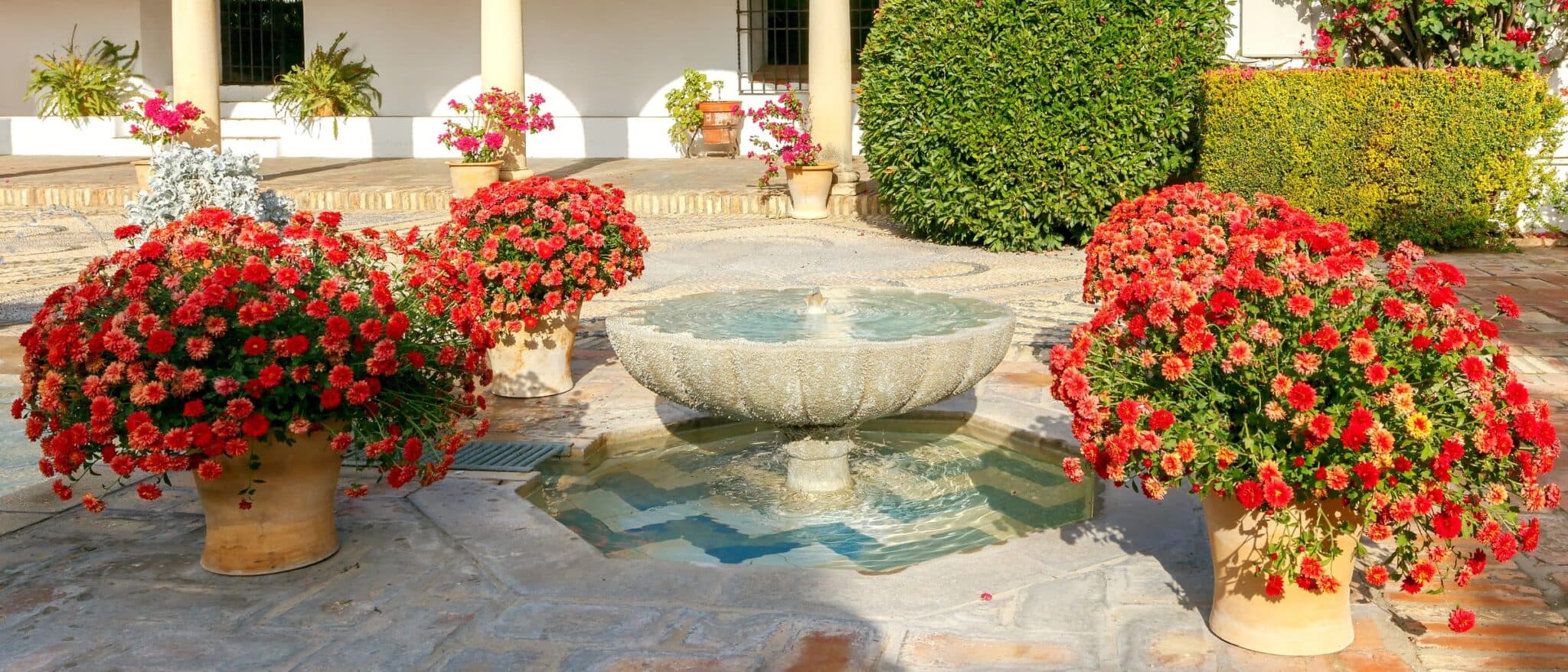
The Palacio de Viana and its twelve courtyards are open all year. Summer hours end on 30 August. From Tuesday 1 September it returns to 10:00–19:00 Tuesday to Saturday and 10:00–15:00 Sundays, closed Mondays; €8.50. That evening reopening is the most useful change in the city’s September calendar: courtyards at 18:00 in shade rather than 13:00 in full sun.
What life is like
The Pedro Ximénez harvest in the Sierra de Montilla is what the province is doing this month, and it produces one of the odder sights in Andalucía: grapes laid out on esparto mats in open fields to raisin in the sun. The asoleo is what concentrates the sugar that makes PX the near-black dessert wine it becomes.
It lasts a few weeks. There is no visitor infrastructure around it — you drive the roads south of Montilla and the fields are simply covered.
The paseras are spread across the denomination, not gathered at Montilla. In 2026 the mats went out beside the N-331 and at Montalbán, Montemayor and Moriles Altos. Bunches lie in the sun four to ten days, turned by hand. Rain in that window can ruin the lot, which is why the gota fría matters more to Montilla than to you.
PX is picked in stages, and 2026 ran early: the harvest opened on 23 July, and by the last week of September the mats are largely in. For seeing them, the first half of the month is the safer bet — which cuts against everything the thermometer says.
The city reopens in September after the August shutdown. The other rhythm is day-trip traffic: Córdoba sits on the high-speed line between Seville and Málaga and takes many visitors as a day out from both, which packs the Judería from mid-morning to mid-afternoon, the hottest stretch of the day. Stay the night and the mornings and evenings are yours.
How to plan a Córdoba day at 34°C
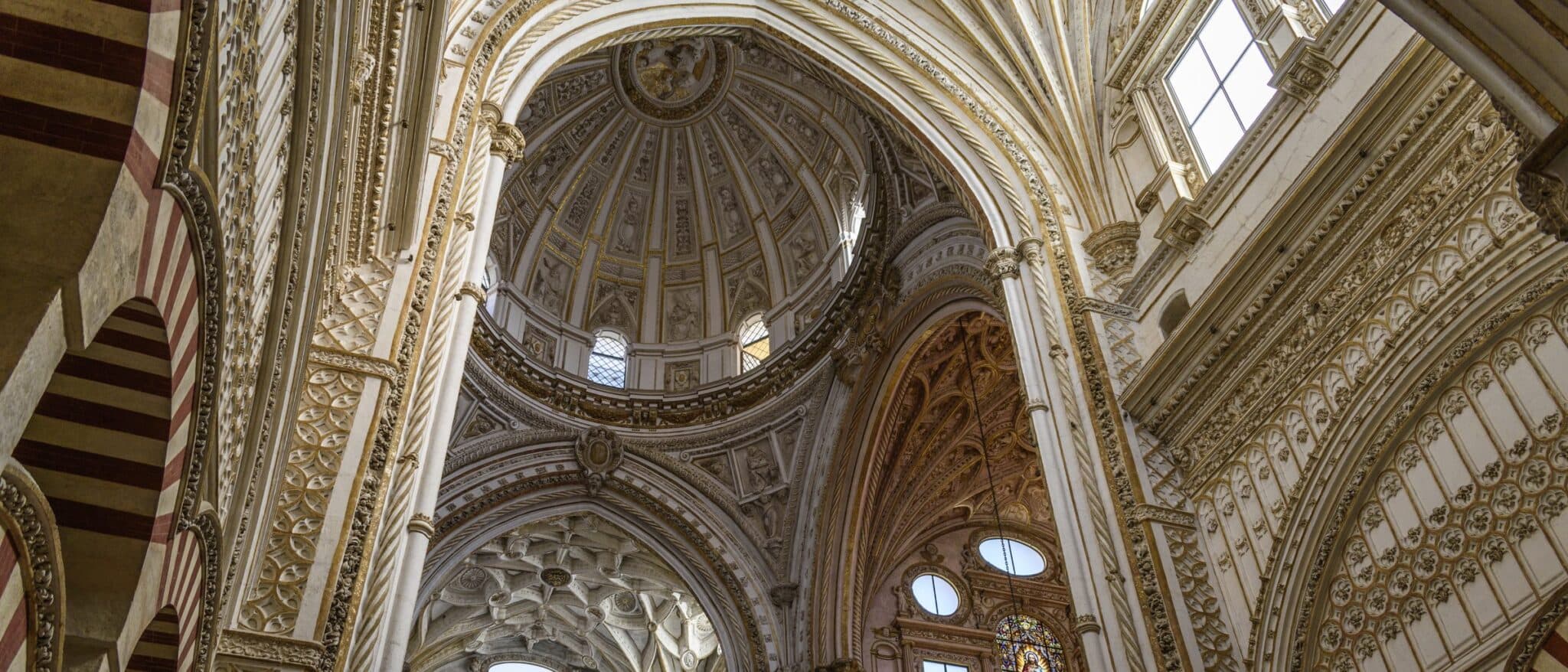
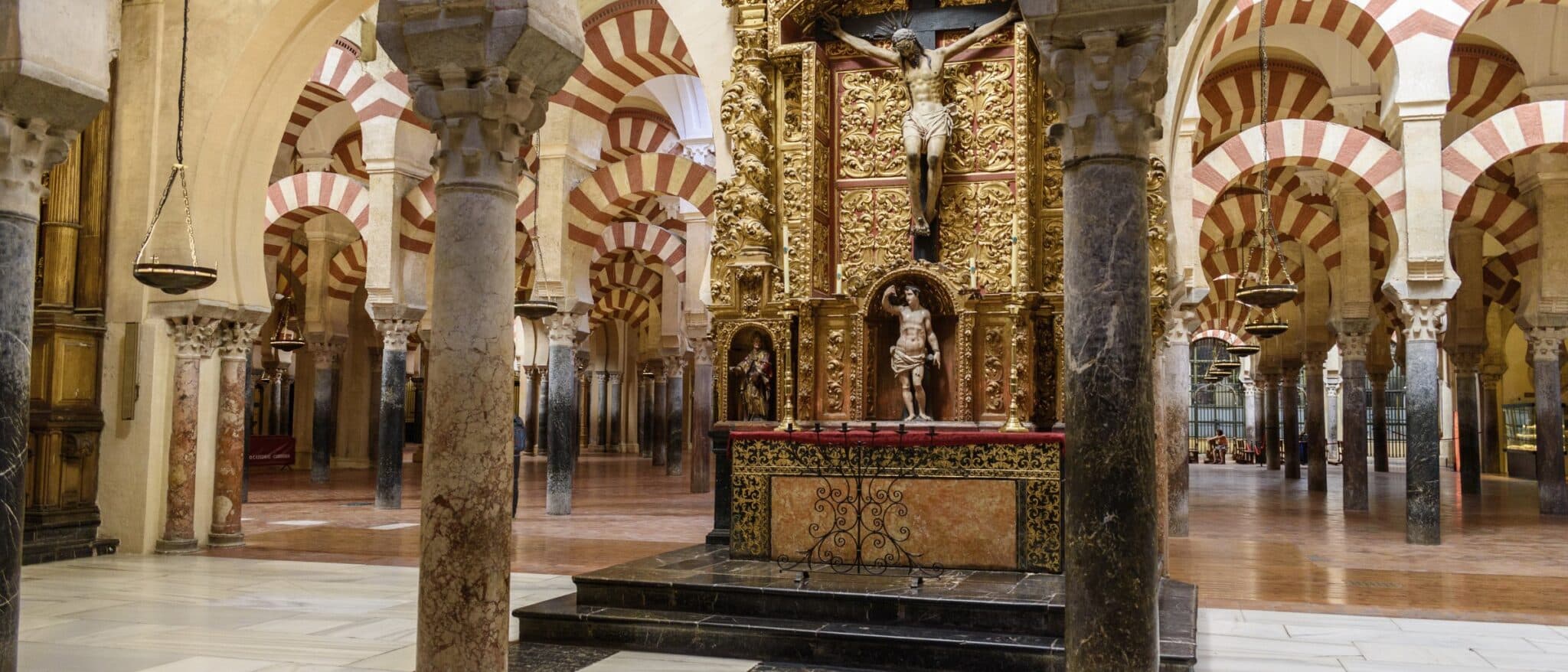
Before 11:00 is for anything needing daylight and legs. The Mezquita still runs its free hour, 08:30–09:30 Monday to Saturday. No groups are admitted then, and staff begin clearing the building ten minutes before it ends. For longer, entry is by timed half-hour slot, better booked online.
Medina Azahara is the other morning job, and its hours change mid-month. To 20 September it opens 09:00–14:00 Tuesday to Saturday, then again 19:00–24:00 for evening visits to the archaeological zone; Sundays and holidays 09:00–15:00, closed Mondays. From 21 September it runs straight through, 09:00–18:00. There is no shade on the site, so 09:00 is not fussiness.
Between about 14:00 and 18:00, stop. That is not advice about relaxing; it is the only way to reach the evening in a usable state. Lunch slowly, then a museum or a hotel room. From 20:00 the city comes back, the Judería empties of day-trippers, and the tabernas fill.
The one thing to do in September
The asoleo and the public treading at Montilla during the vendimia. Sun-drying grapes on mats is a September-only landscape, and the festival is the one week the bodegas open up around it. Montilla is forty-five minutes south of Córdoba city.
The treading is public and free: Plaza de la Merced, about 22:15 on Sunday 6 September. Bodegas are a separate arrangement. Alvear and Pérez Barquero, both in Montilla, take booked visits through their own sites, and the Ruta del Vino Montilla-Moriles coordinates member bodegas. Harvest week is the wrong week to turn up hoping for a space.
Common questions about Córdoba in September
Is September a good time to visit Córdoba?
The last ten days are; the first ten are still August. Afternoons run near 34°C at the start and near 28°C at the end, and there is no coast to retreat to.
Can you see the patios of Córdoba in September?
Not the festival ones: the Fiesta de los Patios is in May. The twelve courtyards of the Palacio de Viana are open all year, and from 1 September the palace goes back to evening hours, to 19:00 Tuesday to Saturday.
Will I actually see grapes drying in the sun?
Probably in the first half of September, probably not by the end of it. The 2026 harvest began on 23 July, and bunches stay out only four to ten days at a time. There is no visitor centre and no signposting: the paseras are roadside, around Montilla, Montalbán, Montemayor and Moriles Altos.
Where to go next
- The Córdoba travel guide
- The Mezquita — go at opening, especially in early September
- Córdoba food guide — salmorejo and Montilla-Moriles wine
- September across Andalucía
- Seville to Córdoba as a day trip