 Travel
Cities
Seville vs Granada: Which City Should You Visit?
Seville vs Granada — an honest comparison of both cities to help you decide which to visit, or how to fit both into your Andalucia trip. Architecture, food, nightlife, cost, and more.
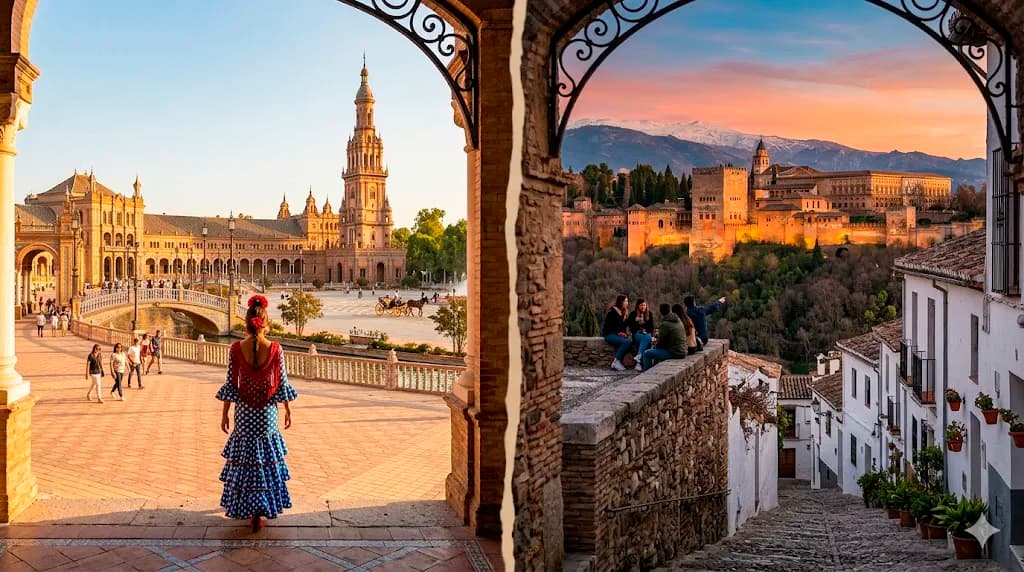
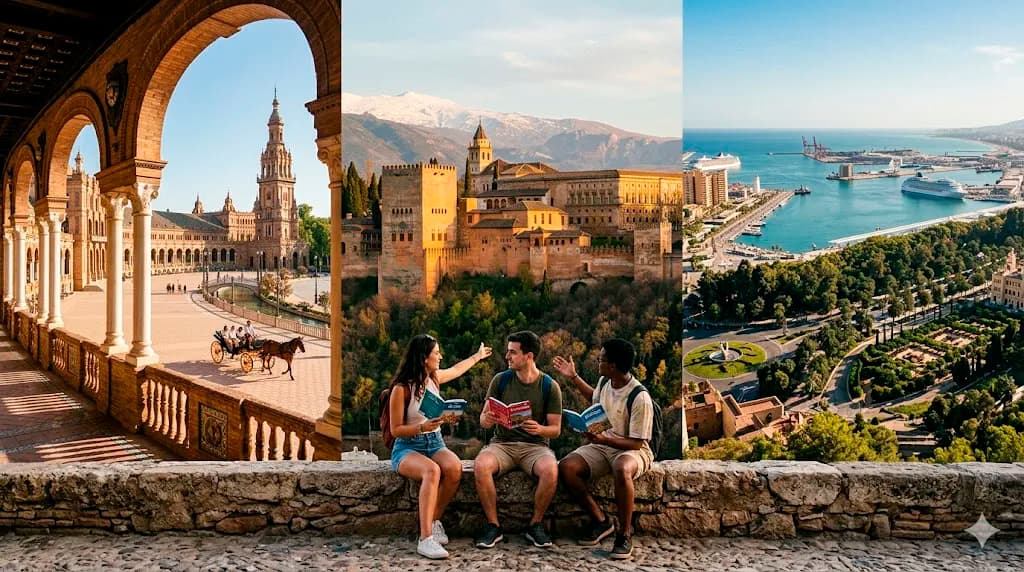
The Seville vs Granada comparison is the most common planning question for Andalucia first-timers, and both cities argue their case convincingly.
Seville Vs Granada: Key Planning Points
This is the question I get asked more than any other about Andalucia: Seville or Granada? And the honest answer is that they are different enough that the choice reveals quite a lot about what kind of traveller you are.
This seville vs granada guide covers everything you need to know for your trip.
Use this seville vs granada resource to plan each stage of your visit to Andalucia.
Seville is grand, baroque, and intensely alive — a city of wide plazas and orange-blossom streets that pulses with music, festivals, and the particular confidence of a place that knows it’s extraordinary. Granada is intimate, layered, and a little melancholy in the best possible way — a city that carries the weight of a lost civilisation and rewards slow exploration.
Both have world-class monuments. Both have excellent food and a thriving flamenco scene. The question is which kind of extraordinary suits your trip.
Here’s the honest breakdown.
The headline attraction
Seville: The Alcázar + Cathedral + Giralda complex — the largest Gothic cathedral in the world (it contains Columbus’s tomb), the most beautiful secular building in Spain (the Alcázar, a working royal palace still used by the Spanish monarchy), and a bell tower you climb on a ramp, not stairs. The Alcázar’s gardens are extraordinary.
Granada: The Alhambra — the most visited monument in Spain and arguably the finest example of Moorish architecture anywhere in the world. The Nasrid Palaces alone justify a trip to southern Spain.
Verdict: This is genuinely a draw. Both are among the top five sights in all of Spain. If forced to choose: the Alhambra has a slight edge for sheer architectural wonder; the Alcázar has a slight edge for surprise value (fewer people know how extraordinary it is).
The neighbourhoods
Seville: The city centre is large enough to explore for several days. Barrio Santa Cruz (the old Jewish quarter — narrow alleys, orange trees, hidden plazas) is the most photogenic. Triana (across the Guadalquivir) is the most authentically Sevillian — the flamenco district, the working-class neighbourhood that keeps the city’s identity grounded. El Centro around the Alameda de Hércules has the best nightlife. Alfalfa the best food market.
Granada: More compact. El Albaicín (the old Moorish quarter on the hill opposite the Alhambra) is one of the most atmospheric neighbourhoods in Spain — cobbled lanes, carmen gardens (walled courtyard homes), and the extraordinary Mirador de San Nicolás viewpoint looking directly at the Alhambra. El Realejo (old Jewish quarter) is quieter and more residential. The university district around Calle Navas has the best tapas bars.
Verdict: Seville has more variety and more room to explore. Granada’s Albaicín is the more dramatic single neighbourhood. If wandering and getting lost in streets is your primary pleasure, Granada edges it.
Food and drink
Seville: Outstanding. A city that takes food seriously — not in a Michelin-starred, precious way, but in the bone-deep way of a culture where food is the engine of social life. The tapas culture is strong (tabernas where you stand at a zinc bar, drink manzanilla, eat jamón and montaditos). Best dishes: pescaíto frito (fried fish), huevos a la flamenca, pringá (slow-cooked meat spread on bread).
Seville’s food scene has improved dramatically in the last decade — chefs like Julio Fernández Quintero (Cañabota) have put the city on the serious gastronomy map. But even at the unpretentious end, the bar food is excellent.
Granada: The tapa libre tradition makes Granada unique in Spain: order any drink at the traditional bars and you receive a free tapa — no asking, no choosing, just wait and see what arrives. It sounds like a gimmick; it’s actually a profound structural advantage for casual eating. You can eat an excellent three-course meal entirely from complimentary tapas for the price of three drinks.
The tapas quality is high — tortilla, croquetas, berenjenas con miel (aubergine with molasses), habas con jamón (broad beans with cured ham). The large student and expat population has also produced a strong international food scene.
Verdict: Granada on value (the tapa libre system is genuinely brilliant). Seville on overall dining quality and variety. Food lovers will be happy in both.
Flamenco
Seville: The birthplace and spiritual home of flamenco. The city has both the most commercially polished flamenco shows (for tourists) and the deepest roots of authentic jondo (deep-song) culture. Casa de la Memoria and La Casa del Flamenco are the best intimate venues. The Bienal de Flamenco (every two years, September) is the world’s most prestigious flamenco festival.
Granada: The Sacromonte cave district has its own flamenco tradition — the zambra, a more Romani-influenced, physically expressive style. Cueva Los Tarantos and Cueva la Rocío are the main venues. The atmosphere is different from Seville — rawer, more physical, slightly more touristy in presentation, but with genuine roots in the cave-dwelling Romani communities of the Sacromonte.
Verdict: Seville for flamenco authenticity and depth. Granada for the theatrical setting (a flamenco show in a candlelit cave, looking across at the Alhambra). Both are worth attending.
Nightlife and atmosphere
Seville: Alive. The city is young (large student population), confident, and loves the night. The Alameda de Hércules is the epicentre — a long promenade of bars that fills at midnight and empties at dawn. The Nervión district has clubs. The feria season (April–May) transforms the city entirely.
Granada: More compact but surprisingly vibrant given the city’s size. The student culture (Universidad de Granada has 60,000 students) generates a lively bar scene around Calle Pedro Antonio de Alarcón and Campo del Príncipe. Quieter than Seville overall but far from dead.
Verdict: Seville wins for pure nightlife energy. Granada is more manageable if you want evenings that end before 3am.
Day trips and surroundings
Seville: Excellent connections by AVE to Córdoba (45 min), Cádiz (1h 45min by train), and Jerez (1h by train). Road access to the western pueblos blancos (Arcos, Vejer). Italica Roman ruins 20 minutes away. The city’s airport has wide international connections.
Granada: Access to the Alhambra (obviously). Sierra Nevada skiing and hiking on the doorstep. Alpujarras villages an hour away. Costa Tropical beaches (Almuñécar, Salobreña) 1h by car. The Subbética Natural Park with Zuheros and the cave paintings to the north.
Verdict: Seville for city-to-city day trips; Granada for nature, mountains, and village escapes.
Ease of getting around
Seville: Flat — entirely walkable, with an excellent tram and metro network for longer distances. Cycling infrastructure is extensive (Seville was an early adopter of a city bike-share system). The historic centre is very compact.
Granada: Hilly — the Albaicín and Alhambra hill are steep enough to require effort. The city centre is walkable; the Albaicín is best explored on foot (many streets are too narrow for vehicles). Minibuses (lines C3 and C4) serve the Alhambra and Albaicín.
Verdict: Seville is physically easier. Granada rewards those willing to climb.
Cost
Seville: Generally slightly more expensive than Granada for accommodation. Mid-range double rooms: €90–€150/night in the historic centre; €60–€90 in Triana.
Granada: Slightly cheaper across the board. Mid-range double rooms: €70–€130/night. The tapa libre system significantly reduces food costs — budgets stretch further.
Verdict: Granada is marginally better value, particularly for food.
Crowds and tourism pressure
Seville: Enormous numbers, especially during Semana Santa and Feria de Abril. The Alcázar and Cathedral queues are long without advance booking. The city handles crowds relatively well due to its size.
Granada: The Alhambra’s ticket system manages crowds effectively, but the Albaicín at sunset (Mirador de San Nicolás) gets severely congested in summer. The city centre is busy but rarely feels overwhelming outside peak season.
Verdict: Both are busy in high season. Advance booking is essential at both cities’ main sights.
Which should you choose?
Visit Seville if:
- You want a large, energetic city with a full urban programme — museums, restaurants, nightlife, shopping
- Festivals are a priority (Semana Santa, Feria de Abril)
- You’re using the city as a hub for day trips (Córdoba, Cádiz, Jerez)
- You want flamenco at its deepest and most authentic
- You’re travelling with people who might not want to hike up steep hills
Visit Granada if:
- The Alhambra is on your non-negotiable list
- You want to wander an ancient Moorish neighbourhood (the Albaicín)
- Value matters — the tapa libre system genuinely saves money
- You want access to mountains (Sierra Nevada) alongside the city
- You prefer intimate scale over grand metropolitan energy
Visit both (recommended):
If you have 7+ days in Andalucia, visiting both is the correct answer. They are different enough to complement each other perfectly — the contrast between Seville’s baroque grandeur and Granada’s Moorish intimacy is part of the experience of understanding Andalucia.
The classic route: Seville (2–3 nights) → Córdoba (day trip) → Granada (2 nights) → Ronda/Málaga.
Side-by-side summary
| Category | Seville | Granada |
|---|---|---|
| Headline sight | Alcázar + Cathedral | Alhambra |
| Neighbourhood character | Grand, baroque, energetic | Intimate, Moorish, layered |
| Food | Excellent tapas scene | Tapa libre tradition |
| Flamenco | Deepest roots | Cave Zambra tradition |
| Nightlife | Very lively | Lively (student city) |
| Day trips | Córdoba, Cádiz, Jerez | Sierra Nevada, Alpujarras |
| Cost | Moderate | Slightly cheaper |
| Walkability | Flat and easy | Hilly |
| Crowds | Very busy in season | Busy but manageable |
| Best for | First-timers, festival-goers | Alhambra lovers, slow travellers |
Plan your Andalucia trip
- For fitting both cities into one trip: see our 7-Day Andalucia Itinerary
- For the Alhambra in full detail: see our Alhambra Visitors Guide
- For Seville’s best day trips: see our Best Day Trips in Andalucia
- For when to go: see our Best Time to Visit Andalucia guide
Useful Resources
For official travel information about Andalucia, visit Andalucia — Spain Tourism.
Related reading: Andalucia 7-day itinerary, best city in Andalucia.