 Travel
Travel
September in Seville: the Bienal year, and the ten days you should not book
The first week of September in Seville is still August at 34°C. The last week is one of the best travel windows of the year — and 2026 brings the Bienal de Flamenco.
Seville in September is two different cities with a fortnight in between. On the 1st it is 34°C and sightseeing is confined to mornings and evenings. By the 30th it is 29°C with nights you can sleep through. It is the biggest month-on-month temperature drop anywhere in Andalucía, and almost all of it happens in the second half.
If your dates are flexible, that single fact is worth more than any other advice on this page: book the last ten days.
What the weather actually does
Seville airport averages 31.7°C by day and 18.2°C at night across September, with 27mm of rain over 2.4 rain days and 244 hours of sunshine. August averages 35.5°C, so the monthly figure looks like relief — but the average hides the shape. Roughly 34/19 on the 1st, 29/17 on the 30th.
October is when the rain arrives properly, at 68mm. September is still dry, and the chance of a wet day climbs from 3% at the start of the month to 14% at the end.
You also lose about 45 minutes of evening light across the month. In early September the sun sets around 20:55; by the 30th it is closer to 20:10, which changes when dinner starts feeling like dinner. A 22:00 table in the first week is eaten in daylight; in the last week, in the dark.
The first ten days are August with a different name on the calendar. The last ten are one of the better travel windows in the Andalucian year. September also opens the gota fría season, where the risk is one violent day rather than a wet fortnight: the 27mm can fall in a single afternoon and the rest of the month stay cloudless.
Which week to book
Book 20 to 30 September if the weather decides it, the first ten days if the programme does. In 2026 they fight.
The Bienal opens on 9 September, inside the hot third of the month, and closes on 3 October, by which point the city is around 29°C. Arrive on the 20th and you get the cooler fortnight, the back half of the festival and its final nights in October. Arrive on the 5th and you get the opening gala, Sara Baras, the Utrera feria and the last Alcázar garden concerts, at 34°C. Utrera ends on the 8th, the concerts on the 19th.
What is on in September 2026
2026 is a Bienal year, and that is the reason to come.
The XXIV Bienal de Flamenco runs 9 September to 3 October (confirmed): 72 performances, 52 productions and 22 world premieres across eleven venues. It happens only in even-numbered years. The opening gala, El mundo por montera, is at the Plaza de Toros de la Real Maestranza at 21:30, though sources differ on the 9th versus the 10th, so treat that date as expected. Sara Baras returns after fourteen years with the premiere of Infinita at the Teatro de la Maestranza on 11, 12 and 13 September (confirmed), alongside José Mercé, Arcángel and Rancapino Chico.
Tickets have been on sale since 11 February 2026, through the Bienal’s site and the city’s ICAS ticketing, with a weekday box office at the Teatro Lope de Vega and each venue’s window opening an hour before curtain. Prices run roughly €12–75, the gala €25–50.
The venues are half the point. Alongside the Maestranza and the Teatro Lope de Vega, performances take place in the Real Alcázar, the church of San Luis de los Franceses and the Real Fábrica de Artillería, with the Teatro Central, Teatro Alameda, Espacio Turina, CaixaForum and Hotel Triana completing the eleven. Flamenco in those rooms is not flamenco in a theatre.
Noches en los Jardines del Real Alcázar runs until 19 September (confirmed): 63 concerts across the season, one price of €7, gardens open 21:00 to 22:25.
Out in the province, Utrera opens with the noche del pescaíto on Friday 4 September and holds its feria 5–8 September (confirmed by the ayuntamiento), closing on the feast of Nuestra Señora de Consolación, fixed annually on the 8th. A dozen towns — Écija, Lebrija, Morón, Los Palacios — hold theirs through the month, most with dates not yet published.
What life is like
September is the verdeo, the table-olive harvest, and it is the season that matters in this province. Gordal comes off from late August and manzanilla from early September; the countryside around Écija, Morón and Arahal is working at dawn all month.
In the city, shops and restaurants come back off holiday in the first week and schools restart on the 10th and 15th. Seville stops performing for tourists and goes back to work, which is a good time to be there.
August is when the family-run tabernas and abacerías shut behind a handwritten sign; the first week of September is when the signs come down. Same streets, most of the neighbourhood added back.
How to plan a day when it is 34°C
Start at 09:30 and stop at 13:00. The Real Alcázar opens at 09:30 and keeps summer hours, closing at 19:00, until 30 September, then drops to a 17:00 close on 1 October. September is the last month you can be in those gardens at seven in the evening. Admission €15.50.
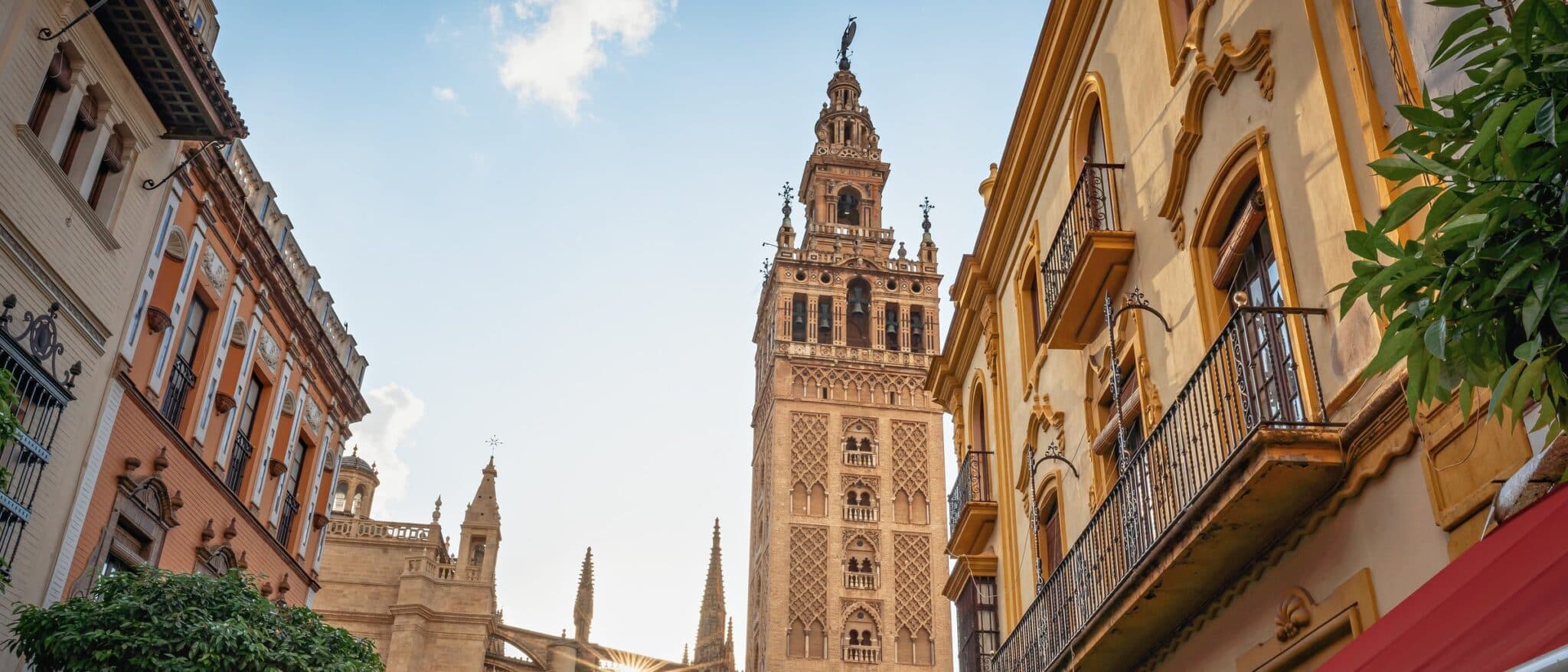
The Cathedral is where the plan breaks. It opens at 09:30 in July and August, but from September it reverts to 11:00 Monday to Saturday, 14:30 on Sundays. So the obvious sequence, Alcázar then Cathedral, puts you in a queue at the hottest end of the morning. Split them across two days, or go late: under daylight saving it stays open until 19:00. Entry is €13 online, €14 at the window.
From 13:00 to 18:00, stop trying. Lunch, air conditioning, and if you must be out, thick walls: the Museo de Bellas Artes, the Casa de Pilatos, the Archivo de Indias.
From 21:00 the city works again. Until 19 September that means the Alcázar garden concerts. The Cathedral runs evening visits on fixed weekdays too: Proyectando Historia on Fridays and El Evangelio de la Madera on Saturdays at 20:30, De Profundis on Tuesdays and Thursdays at 19:15. Check its site for September dates. From 9 September the Bienal takes the evening outright and dinner happens afterwards, at eleven.
The one thing to do in September
A Bienal night in a venue that is not a theatre. San Luis de los Franceses is a baroque church with a painted dome; the Alcázar is a working royal palace. Nothing else puts this density of first-rank flamenco inside Seville’s own buildings, and it only happens every second year.
Both are on the 2026 programme and both are small. A cantaor in San Luis sings into a dome built to carry sound, not at a proscenium arch and a lighting rig.
Book early. The programme went out in February and the smaller venues are the first to go.
Questions people ask about September
Is September too hot for Seville?
The first ten days are, the last ten are not: roughly 34°C on 1 September, around 29°C in the last third. Stuck with early dates? Plan mornings and nights and write off the afternoons.
Do I need to book Bienal tickets in advance?
Yes, for anything in a small venue. Sales opened on 11 February 2026, and each venue sells at its own door an hour before the show. The Alcázar and San Luis de los Franceses go first.
Is the Bienal on every year?
No, only in even-numbered years, so the next edition after 2026 is 2028. That is the argument for this September rather than next.
Will it rain in September?
Probably not. September averages 27mm over 2.4 rain days against 68mm in October, and the odds of a wet day rise from 3% to 14% across the month. When the rain comes it comes all at once, so plan a wet-afternoon fallback.