 Travel
Blog
Andalucía in October: the month the season turns, and the date it happens
October is Andalucía’s best-value month — heat gone, crowds gone, the Alhambra bookable within weeks. Real AEMET figures, dated events from official sources, and all eight provinces.
October is the month Andalucía changes season, and unusually for a season change, you can put a date on it. Until Saturday 24 October the sun sets over Seville at half past seven and the region still behaves like a warm-weather destination. On Sunday 25 October the clocks go back, sunset drops to 18:34 overnight, and everything about an Andalusian evening moves indoors and an hour earlier.
Before that, October is the best-value month in the Andalusian year: the heat has broken, the crowds have gone home, the Alhambra is bookable within weeks rather than months, and hotel rates fall by something like a third. After it, you are into the short days of a southern European winter — mild, cheap, and a different holiday entirely.
The short version
- Come in the second and third weeks if you want one answer. The inland heat has gone, the evenings are still usable, and the 12 October long weekend has cleared.
- Avoid 10–12 October unless you want company. Monday 12 October is the Fiesta Nacional and falls on a Monday in 2026, creating a three-day weekend that fills Seville, Córdoba, Granada and the coast.
- The clocks go back on Sunday 25 October. Plan the last week around afternoons, not evenings.
- For the beach, go east. Almería and the Costa de la Luz hold their water temperature better than the Costa del Sol.
- Book late, not early. October is the one month when the region’s headline sights can be seen on a few weeks’ notice.
October weather across the region
These are AEMET’s published climate normals for the 1981–2010 period, by provincial capital.
| Capital | Day °C | Night °C | Rain | Rain days |
|---|---|---|---|---|
| Seville | 26.0 | 14.4 | 68 mm | 6.1 |
| Jerez (Cádiz, inland) | 25.5 | 13.7 | 72 mm | 5.8 |
| Córdoba | 25.1 | 13.0 | 86 mm | 6.9 |
| Huelva | 24.9 | 14.1 | 68 mm | 6.4 |
| Almería | 24.5 | 16.3 | 27 mm | 2.8 |
| Málaga | 24.1 | 15.0 | 57 mm | 4.4 |
| Cádiz city | 23.4 | 17.3 | 67 mm | 5.6 |
| Granada (560 m) | 23.2 | 8.7 | 40 mm | 5.0 |
| Jaén (580 m) | 21.9 | 13.8 | 55 mm | 5.9 |
Two readings of that table are worth having. The day figures cluster tightly — seven of the nine sit between 23 and 26°C — so October is the month when it barely matters which part of Andalucía you pick for daytime comfort. The night figures do not: Cádiz stays at 17.3°C and Granada drops to 8.7°C. That nine-degree spread is the real decision.
Granada’s figure needs a footnote. Its official station is out at the airport in the vega, which drains cold air off the sierra overnight. The Armilla station on the city edge, 127 metres higher, is 1.4°C warmer at night. Add a degree and a half for the city itself.
The two Octobers, inland
Averaging October is misleading in the Guadalquivir valley, where the month cools faster than anywhere else in Spain.
Seville runs 28.0°C by day across the first ten days and 24.6°C across the last eleven. Córdoba runs 27.7°C and then 23.7°C. Nearly five degrees of daytime heat disappears in three weeks, and almost all of it goes before the 20th.
The clearest version is in 30-degree days. Seville averages 3.3 of them in the first ten days of October and 0.5 in the last eleven; Córdoba 3.2 and then 0.3. If you have avoided inland Andalucía because of the heat, the back half of October is the answer, and the front half is not.
Rain, and why the averages lie
October is the month the autumn rains return, and the monthly totals above look discouraging. They should not be read straight.
Across the thirty-year record, roughly 80% of October’s rainfall falls on the month’s three wettest days, and about 45% of it on the single wettest. In Seville, nine of twenty-nine Octobers came in under 20mm; October 1985 recorded no rain at all; October 1999 delivered 245mm. The median October is drier than the mean, which is why AEMET’s own seasonal monitoring plots rainfall against the median rather than the average.
What that means in practice: you are more likely to get a dry fortnight than a wet one, and the realistic downside is losing a day or two, not a holiday. The genuine hazard is the other tail. October is peak season for a gota fría or DANA — cold upper air over a Mediterranean still holding summer heat — and it arrives as a few violent hours rather than a grey week. In October 2024 Andalucía recorded 221% of its normal October rainfall, the fourth-wettest since 1961. Check AEMET warnings before driving in the mountains, and never park in a dry riverbed.
The sea in October
Measured from the Puertos del Estado buoy network, October means over 2011–2025:
- Gulf of Cádiz (Cádiz and Huelva coasts) — 21.6°C, and remarkably steady: 21.9°C early in the month, 21.1°C late. The warmest water in Andalucía in October.
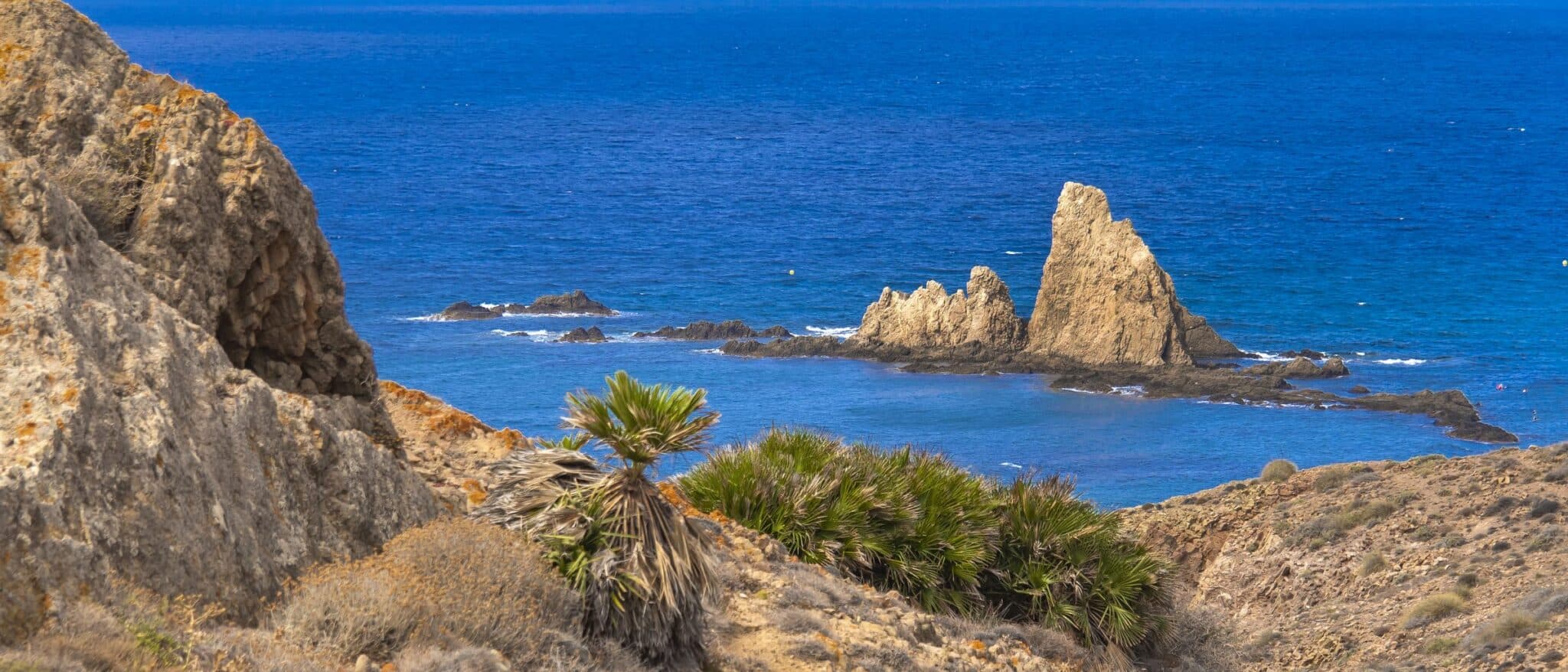
- Cabo de Gata (Almería) — 21.1°C, from 22.2°C to 20.1°C across the month.
- Costa del Sol (Málaga) — 19.8°C, from 20.7°C to 18.8°C.
- Strait of Gibraltar (Tarifa) — 18.6°C, cold all year because of the Atlantic inflow.
The Costa del Sol figure contradicts most of what is written about October on this coast, which tends to claim 21–22°C. The buoy record does not support it; upwelling along the Málaga coast keeps it cooler than Almería. If swimming is the point of the trip, the Costa de la Luz and Cabo de Gata are the better bets, and the Costa Tropical around Motril sits somewhere between Málaga and Almería — though there is no buoy there to be precise about.
What is on in October 2026
The single most important date is Monday 12 October, the Fiesta Nacional. Falling on a Monday makes a three-day weekend, and it lands on top of the Fuengirola feria, the Almería Western Film Festival and the opening weekend of the Feria de San Lucas. Those three towns will be at their fullest on 10–12 October.
The second is 7 October, the Virgen del Rosario. It is a local holiday in dozens of towns across all eight provinces at once — the densest fiesta date of the Andalusian autumn, and mostly invisible to visitors.
The events worth planning a trip around:
- 6–12 October (fixed every year) — Feria del Rosario, Fuengirola, the biggest feria on the autumn Costa del Sol.
- 8–12 October (confirmed) — Almería Western Film Festival, Tabernas, played on the original spaghetti-western sets.
- 9–18 October (confirmed) — Feria de San Lucas, Jaén, ten days, and it always ends on the 18th.
- 16–18 October (confirmed) — WorldSBK season finale at the Circuito de Jerez.
- Sunday 18 October (confirmed) — Romería de Valme, Dos Hermanas: ox-carts, riders and the largest romería in Seville province.
- Saturday 24 October (fixed every year) — San Rafael, Córdoba’s patron, and a full city holiday.
- 27 October – 7 November (confirmed) — Festival Internacional de Jazz de Granada, 46th edition.
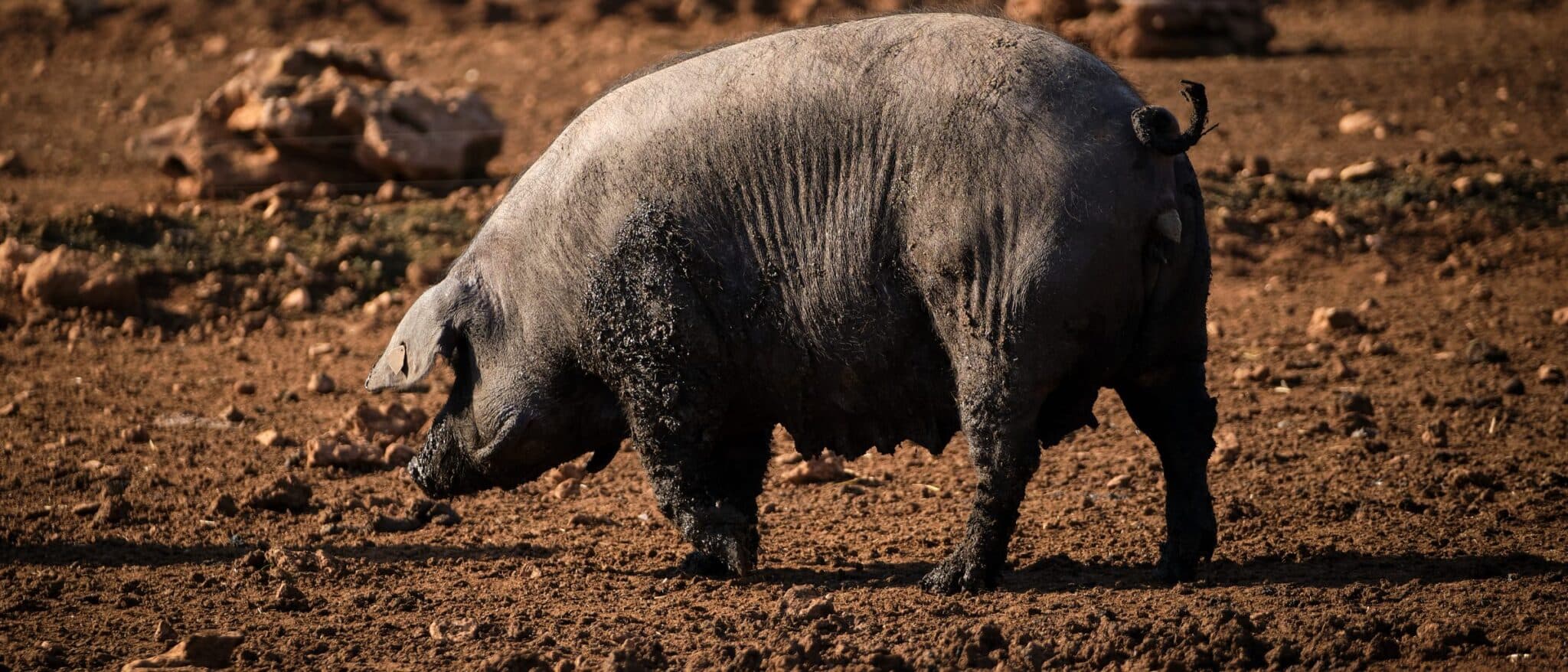
- From 1 October (fixed every year) — the montanera opens in the Huelva dehesa, when the ibérico pigs go out among the oaks.
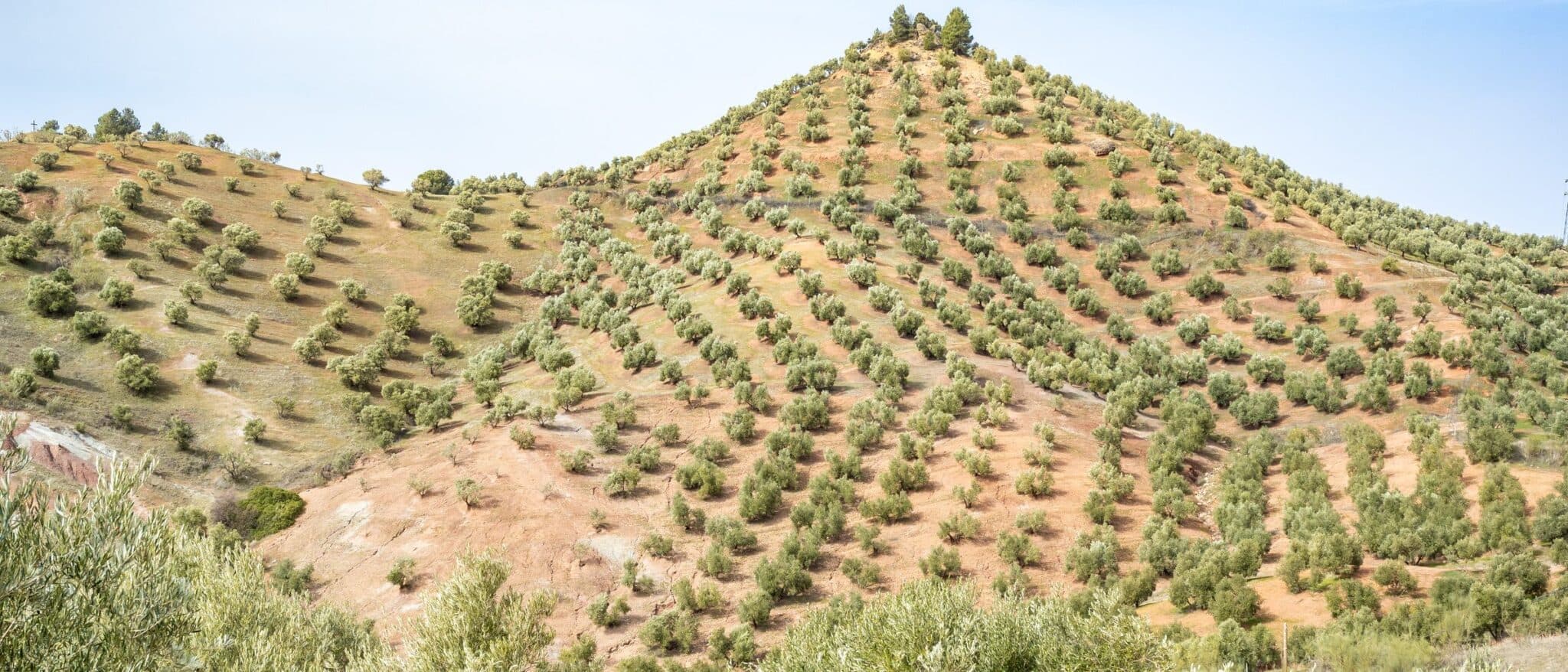
- From late October — the olive harvest begins in Jaén and Córdoba, and the first mills run.
Things listed for October that are not in October
Autumn listings for Andalucía are unusually unreliable. Checked against town halls and official festival sites, these are the ones that recur:
- Fuengirola’s Feria Internacional de los Países is 29 April – 3 May, not October. The October event in that town is the Feria del Rosario, a different fiesta.
- Sierra Nevada is completely shut in October. Summer lifts end in late August; the winter season opens at the end of November.
- The chestnut festivals are November and December — Pujerra and Mecina Bombarón around All Saints, Fuenteheridos at the Inmaculada bridge. October gives you the woods, not the festivals.
- The Jerez vendimia is over before October starts, and International Sherry Week is 2–8 November.
- The Montilla-Moriles harvest began on 23 July; the PX asoleo is finished before October.
- The Seville and Huelva film festivals are November, as is Almería’s FICAL — the Western Film Festival at Tabernas is the October one.
- The Jaén olive harvest is not in September, whatever half the guides say; and the berrea in Cazorla is mostly finished by mid-October.
Why October is the best-value month
Three things line up. Prices drop sharply once the Spanish holiday season ends — hotel rates fall by roughly a third against the summer peak, and car hire further than that. The big sights become bookable: the Alhambra’s window compresses from two to four months in spring to three or four weeks in October, which is the difference between planning a trip around a ticket and buying a ticket for a trip. And the light is the best of the year, low and long, which is why October is when the photographers come.
What you give up is evening daylight, and after the 25th you give up a lot of it at once.
October province by province
Andalucía is eight provinces and October treats them very differently — one is still a beach month, one is starting its olive harvest, one is shutting its mountain season. Each guide has the local weather figures, the dated events and one thing that is specifically better in October than at any other time of year.
- October in Málaga — three ferias, and the Genal chestnut woods turning copper
- October in Seville — the city becomes walkable again, and the Romería de Valme
- October in Granada — the Alhambra is bookable, the Alpujarras are at their best, and the sierra is shut
- October in Cádiz — the warmest sea in Andalucía, and bodegas without the harvest crowds
- October in Córdoba — the steepest cool-down in the region, and San Rafael on the 24th
- October in Huelva — the montanera opens and the Doñana birds arrive
- October in Jaén — ten days of San Lucas, then the first oil of the season
- October in Almería — Cabo de Gata without the access restrictions, at 21°C
What to pack
Layers, and more of them than the daytime figures suggest. Shirtsleeves for the afternoon anywhere in the region; something warm for the evening everywhere except Cádiz; a proper jacket for Granada, Jaén and anywhere above 600 metres. A light waterproof — you probably will not need it, but if you do you will need it seriously. Swimwear is worth packing for the coast, and genuinely so for Almería and the Costa de la Luz. See the full packing list.
Sources
Temperature and rainfall figures are AEMET’s published climate normals for 1981–2010 (Huelva 1984–2010, Jaén 1983–2010). Sea temperatures are computed from the Puertos del Estado buoy network, 2011–2025, and are a warmer baseline than the air-temperature normals. Sunset times and the clock change are from the Observatorio Astronómico Nacional. Event dates are taken from town halls, provincial tourist boards and the official sites of the events themselves, and from the regional government’s published list of 2026 municipal holidays; dates are marked confirmed, expected or fixed every year, and nothing here comes from an event aggregator.
Plan your October visit
Frequently asked questions
Is October a good time to visit Andalucía?
It is one of the two best months, alongside May, and it is cheaper than May. The heat has gone, the crowds have gone, and the region’s big sights are bookable at short notice. The compromise is daylight, especially after the clocks change on 25 October.
Can you still swim in Andalucía in October?
Yes, on most of the coast. The Gulf of Cádiz holds 21.6°C and Cabo de Gata 21.1°C through the month; the Costa del Sol is cooler at 19.8°C, and the Strait at Tarifa colder still.
How much rain should I expect?
Less than the averages imply, most years. Roughly 80% of the month’s rain falls on three days, and dry Octobers are common. The risk is one or two intense days rather than a wet fortnight.
Which is better, September or October?
September for the sea and the long evenings; October for comfortable sightseeing, lower prices and easier tickets. If you are going inland to Seville, Córdoba or Granada, October is clearly the better month. If the beach is the point, September holds the edge. See the September guide for the comparison.
Do I need to book the Alhambra months ahead for October?
No. Three to four weeks is usually enough, against two to four months in spring. See how to book Alhambra tickets.